

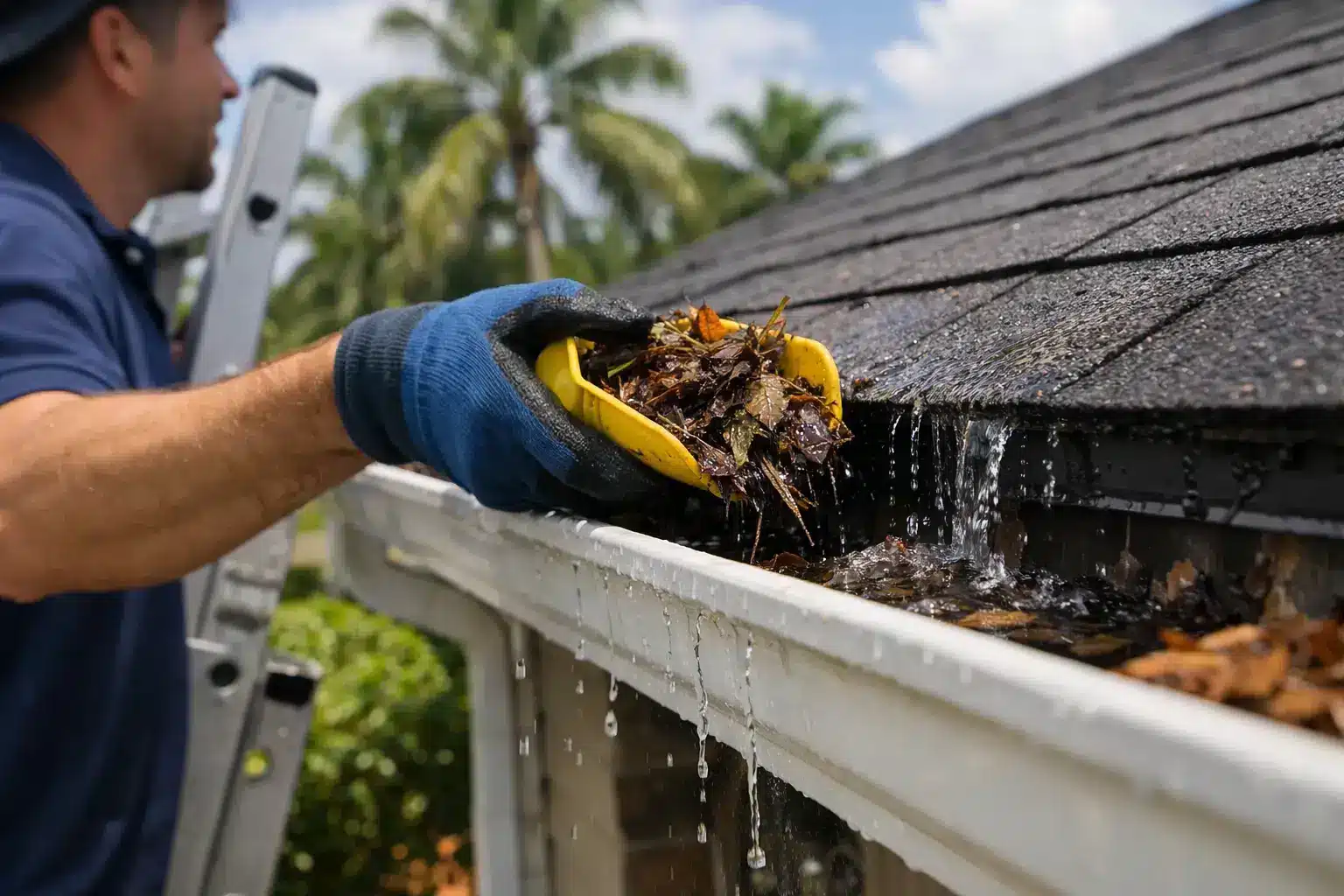

A Jacksonville Florida downpour can fill a gutter in minutes. When that gutter is packed with oak leaves, pine needles, roof grit, or storm debris, water has nowhere to go except over the edge or back toward the fascia and roof. Gutter cleaning prevents roof leaks by restoring the drainage path that carries rain safely away from the roofline, fascia, walls, and foundation.
That does not mean every roof leak starts in a gutter. A damaged shingle, failed pipe boot, open flashing detail, chimney transition, or aging skylight can also allow water inside. The value of gutter maintenance is that it removes one common and preventable source of water buildup before it damages materials at the vulnerable edge of the roof.
Why clogged gutters put the roof edge at risk
Gutters are designed to collect runoff from the roof and direct it through downspouts. When debris forms a dam, the water level rises during heavy rain. Instead of flowing into the downspout, it can spill over the front of the gutter, run behind it, or remain standing along the roof edge long after the storm has passed.
Water that runs behind a gutter is especially concerning. It can wet the fascia board, soffit, rafter tails, and the lower edge of the roof decking. Repeated saturation can soften wood, loosen gutter fasteners, stain exterior finishes, and create conditions for rot. Once the roof edge and surrounding materials begin to deteriorate, water has more opportunities to move into the attic or exterior wall.
In Jacksonville Florida, this cycle is harder on homes because our roofs face intense sun, humidity, heavy seasonal rain, and tropical-storm winds. A small amount of debris may not look serious on a dry day, but it can become a blockage when wind-blown leaves and shingle granules collect at the outlet during a storm.
Standing water can expose weak points
Roofing materials are intended to shed moving water. They are not meant to hold water against vulnerable edges, under lifted shingles, or near deteriorated flashing for extended periods. Backed-up gutters can keep these areas wet longer than they should be, revealing weaknesses that may have stayed dry under normal drainage.
This is why a homeowner may first notice a ceiling stain after a major rainstorm even though the underlying issue has been developing for months. The visible stain is the symptom. The source could be a clogged gutter, but it could also be a roof penetration or flashing detail higher on the roof. A careful inspection is the right way to tell the difference.
Gutter cleaning prevents roof leaks when drainage is the cause
A clear gutter system helps protect the lower roof edge by moving water away promptly. It also reduces the chance of overflow soaking siding, window trim, masonry, and landscaping below. Proper drainage protects more than one component of the home.
For gutter cleaning to do its job, the entire system needs attention, not just the open sections visible from the ground. Debris commonly collects in gutter corners, at downspout outlets, and inside underground drain extensions. A gutter can look clear from one end while the downspout remains blocked lower down.
A thorough service should confirm that water flows toward each outlet, downspouts are open, and gutter sections are securely fastened and properly pitched. If a gutter is pulling away from the fascia or holding standing water between storms, cleaning alone may not correct the problem. The system may need adjustment or repair, and the fascia behind it should be checked for hidden deterioration.
Warning signs homeowners should not ignore
You do not need to climb a ladder to spot every gutter issue. Walk around the property after a steady rain and look at how water behaves. Overflowing water, a waterfall from the middle of a gutter run, or a downspout with little to no discharge can point to a blockage.
Pay attention to stains or peeling paint along the fascia and soffits. Rust marks, sagging gutter sections, visible plant growth, and dark streaks on siding also suggest that water has been sitting where it should be draining. Inside the home, new ceiling discoloration near an exterior wall or the edge of a room deserves prompt attention, particularly after wind-driven rain.
Some warning signs require a closer roof evaluation. Granules washing out of shingles, curled shingle edges, damaged drip edge, or soft wood near the eaves can make a roof more susceptible to water intrusion. These conditions may exist alongside clogged gutters, but they need targeted repairs rather than a cleaning-only answer.
How often should gutters be cleaned in Jacksonville Florida ?
The right schedule depends on the trees around the home, roof design, and recent weather. Homes beneath mature oaks, pines, or palms often need cleaning more frequently than homes with little overhead foliage. Valleys, low-slope roof areas, and gutters beneath upper roof sections also tend to collect debris faster.
For many Jacksonville-area homes, checking gutters at least twice a year is sensible: once before the heaviest summer rain pattern and again after the primary fall leaf drop. A third check after a tropical storm or a period of unusually high winds can prevent a small debris buildup from becoming an overflow problem during the next storm.
Regular inspection matters as much as the calendar. If water has overflowed once, do not assume the next rain will clear the blockage. Wet leaves compact tightly, and roof grit can settle at the bottom of a downspout outlet. The longer debris remains, the more likely it is to hold moisture against metal and wood components.
Cleaning is useful, but safety and diagnosis come first
Gutter work involves ladders, wet surfaces, uneven ground, and a roof edge that may already have damaged wood. Homeowners should not step onto a roof or lean a ladder against a loose gutter simply to remove a handful of leaves. The risk is not worth it, especially after rain or when storm debris has made conditions unstable.
Professional service is particularly helpful when gutters are high, rooflines are steep, there are multiple levels, or water stains have appeared inside. A trained roofing professional can clean the drainage system while looking for related conditions at the eaves: loose drip edge, failing sealant, damaged shingles, rotted fascia, open joints, or evidence that water is traveling behind the gutter.
This inspection-led approach helps avoid unnecessary work. Replacing a roof because of a ceiling stain is not always the answer. On the other hand, cleaning gutters without addressing a failed pipe boot or chimney flashing will not stop a leak that begins higher on the roof. The repair should match the actual path water is taking.
Protect the roof with a complete maintenance plan
Gutter cleaning works best as part of practical roof maintenance. Keep roof valleys free of heavy debris, trim branches that repeatedly scrape shingles or drop material into gutters, and watch for loose gutter spikes or brackets after high winds. If trees provide valuable shade, trimming may be a better choice than aggressive removal. The goal is to reduce debris while preserving the property’s needs.
Gutter guards can help in certain situations, but they are not maintenance-free. Fine pine needles, seed pods, and roof granules can still collect on top of or beneath some guard systems. Before investing in guards, consider the type of debris around the home, the gutter profile, and whether the existing gutters are correctly pitched and securely installed.
When a leak or stain appears, document when it occurs and where you see it. Does it happen only during wind-driven rain? Is it near a chimney, skylight, plumbing vent, exterior wall, or lower roof edge? Those details help narrow the inspection and reduce guesswork.
At James Neill Roofing Repair, the focus is on finding the actual source of water intrusion before recommending a repair. For Jacksonville Florida homeowners, a clean gutter system is a straightforward layer of protection, but the best next step is always to address the specific condition found at the roof, flashing, drainage, or surrounding materials before the next hard rain tests it again.