

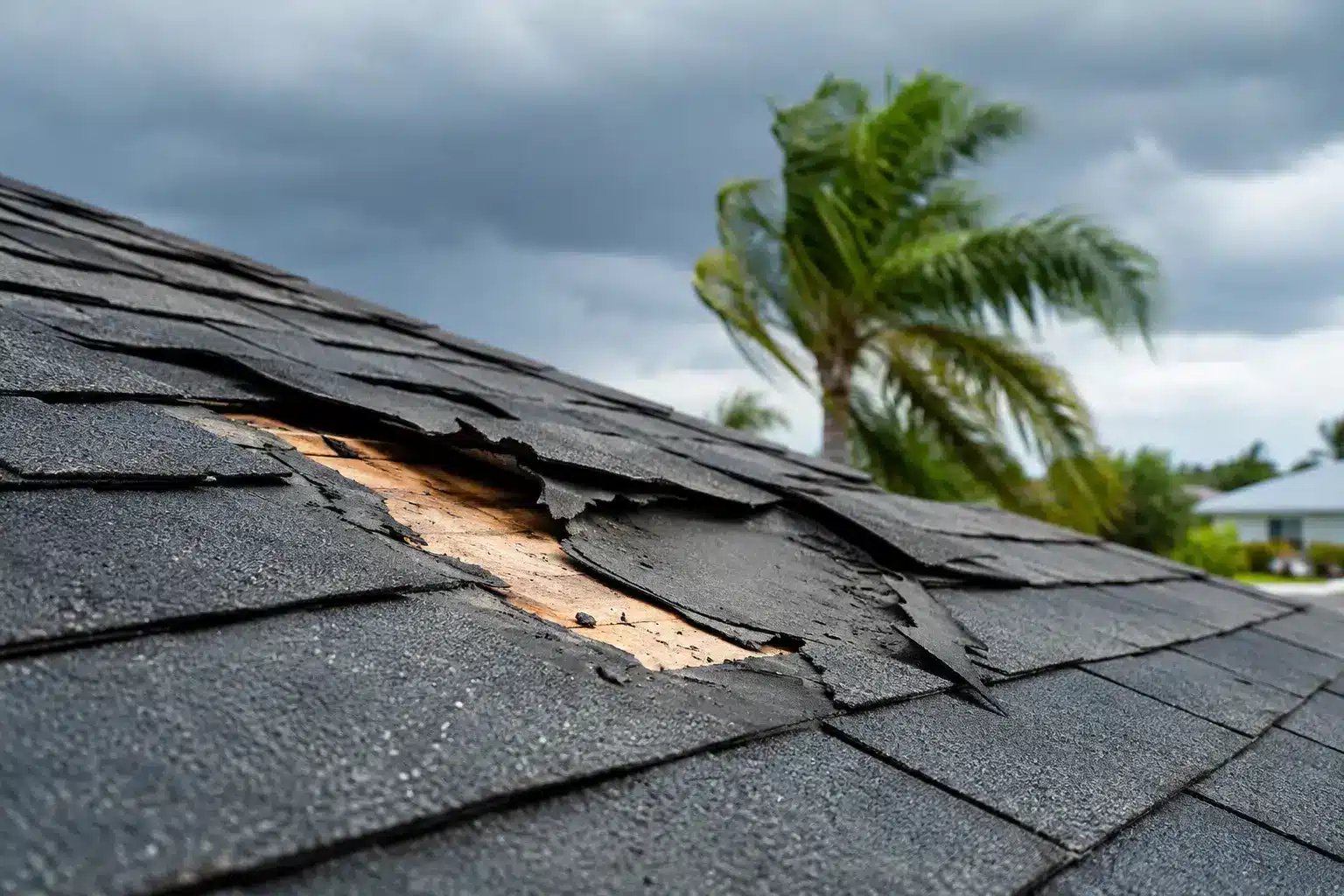

A roof can look acceptable from the street and still have a failing water barrier beneath its shingles. Homeowners often ask what damages roof underlayment after finding a ceiling stain or recurring leak, but the answer is not always visible on the roof surface. In Jacksonville, intense sun, heavy rain, humidity, wind, and aging materials can all affect the underlayment long before a major leak becomes obvious.
Underlayment is the protective layer installed between the roof deck and the finished roofing material. On a shingle roof, it helps shed water that gets past the shingles during wind-driven rain. On low-slope and flat-roof areas, the protective layers and transitions perform a similar role. When that secondary barrier is compromised, water can reach the plywood decking, attic, insulation, fascia, and eventually the living space.
What Damages Roof Underlayment Most Often?
Underlayment rarely fails for just one reason. More often, weather exposure, an opening around a roof detail, and normal material aging work together. Finding the source means inspecting the roofing material above it as well as the flashing, penetrations, roof deck, and nearby transitions.
Heat and ultraviolet exposure
Florida sunlight is hard on every roof component. Shingles may become brittle, curl, lose protective granules, or crack over time. Once the shingles no longer shed water properly, the underlayment is asked to do more than it was designed to do.
Heat also affects the underlayment itself, particularly on older roofs. Traditional felt can dry out, become brittle, and tear. Synthetic materials generally handle heat and moisture better, but they are not permanent. If the roof covering above has deteriorated, even a quality underlayment can eventually be weakened by repeated heat cycles and water exposure.
Wind-driven rain and tropical storms
A heavy rainstorm does not always cause a leak. Wind-driven rain is different because it can force water beneath lifted shingles, into ridge and hip areas, and around roof penetrations. Strong wind can also break shingle seals, loosen fasteners, damage flashing, or blow debris against the roof.
The underlayment may prevent immediate interior damage after a storm, but repeated water intrusion can cause it to deteriorate. A homeowner may only notice the problem later, when another storm sends water through the same weakened area. That is why a roof inspection after significant wind damage should look beyond missing shingles alone.
Leaks at flashing, chimneys, skylights, and vents
Many underlayment problems begin at a transition, not in the middle of a roof field. Chimneys, skylights, plumbing vents, exhaust vents, valleys, walls, and dormers all interrupt the roof surface. Each requires correctly installed flashing and properly integrated underlayment to direct water away.
If flashing is bent, corroded, poorly sealed, or incorrectly layered, water can travel beneath the shingles. A chimney leak may appear as a ceiling stain several feet away from the chimney because water follows the underlayment or roof decking before it drips inside. The same is true around skylights, where a failed gasket or flashing detail can send water below the roof covering.
Caulking over the visible area may slow a leak for a short time, but it does not correct failed flashing or damaged material below it. The repair has to match the source of the intrusion and the condition of the surrounding roof system.
Aging shingles and fastener damage
Shingles are the roof’s first line of defense. When they crack, curl, lift, slide, or lose granules, water has more opportunity to reach the underlayment. Nails driven too high, too low, or through weakened shingles can also create entry points. Over time, those small openings allow moisture to work below the roof surface.
Older repairs can create problems as well. A replacement shingle installed without adequate sealing, mismatched materials, exposed fasteners, or excessive roof cement can interfere with drainage. The result may be a leak that seems minor but keeps wetting the underlayment during every hard rain.
Moisture Damage Can Start Below the Roof Covering
Not all moisture affecting roof underlayment comes from above. Condensation in an attic can contribute to damp decking and shorten the life of roofing materials. Inadequate ventilation, bathroom fans that exhaust into the attic, and air leaks from the home can add moisture where it does not belong.
This does not mean every damp attic is an underlayment failure. It means a proper diagnosis should separate a roof leak from condensation or plumbing issues before repairs are recommended. The staining pattern, condition of the decking, moisture location, and weather history all help identify the actual cause.
Once water repeatedly reaches the deck, the damage can become more expensive. Plywood may delaminate or rot, nails can lose holding strength, and the roof edge may soften. In some cases, damaged decking also affects fascia and eaves, which can lead to additional carpentry repairs. Addressing a leak while it is limited to a specific area is usually far more practical than waiting for visible sagging or widespread interior staining.
Signs the Underlayment May Be Compromised
You cannot normally see underlayment without lifting roofing materials, but there are warning signs worth taking seriously. A stain that darkens after rain, bubbling paint near a ceiling or exterior wall, musty attic odors, or damp insulation may point to an active water issue.
Outside, look for cracked or missing shingles, exposed nail heads, loose flashing, shingle granules in gutters, damaged chimney transitions, and soft-looking areas at the eaves. Flat roof sections should be checked for cracked coatings, open seams, standing water, and deteriorated edges. These conditions do not prove the underlayment has failed, but they identify areas where water may be getting beneath the primary roof covering.
A roof that leaks only during wind-driven rain is especially worth investigating. That pattern often indicates a problem at flashing, a roof-to-wall transition, a vent, a ridge, or a lifted shingle rather than a broad failure across the entire roof.
Can Damaged Underlayment Be Repaired?
It depends on the location and extent of the damage. If a leak is limited to a small area around a vent, chimney, skylight, or a few damaged shingles, a targeted repair may allow the affected materials to be removed, the underlayment and any damaged decking to be repaired, and the roof surface restored correctly.
If the underlayment is brittle or compromised across large sections of an older roof, isolated repairs may not provide a long-lasting answer. A careful inspection should explain that distinction clearly. Homeowners deserve to know whether a focused repair will protect the property or whether the surrounding materials have reached the point where broader work makes better financial sense.
The same principle applies to storm-related damage. Replacing one missing shingle may be appropriate if the surrounding roof is sound. If many shingles have broken seals, widespread cracking, or hidden wind damage, the visible shingle is only part of the condition that needs attention.
Protecting Underlayment Before It Becomes an Interior Leak
Maintenance helps reduce the chance that a small roofing issue reaches the underlayment. Keep gutters and roof valleys clear so water can drain. Trim branches that rub against shingles or drop heavy debris. Watch flashing around chimneys and skylights, and do not ignore a stain simply because it dries between storms.
For Jacksonville homeowners, an inspection after a major storm and periodic checks on aging roofs are sensible protection. Documentation matters too. Clear photographs and plain-language findings make it easier to understand whether the problem involves shingles, flashing, a penetration, the roof deck, or the underlayment beneath it.
James Neill Roofing Repair approaches leaks by tracing the water path rather than treating the stain as the repair location. With more than 45 years of hands-on experience and Florida license CCC057937, the goal is to identify the condition that is allowing water in and recommend work that protects the home without pushing unnecessary replacement.
If your roof has a recurring leak, recent storm damage, or signs of aging around a chimney, skylight, or roof edge, prompt inspection can keep a repair focused. The best time to investigate a suspected underlayment problem is before the next hard rain turns a hidden weakness into damaged ceilings, insulation, and decking.