

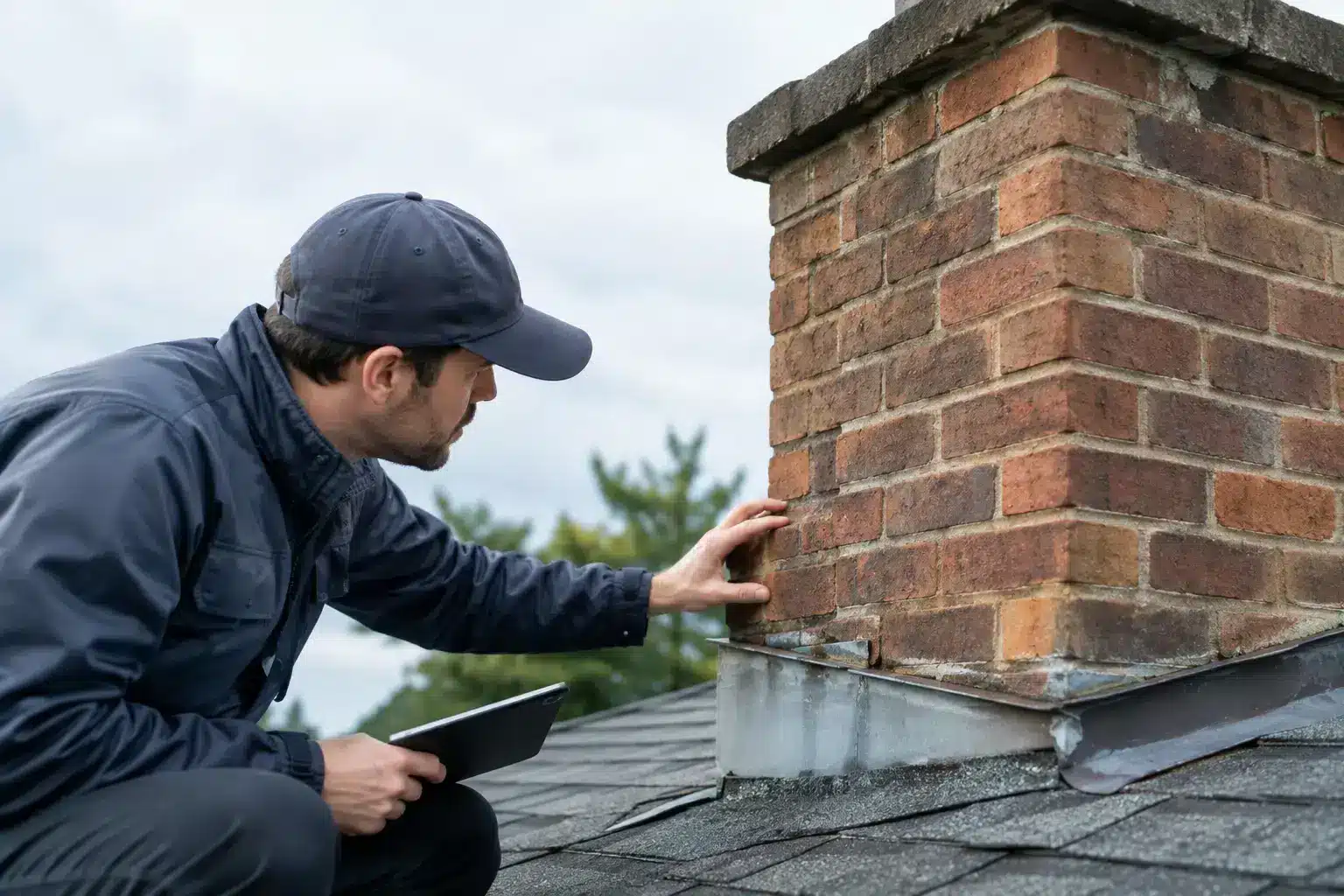

A brown ceiling stain near the fireplace does not always mean the chimney itself is leaking. Water can enter at the flashing, move along roof framing, and appear several feet away from the actual opening. That is why knowing how to identify chimney leaks starts with looking at the full chimney-to-roof transition, not just the stain you can see indoors.
For Jacksonville homeowners, chimney leak diagnosis deserves prompt attention. Heavy rain, wind-driven storms, intense sun, humidity, and coastal moisture can all wear down the materials that seal a chimney to the roof. A small failure around the chimney can lead to wet insulation, damaged decking, deteriorated framing, and interior repairs that cost far more than a targeted roof repair.
Start Inside, but Do Not Assume the Water Path
The first visible sign is often a ceiling or wall stain near the chimney. Look for yellow, brown, or gray discoloration; bubbling paint; soft drywall; peeling wallpaper; or a musty odor in the room, attic, or fireplace area. Fresh water damage may feel damp after rain, while older leaks can leave dry rings that grow darker during the next storm.
Check the ceiling around the chimney on every floor. In a two-story home, water may enter near the roofline and travel down framing before it becomes visible on a lower ceiling or wall. A stain on one side of the fireplace can also point to failed step flashing along the side of the chimney, but it is not proof by itself.
If you can safely access the attic, use a flashlight to inspect the underside of the roof around the chimney. Look for damp sheathing, dark water trails, rusted nails, wet insulation, mold-like growth, or daylight at a roof penetration. Take photos before touching anything. Documentation helps show whether the issue is active and gives a roofing professional a clearer starting point.
A word of caution: do not walk on attic framing or lean against the chimney structure. Older ceilings and insulation can conceal unsafe footing, and a wet area may make the space more hazardous.
How to Identify Chimney Leaks From Outside Clues
Most chimney leaks come from components surrounding the masonry, metal pipe, or chimney cap rather than from the chimney body alone. From the ground, binoculars can help you spot obvious concerns without climbing onto the roof.
Pay attention to the condition of shingles around the chimney. Missing, cracked, curled, loose, or heavily worn shingles can allow water beneath the roof covering. Wind can lift shingles at the uphill side of a chimney, where water naturally backs up during hard rain. Granule loss and exposed nail heads near this area also deserve inspection.
Examine the chimney flashing, which is the metal system that directs water away from the chimney and onto the roof. Proper flashing usually includes step flashing along both sides, apron flashing at the lower front edge, and counterflashing secured into mortar joints or another appropriate transition detail. If metal is bent, rusted, loose, separated from the chimney, covered with failing roof cement, or missing altogether, it may be the source of the leak.
Sealant deserves a careful look, but it should not be mistaken for a permanent flashing system. Cracked caulk at the flashing edge can admit water. At the same time, a large amount of tar or roof cement often suggests someone tried to cover a failure rather than correct the flashing detail beneath it. Sealant can be part of a repair, but it cannot reliably replace properly installed metal flashing.
Check the Chimney Cap, Crown, and Masonry
Rain can enter through the top of a chimney as well as where it meets the roof. If your chimney serves a wood-burning fireplace, a fitted chimney cap helps keep rain, leaves, nesting animals, and debris out of the flue. A missing, loose, rusted, or damaged cap can allow water directly into the system.
The chimney crown is the sloped cement surface at the top of a masonry chimney. Its job is to shed water away from the flue and masonry. Cracks, gaps around the flue tile, spalling concrete, or a flat crown that holds water can allow moisture into the chimney structure. In Florida’s heat and rain cycle, small crown cracks can worsen quickly.
Masonry itself can absorb moisture, especially when mortar joints are cracked or brick faces are flaking. White powdery deposits, known as efflorescence, may indicate that moisture is moving through the masonry. That does not automatically mean the roof is leaking, but it does mean the chimney should be evaluated for water management and repair needs.
Metal chimneys and factory-built fireplace systems have different weak points. Their storm collars, chase covers, pipe penetrations, and caps need inspection for rust, gaps, lifted edges, and failed seals. Treating a metal chimney like a masonry chimney can lead to the wrong repair, which is one reason the type of system matters during diagnosis.
Notice When the Leak Happens
The timing of water intrusion offers useful clues. A leak that appears only during a long, steady rain may relate to worn shingles, a deteriorated roof valley nearby, or water building up above the chimney. A leak that occurs during wind-driven rain often points to open flashing edges, lifted shingles, cracked siding on a chimney chase, or gaps at the cap or counterflashing.
If moisture appears after a storm but there was little rainfall, consider condensation as well. An uninsulated metal flue, poor attic ventilation, or humid air can create moisture that looks similar to a roof leak. Condensation is less common than a flashing failure in many cases, but it should not be ruled out without examining the surrounding materials.
Keep a simple record of the date, storm conditions, location of the stain, and whether it is growing. This information can help distinguish a recurring chimney leak from a one-time event caused by an extreme storm.
Common Sources That Can Be Mistaken for a Chimney Leak
A chimney is a natural suspect when a stain appears near a fireplace, but nearby roof details can send water into the same area. A roof valley, plumbing vent, skylight, dormer wall, satellite mount, or damaged ridge cap may be the true source. On homes with a chimney chase, failed siding, trim, or a rotted chase cover can be just as significant as roof flashing.
Gutters can also contribute. When a clogged gutter overflows near the chimney or a roof-to-wall transition, water can saturate fascia and roof edges, then find a path indoors. The correct repair depends on the source. Replacing a chimney cap will not solve a leak caused by failed step flashing, and resealing flashing will not correct a cracked chase cover.
This is why a thorough inspection should include the chimney, roof field, adjacent penetrations, attic evidence, and related exterior components. The goal is to find the first point where water enters, not simply the place where damage shows up.
When to Call for a Professional Chimney Leak Inspection
Call for an inspection promptly if water is actively dripping, drywall is soft, a ceiling is sagging, or you see damage after a tropical storm. It is also wise to schedule an inspection when stains return after being painted, flashing looks loose, chimney masonry is cracking, or you are buying or selling a home.
Avoid climbing onto a steep, wet, or aging roof to inspect flashing yourself. Chimney areas are especially risky because roof slopes, transitions, and wet algae can make footing unpredictable. A qualified roofing contractor can inspect the area safely, identify material failures, and explain whether a focused repair, chimney cap repair, flashing replacement, shingle repair, or related carpentry work is needed.
James Neill Roofing Repair approaches chimney leaks by documenting the actual source of intrusion before recommending work. With more than 45 years of experience and Florida license CCC057937, the focus is on repair recommendations that protect the roof, chimney transition, and interior of the home without pushing unnecessary replacement.
A chimney leak rarely improves on its own. If you see a new stain after rain or suspect a problem around the chimney, protect the area below it, photograph what you find, and arrange for a careful inspection before the next round of Jacksonville weather has a chance to make a small opening a larger repair.