
A ceiling stain near a fireplace is rarely just a ceiling problem. In Jacksonville Florida, heavy rain can work through a small opening at the chimney and travel along roof framing before it appears indoors. Proper chimney flashing repair finds and seals that entry point before repeated moisture damages decking, insulation, drywall, or wood framing.
The chimney is one of the most vulnerable transitions on a roof because it interrupts the roofing system. Shingles, underlayment, metal flashing, masonry, sealant, and often a chimney cap all meet in one small area. When one component fails, water may enter behind the visible materials rather than running harmlessly down the roof.
Why Chimney Flashing Fails in Jacksonville Florida
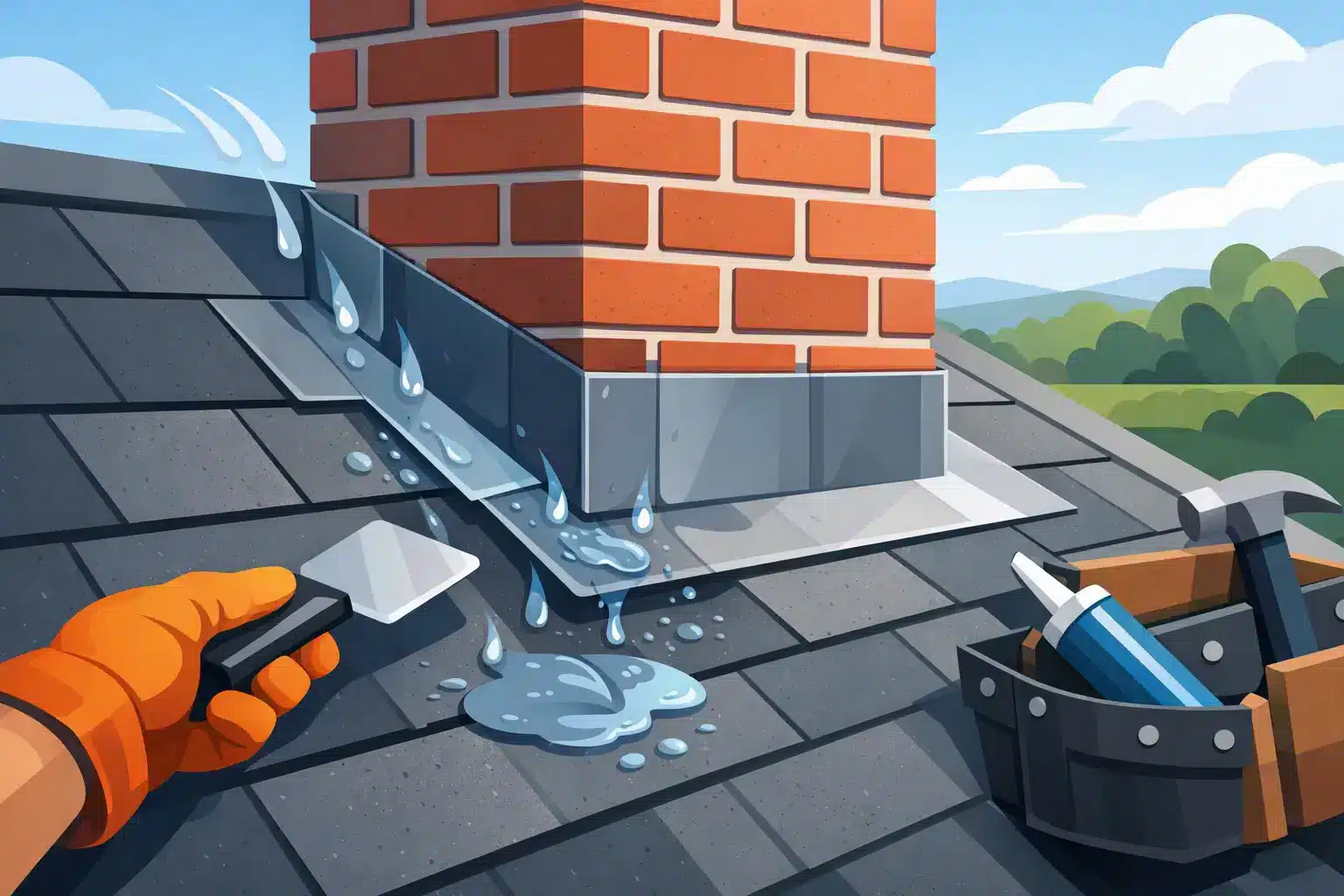
Flashing is the metal system that directs water away from the joint where the roof meets the chimney. A well-built flashing assembly is layered with the roof so water sheds over each course, not into a sealed gap that depends solely on caulk.
Florida sun, humidity, wind-driven rain, and tropical weather all place stress on that assembly. Metal can loosen or corrode over time. Mortar joints may crack. Roof movement can separate old sealant from brick, siding, or flashing. Wind can lift nearby shingles, exposing edges that once tucked securely beneath the flashing.
Age is not the only factor. A roof may be in generally good condition while the chimney transition has a localized problem. Conversely, a flashing leak may be a sign that the surrounding shingles, roof decking, chimney masonry, or underlayment also need attention. That is why the visible stain or loose piece of metal should not determine the repair by itself.
The flashing pieces that must work together
Most sloped roofs use several flashing components around a chimney. Base flashing runs along the lower edge. Step flashing is woven with the shingles along the sides. Counterflashing covers the upper edge of the base or step flashing and is set into masonry joints or otherwise secured to the chimney. A cricket may be installed on the uphill side of a wider chimney to divert water around it.
If any one of these pieces is incorrectly installed, bent, rusted through, or covered with failing roof cement, water can find a path below the roof surface. The repair must account for how those components overlap. Simply applying more sealant over an exposed gap may slow a leak temporarily, but it does not restore the intended water-shedding design.
Signs You May Need Chimney Flashing Repair
Homeowners do not need to climb onto the roof to spot every problem. Watch for changes inside and outside the home, particularly after a hard rain or wind event. Common warning signs include:
- Water stains, bubbling paint, or damp drywall near the chimney, fireplace, or upper-story ceilings
- A musty odor in the attic or visible moisture on roof framing near the chimney
- Rusted, lifted, bent, or missing flashing visible from the ground
- Cracked mortar, deteriorated sealant, or loose brick around the chimney transition
- Shingle damage or granular loss immediately around the chimney
A leak does not always show up directly beside the chimney. Water can run along rafters, nail lines, or insulation and appear several feet away from the actual opening. That is one reason a careful roof inspection is more valuable than treating the nearest stain as the source.
Diagnosis Comes Before the Repair
A reliable repair begins with inspecting the full area, not just the most obvious crack. The roof should be checked for loose or damaged shingles around the chimney, open nail holes, worn underlayment, failed pipe boots or vents nearby, and drainage issues above the chimney. The chimney itself should be evaluated for damaged mortar, cracked crown surfaces, failed counterflashing, and cap problems that allow water into the flue or masonry.
This process matters because several issues can produce similar symptoms. For example, a leak at the upper rear corner of a chimney may be caused by missing flashing, but it may also come from an absent cricket, deteriorated shingles uphill from the chimney, or water entering through cracked masonry. Repairing only the visible metal would leave the homeowner with the same leak during the next storm.
At James Neill Roofing Repair, inspection-led recommendations are meant to give homeowners clear information about the actual condition of the chimney transition and nearby roof materials. Documented findings and before-and-after photographs can help confirm what was repaired and why it was necessary.
What a Lasting Flashing Repair May Involve
The right scope depends on the condition of the chimney and roof. In some cases, a focused repair may involve resetting a loose flashing section, replacing damaged sealant in the proper locations, and repairing several disturbed shingles. If the metal is corroded, improperly layered, or repeatedly leaking, portions of the flashing assembly may need to be removed and rebuilt.
A proper rebuild often requires carefully lifting or replacing surrounding shingles so new step flashing can be integrated with the roof courses. Counterflashing may need to be secured correctly into the chimney mortar joint, then sealed at the joint to keep water out while allowing the flashing system to shed water. Where a chimney is broad enough to collect runoff on its uphill side, a cricket can be the practical solution to prevent water from pooling and forcing its way into vulnerable seams.
There are trade-offs. Reusing sound nearby shingles may keep a repair more limited, but brittle or sun-worn shingles can crack when lifted. Replacing a larger section of surrounding roofing may be the more durable choice when materials have reached the end of their useful life. A homeowner deserves an explanation of those conditions before work begins, rather than a blanket recommendation for full roof replacement.
Why caulk alone is not a complete answer
Sealant has a role in chimney work, especially at counterflashing joints and small, properly prepared connections. But a thick line of caulk or roofing cement applied over loose metal is not a substitute for layered flashing. Florida heat can dry, shrink, or crack exposed sealant. Rainwater can then move behind it, where the leak remains hidden until interior damage develops.
The goal is not to cover the path of water. It is to create a flashing sequence that gives water a clear route back onto the roof surface and toward the gutters.
Protecting the Chimney Area After Repairs
Once repairs are complete, routine observation can help prevent a small issue from becoming expensive damage. Check the attic and ceilings after severe storms, especially if the home has a history of leaks around the chimney. From the ground, look for displaced shingles, missing cap components, or flashing that appears lifted away from the chimney.
Keep gutters and roof valleys clear so water does not back up in areas near roof transitions. Trim branches that scrape the roof or drop excessive debris. If masonry mortar is cracking or the chimney cap is damaged, address it before water has another way into the system.
Annual roof maintenance is particularly useful for Jacksonville Florida area homes exposed to intense sun and seasonal storms. A focused inspection can identify loose flashing, aging sealant, storm damage, and nearby shingle deterioration while repairs are still manageable.
When to Schedule an Inspection
Schedule an inspection promptly if water has entered the home, even if the stain appears dry now. Moisture can remain in decking, insulation, and framing long after a storm has passed. It is also wise to have the chimney area checked after significant wind events, before listing or purchasing a home, and when a roof is approaching the age where individual components begin to fail.
A chimney leak is not always an emergency, but it should not be dismissed as a cosmetic issue. The smallest opening can become a route for repeated water intrusion each time rain is driven against the roof. Careful diagnosis, correctly integrated flashing, and attention to the surrounding roof give your home the protection it needs when the next Jacksonville Florida storm arrives.