

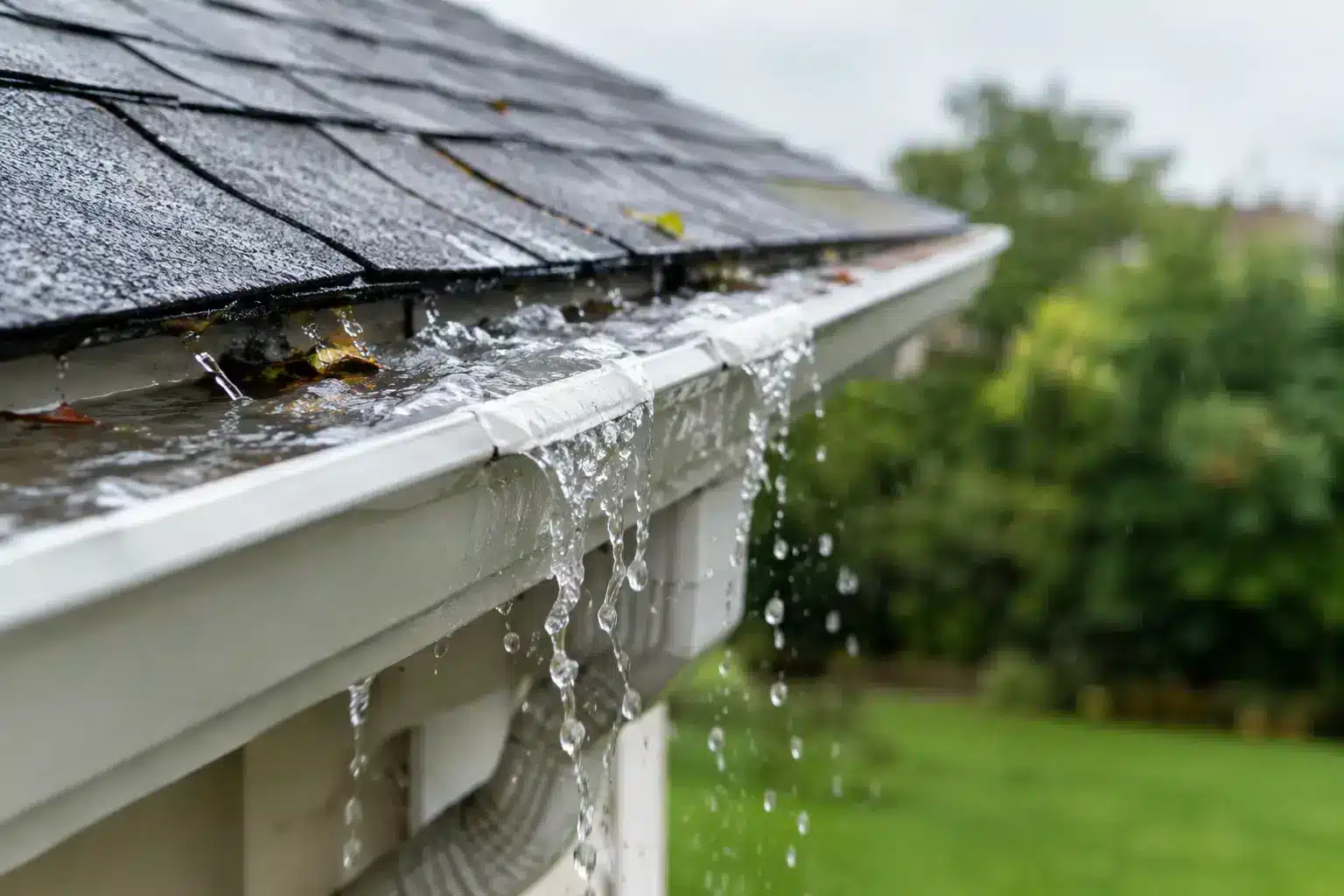

A gutter that spills over during a Jacksonville downpour can look like a simple cleaning issue. Sometimes it is. But if you are asking, why are gutters overflowing, the answer may involve the downspouts, gutter slope, roof edge, or failing fascia behind the gutter. Finding the actual cause matters because repeated overflow can soak siding, stain exterior walls, rot roof-edge materials, and send water toward the foundation.
Heavy rain is normal in Northeast Florida, especially during summer storms and tropical weather. A properly sized, properly installed gutter system should still move water away from the house. When it cannot, the water is giving you a visible warning that something needs attention.
Why Are Gutters Overflowing During Heavy Rain?
The most common reason is a blockage. Leaves, pine needles, seed pods, roofing granules, and windblown debris settle in the gutter channel and gradually restrict water flow. Water may move through the gutter during a light shower, then spill over as soon as a heavier rain arrives.
The blockage is not always easy to see from the ground. Debris often collects at the outlet where the gutter meets the downspout. That narrow opening can clog while the rest of the gutter looks reasonably clear. A clogged underground drain extension can create the same problem by preventing water from leaving the downspout.
A gutter may also overflow when the downspout is too small, crushed, disconnected, or improperly routed. If water cannot exit as quickly as it enters, it backs up in the gutter and eventually pours over the front or rear edge. Water running behind the gutter is especially concerning because it can saturate the fascia board and soffit.
Clogs Are Common, but They Are Not the Only Cause
Cleaning is a sensible first step, but it should not be treated as the answer to every overflow problem. A clean gutter that continues to spill during ordinary rain needs a closer inspection.
Incorrect Gutter Pitch
Gutters are installed with a subtle slope toward each downspout. The pitch is slight enough that most homeowners will not notice it, but it is essential. If a section is level, sloped the wrong way, or has sagged between hangers, water pools instead of draining.
Standing water adds weight. Over time, that weight can pull gutter fasteners loose and worsen the sag. In older systems, the gutter may appear to be overflowing at one spot when the real issue is that water is collecting several feet away and never reaching the outlet.
Loose Hangers or Damaged Fascia
Gutters rely on solid attachment points. When hangers loosen, the gutter lip drops and water can run over the low area. If the fascia board behind the gutter has deteriorated from long-term moisture exposure, simply tightening the fasteners may not provide a lasting repair.
This is one reason a roof-edge inspection is valuable. The visible gutter problem may be tied to soft fascia, damaged drip edge, or a roof condition that has allowed water behind the gutter for some time. Reattaching a gutter to weakened wood only postpones the repair.
Gutters That Are Too Small for the Roof
Some homes have a gutter system that is undersized for the roof area feeding it. A large or steep roof sheds rain quickly, and multiple roof planes can direct a surprising amount of water into one short gutter run. During a hard Florida storm, a standard gutter may not have enough capacity even when it is clean and correctly pitched.
This does not mean every overflow requires larger gutters. It depends on where the overflow occurs and whether it happens only in exceptional rainfall. If the problem is limited to one roof valley or one high-volume section, adding a larger downspout, adjusting the drainage layout, or installing a diverter may be more appropriate than replacing the full system.
Water Overshooting the Gutter
When water runs fast off the roof, it can pass over the gutter rather than falling into it. This is often noticeable during intense rain at roof valleys, near a second-story roof line, or along a steep shingle roof.
Missing, bent, or incorrectly installed drip edge can contribute to this issue. Drip edge is the metal installed at the roof perimeter to guide water away from the roof deck and into the gutter. Without a proper edge detail, water can cling to the underside of the shingles and run behind the gutter instead.
Roof Valleys Sending Too Much Water to One Spot
A valley is where two roof sections meet and channel water into a concentrated path. Valleys handle a large volume of runoff, so a gutter directly below one may overflow even when the rest of the system performs well.
The right correction depends on the roof and gutter layout. A qualified contractor should inspect the valley, shingles, flashing, drip edge, and gutter capacity before recommending a change. Adding a piece of metal without understanding the water path can redirect the problem to another area of the roof edge.
Warning Signs That Overflow Has Caused Damage
Do not wait for water to enter the home before taking gutter overflow seriously. Exterior signs often appear first, particularly after repeated storms.
Look for peeling paint on fascia or siding, dark staining beneath the gutter, rusted fasteners, mildew growth, and soil washout below the eaves. You may also notice gutter sections pulling away from the house, water stains on porch ceilings, or damp areas along exterior walls after rainfall.
Inside the home, ceiling stains near an exterior wall can be associated with several causes, including a roof leak, flashing problem, or water intrusion at the roof edge. The gutter should be inspected, but it should not be assumed to be the only source. Careful diagnosis prevents a visible gutter issue from masking a separate roofing repair need.
What Homeowners Can Safely Check First
After the weather clears, start from the ground. Watch where water emerges from the downspouts during the next light rain. Weak flow, no flow, or water spilling from the top of a downspout indicates a likely obstruction. Check for disconnected extensions and make sure discharge is directed away from the foundation.
You can also look along the gutter line for obvious low spots, separated joints, loose sections, and water marks on the fascia. Note whether overflow occurs along the entire run, at a single corner, below a valley, or only near one downspout. Those details help narrow down the cause.
Avoid climbing onto a wet roof or leaning a ladder against a gutter. Gutters are not designed to support ladder weight, and wet shingles can be dangerously slippery. If debris is high, the gutters are pulling away, or you suspect fascia damage, professional service is the safer choice.
The Repair Should Match the Cause
A proper repair may be as straightforward as thorough gutter and downspout cleaning. It may also require resetting the pitch, securing new hangers, replacing a damaged section, clearing underground drainage, or repairing fascia and roof-edge materials before the gutter is reinstalled.
When overflow occurs at a valley or steep roof section, the inspection should include the roof itself. Damaged shingles, loose flashing, missing drip edge, and poorly managed runoff can all affect how water reaches the gutter. Treating only the gutter can leave the underlying water-management issue unresolved.
James Neill Roofing Repair approaches roof-edge and gutter concerns by inspecting the full water path, from the roof surface to the downspout discharge. With more than 45 years of experience and Florida license CCC057937, the focus is on clear findings and targeted work rather than recommending broad replacement when a focused repair will protect the property.
Preventing Future Gutter Overflow
Most gutter systems benefit from cleaning at least twice each year, with additional service after major storms or periods of heavy leaf and pine-needle buildup. Homes near mature trees may need more frequent attention. Gutter guards can reduce large debris, but they are not maintenance-free and may not solve pitch, capacity, or roof-valley issues.
After cleaning, confirm that water flows freely through every downspout and away from the home. Keep an eye on the first few hard rains. If water still spills over, take photos or video from a safe location and arrange an inspection while the pattern is fresh.
Water should leave the roof, travel through the gutter, and discharge safely away from the house without touching the fascia, siding, or foundation. When it does not, prompt attention is a practical way to protect the roof edge, prevent avoidable interior damage, and keep a small drainage issue from becoming a larger repair.