

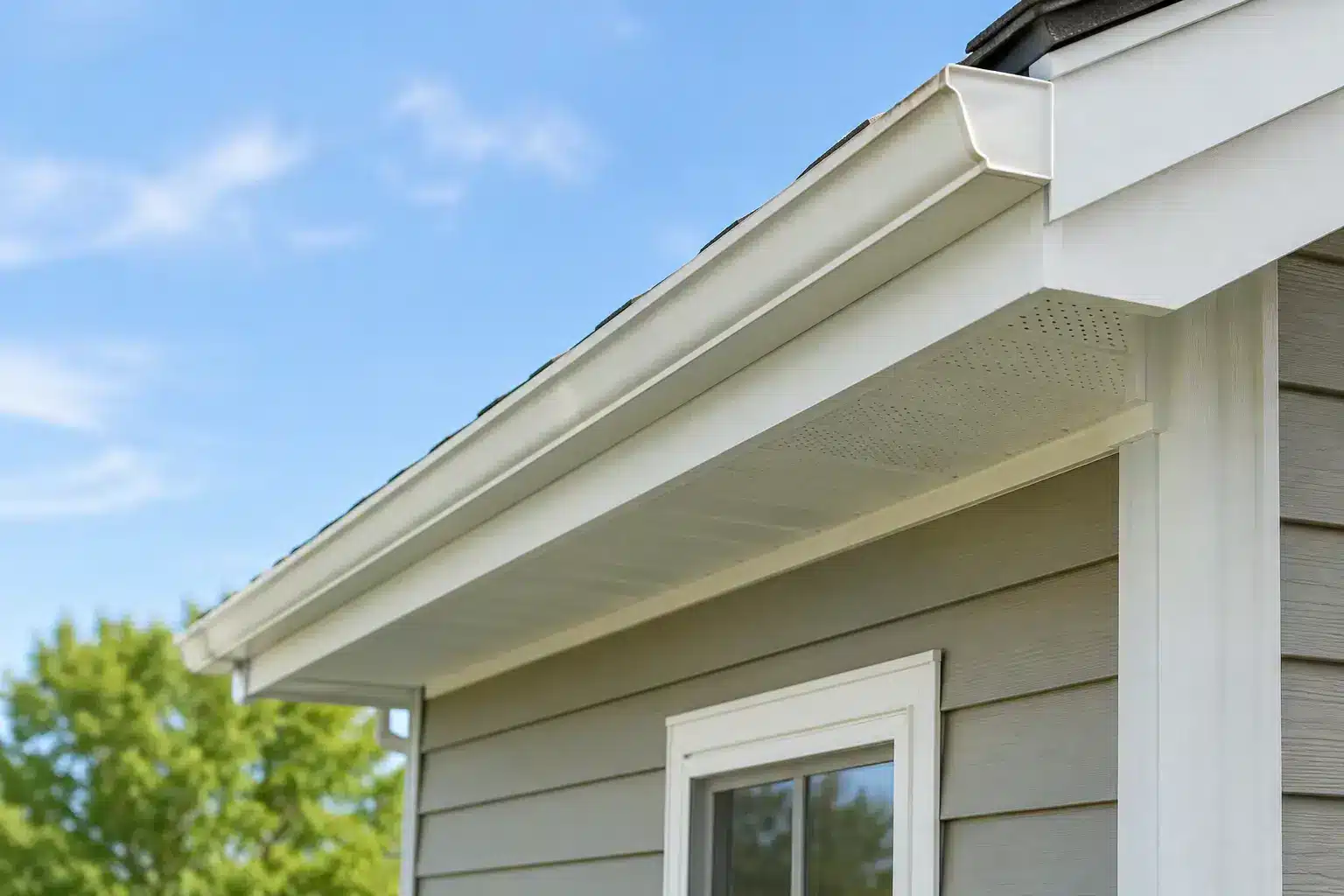

A soft board at the roof edge can look like a small carpentry issue until rain begins reaching the soffit, attic, or exterior wall. Homeowners often ask, when should fascia be replaced rather than repaired? The answer depends on the condition of the wood or trim, but also on why it deteriorated in the first place. Replacing a damaged board without correcting a roof leak, overflowing gutter, or failed flashing can lead to the same problem returning.
Fascia is the long board installed along the lower edge of a roof. It creates a finished appearance, supports the gutter system on many homes, and protects the exposed ends of the roof framing. In Jacksonville, repeated heavy rain, strong sun, humidity, wind-driven water, and coastal moisture can all shorten the life of fascia, especially when a small roof or gutter problem goes unaddressed.
When Should Fascia Be Replaced Instead of Repaired?
Fascia should be replaced when it has lost its structural strength, has widespread rot, or cannot securely hold gutters and fasteners. A small area of superficial peeling paint may only need preparation, priming, and repainting. A board that feels soft, flakes apart, bows away from the roof edge, or has decay extending behind the visible face needs closer attention.
The key distinction is whether the material is still sound. Surface staining and minor weathering can often be repaired. Wood that has absorbed moisture for a long period is different. Once decay compromises the board, covering it with caulk or paint may improve its appearance briefly, but it will not restore its strength.
Replacement is usually the sensible choice when you notice several of these conditions:
- Soft, spongy, cracked, or crumbling wood along the roof edge
- Gutters pulling loose, sagging, or dropping fasteners after rain
- Rot that extends across a long section of fascia or into the rafter tails behind it
- Recurring paint failure, dark water stains, mold, or visible insect damage
- Water entering the soffit, attic, wall, or ceiling near the eaves
A single loose gutter spike does not always mean the fascia has failed. However, it should not be ignored. It can be an early warning that water has weakened the wood behind the gutter.
Visible Damage Does Not Always Show the Cause
Fascia damage is often a symptom, not the starting point. Water can reach the board from above when shingles, drip edge, flashing, or roof decking fail near the eave. It can also come from below or in front when gutters clog, overflow, or hold standing water against the fascia.
A roof edge should shed water into the gutter, not behind it. If the gutter has been installed too low, has pulled away, or lacks proper support, rain can pass behind the gutter and soak the fascia over and over. A missing or improperly installed drip edge can create a similar pattern. On homes with valleys, chimney transitions, skylights, or low-slope areas nearby, water may travel farther than expected before showing itself at the eaves.
This is why a proper inspection matters before replacement begins. The damaged fascia should be examined alongside the roof covering, gutter pitch, drip edge, soffit, roof decking, and surrounding trim. A focused repair addresses the actual water path instead of replacing material that will soon be exposed to the same moisture.
Look for Trouble After Heavy Rain
The best time to notice a drainage problem is shortly after a hard rain. Watch for water spilling over the gutter edge, running behind the gutter, or dripping from joints and corners. Check whether gutters remain full of debris or visibly pull away from the house.
From ground level, look for dark streaks below the roofline, bubbling paint, rusted gutter hardware, or sagging sections. Do not climb onto a roof or lean a ladder against questionable fascia. Weak boards may not support weight, and wet roof surfaces are hazardous.
How Much Fascia Needs Replacement?
The right scope depends on the condition of the surrounding material. Replacing only the visibly rotten section can be appropriate if the adjacent fascia is dry, solid, and properly protected from water. This targeted approach can preserve sound material and keep the repair cost reasonable.
On the other hand, patching a small area may not make sense when decay continues several feet in either direction or when the board has repeated failures along the same roof edge. The contractor should check behind the fascia before deciding where replacement begins and ends. Hidden damage to rafter tails, roof decking, or soffit framing may require additional carpentry, while a sound structure may need only fascia replacement and drainage correction.
Material choice also matters. Wood fascia can provide a traditional appearance and is practical for matching existing trim, but it needs proper priming, sealing, and maintenance. PVC and composite fascia resist rot, though they must be installed correctly and may not suit every existing roof edge or architectural detail. Aluminum-wrapped fascia can reduce paint maintenance, but it should not be installed over active rot. Trapping wet, deteriorated wood behind a cover hides the problem rather than correcting it.
Protecting the Roof Edge During Fascia Work
Replacing fascia is not simply a matter of removing a board and attaching a new one. The work often involves temporarily removing or loosening gutters, checking the drip edge, and making sure the new material fits tightly at the soffit and roofline. If a gutter caused the original damage, it should be rehung with the correct pitch and secure fasteners after the fascia is restored.
The roof edge must also be sealed and detailed so rain is directed away from the structure. That may include correcting damaged shingles at the eave, replacing deteriorated drip edge, repairing a nearby flashing defect, or clearing debris from the gutter system. For homes with a roof leak near an eave, the attic side may need inspection as well. Wet insulation, darkened decking, or mildew odors can reveal moisture that is not visible outdoors.
In Florida’s humid climate, delaying these repairs can allow a small issue to spread. Moist wood is more vulnerable to fungal decay and insects, while leaking water can damage soffits, siding, interior drywall, and electrical components. Prompt attention is usually less expensive than waiting for a gutter to detach or a ceiling stain to appear.
Repair, Maintenance, or Replacement: Make the Decision With Evidence
Not every worn fascia board calls for full replacement, and not every water stain means the roof needs to be replaced. The practical decision comes from documented conditions: how much material is damaged, whether the wood remains structurally sound, and where the water is entering.
Ask for clear findings before approving work. Photos of the affected roof edge, gutter attachment area, drip edge, and any concealed decay help explain the recommendation. A good repair plan should identify what will be replaced, what is being repaired, and how the original moisture source will be corrected.
For Jacksonville homeowners, regular gutter cleaning and roof-edge inspections are simple ways to catch trouble early, particularly after tropical storms and periods of heavy rain. Pay attention to small changes around the eaves. Peeling paint, a loose gutter, or a dark spot beneath the roofline is often easier to address before the fascia, soffit, and framing are all affected.
James Neill Roofing Repair approaches damaged fascia as part of the whole roof-edge system, not as an isolated cosmetic repair. With more than 45 years of hands-on experience and Florida license CCC057937, the focus is on locating the source of deterioration and recommending only the work needed to protect the home.
If your fascia is soft, stained, separating from the roofline, or no longer holding the gutter securely, schedule an inspection before the next major rain exposes a larger problem. Clear diagnosis and timely workmanship can protect the roof edge, the interior of your home, and the people who rely on it.