

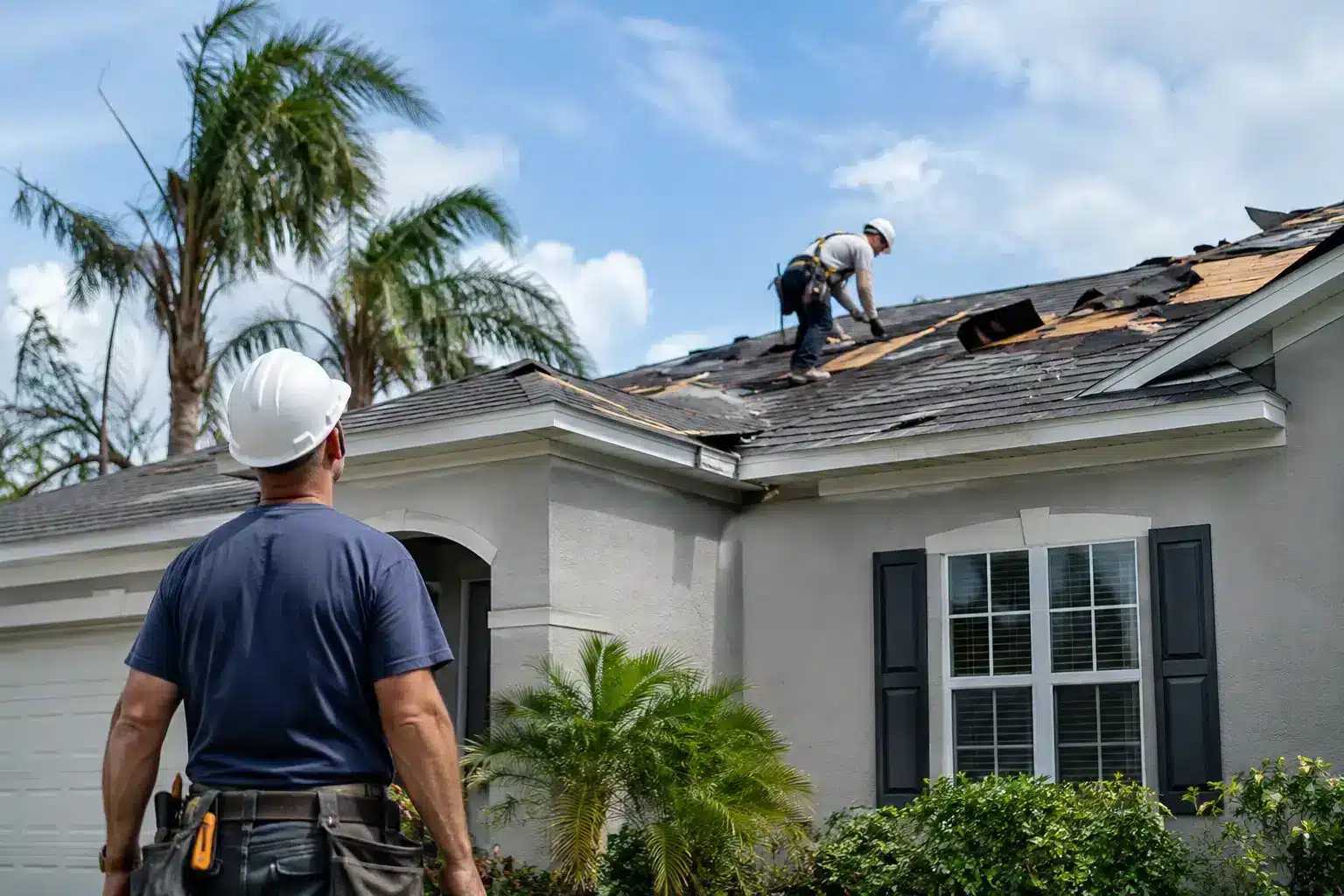

A hard rain may leave a brown ceiling stain, but the water often entered the roof somewhere else. The most useful storm repair examples show why a careful inspection matters: wind can lift a shingle edge, rain can enter at a pipe boot or chimney transition, and water can travel along framing before it appears indoors. Repairing only the visible symptom can leave the actual opening in place.
Jacksonville homes face a demanding combination of heavy rain, wind, intense sun, humidity, and, in coastal areas, moisture exposure. After a storm, the right repair depends on the damaged component, the age and condition of surrounding materials, and whether the roof is still shedding water as designed. A focused repair can be a sensible way to protect the home without treating every storm issue as a full roof replacement.
Storm Repair Examples That Need Careful Diagnosis
Lifted, creased, or missing shingles
Wind does not have to remove an entire section of roofing to cause a leak. A lifted shingle may crease at the nail line, break its seal, or expose the underlayment beneath it. From the ground, the roof can look mostly normal. Up close, however, an experienced inspector may find loose tabs, damaged fasteners, cracked shingles, or exposed nail heads.
The appropriate repair may involve replacing damaged shingles, securing adjoining shingles where compatible, and checking the underlayment and decking beneath the affected area. Matching the repair to the existing roof matters. A new shingle installed over deteriorated surrounding material may not provide a lasting solution if the nearby shingles are brittle or no longer sealing properly.
A leak around a chimney or wall transition
Chimneys, sidewalls, and roof-to-wall intersections are common trouble spots after wind-driven rain. The shingles may be intact, yet water can enter where flashing has loosened, corroded, separated from masonry, or been covered by an earlier patch that has failed.
A correct repair often means examining the full transition, not simply applying sealant over the area where water appeared. Depending on the condition, the work may include repairing step flashing, counterflashing, adjoining shingles, or a deteriorated chimney cap. Sealant has a role in certain details, but it is not a substitute for properly layered flashing that directs water back onto the roof surface.
Water entering around a skylight
Skylights are valuable for natural light, but they create a roof penetration that must remain properly flashed and sealed. After a storm, homeowners may see damp drywall at the skylight shaft, dripping at a corner of the frame, or staining several feet away. The leak could come from failed flashing, worn seals, cracked surrounding shingles, or the skylight unit itself.
The repair decision depends on the source and the age of the skylight. If the unit is sound and the flashing system is the problem, targeted flashing and roof repairs may be appropriate. If the skylight frame, glazing seal, or surrounding materials have deteriorated, replacement can prevent repeat water intrusion and avoid opening the roof again soon afterward.
Damaged pipe boots and roof penetrations
Plumbing vent pipes, exhaust vents, and other penetrations are small details with a large responsibility. Rubber pipe boots can crack from sun exposure. Metal flashing can loosen. Wind-driven rain can work under a failed collar and follow the pipe into the attic, sometimes causing a stain near a bathroom or hallway ceiling.
This is one of the more straightforward storm repair examples, but the nearby roof still needs inspection. A contractor should check whether water affected the decking, whether fasteners are secure, and whether adjacent shingles were disturbed during the storm. Replacing a failed boot without reviewing its surrounding materials can miss the beginning of a larger problem.
Flat roof ponding and membrane damage
Flat and low-slope roofs require a different approach than shingle roofs. Heavy rain can reveal clogged drains, deteriorated seams, split coatings, cracked flashing at parapet walls, or areas where water remains after the roof should have drained. Standing water does not always mean the roof is leaking immediately, but repeated ponding can accelerate deterioration.
A practical repair may include cleaning drainage paths, repairing seams or penetrations, addressing damaged flashing, and applying a compatible coating where the roof system and surface condition support it. Coating over wet, loose, or failing material is not a lasting answer. The roof needs to be dry, properly prepared, and evaluated for trapped moisture before a coating is recommended.
Loose gutters, fascia, and storm-damaged eaves
Not every storm-related roof repair is on the roof field itself. Overflowing or detached gutters can direct water behind fascia boards and into soffits. Wind can loosen gutter hangers, while heavy runoff can expose weak spots at the eaves. On older homes, the visible gutter issue may be connected to damaged fascia or soft roof-edge wood.
The repair should address both water management and the supporting materials. Reattaching a gutter to deteriorated wood may only postpone the next failure. Replacing damaged fascia, correcting the gutter slope, and clearing debris helps keep water moving away from the roof edge, siding, and foundation.
What Separates a Useful Repair From a Quick Patch
A storm repair should begin with the path of the water, not just the stain or missing shingle. Interior signs help narrow the search, but they rarely identify the exact entry point. Water can move along rafters, decking, or insulation before it becomes visible inside.
A thorough inspection looks at the affected roof area and the surrounding components: shingles or membrane, flashings, penetrations, fasteners, valleys, chimney transitions, skylights, gutters, and roof-edge details. Attic conditions can also provide important clues, such as damp insulation, darkened decking, rusted nail tips, or active moisture after rainfall.
Documentation is helpful, especially after a significant storm. Clear photographs of damaged materials and completed repairs give homeowners a record of what was found and what work was performed. This can be useful for maintenance planning, real estate transactions, and insurance conversations, although an inspection does not guarantee insurance coverage or determine a claim outcome.
When Repair Makes Sense and When More Work May Be Needed
Many storm issues can be resolved with targeted repair when damage is limited and the surrounding roof remains in serviceable condition. A few wind-damaged shingles, a failed pipe boot, loose flashing, or a localized flat-roof seam problem may not justify replacement of the whole roof.
It depends, however, on the roof’s overall condition. If shingles are broadly brittle, granule loss is extensive, decking has widespread moisture damage, or several repairs are failing across the roof, a homeowner deserves a clear discussion about the cost and expected life of continued repairs. Honest recommendations should explain both options rather than using a storm event to pressure a replacement.
Prompt action is especially worthwhile when there is active leaking. Move belongings away from the affected area, collect dripping water safely, and avoid climbing onto a wet roof. If ceiling material is sagging or electrical fixtures are affected, treat it as a safety concern and contact the appropriate professional promptly.
For homeowners in Jacksonville and nearby communities, storm damage is often a detail problem before it becomes a major interior repair. James Neill Roofing Repair approaches those details through inspection-led diagnosis, documented findings, and repairs matched to the actual source of water intrusion. A careful look after severe weather can protect the roof, the home, and the people living beneath it.