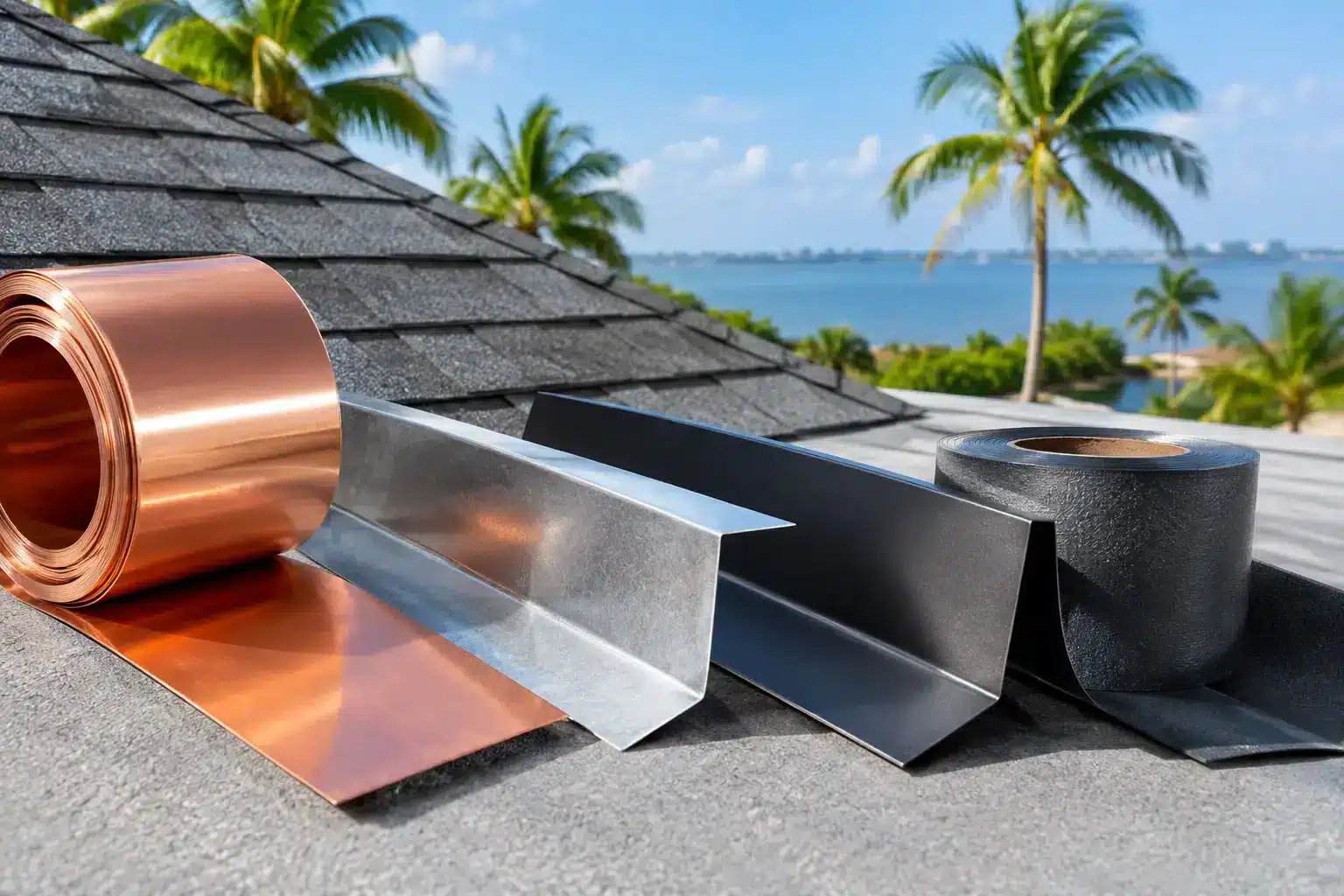

A roof can have sound shingles and still leak when flashing has failed. The best materials for roof flashing are the materials that fit the roof system, the penetration or wall transition, and the weather exposure around the home. In Jacksonville, that means planning for intense sun, wind-driven rain, high humidity, and, in coastal communities, salt-laden air.
Flashing is the formed material that directs water away from the joints shingles alone cannot protect. You will find it at chimneys, skylights, plumbing vents, valleys, roof-to-wall intersections, dormers, and edges. When it is correctly installed, water moves over the flashing and off the roof. When it is corroded, poorly lapped, cracked, or covered with excess sealant, water can find its way into the decking, attic, walls, and ceilings.
Best Materials for Roof Flashing: What Fits the Job?
There is no single flashing material that is right for every Jacksonville roof. The correct choice depends on the roof covering, the detail being repaired, nearby metals, the home’s distance from the coast, and whether surrounding shingles or roofing membrane are still serviceable. A lasting repair starts by finding the actual water entry point, not simply replacing the most visible piece of metal.
Galvanized steel: practical for many shingle roofs
Galvanized steel is one of the most common flashing materials on residential asphalt shingle roofs. It is steel protected with a zinc coating, giving it good strength, easy formability, and a reasonable cost. Properly installed galvanized flashing works well for step flashing along sidewalls, headwall flashing, chimney details, and certain vent applications.
Its trade-off is corrosion resistance. Jacksonville’s humidity and frequent rainfall can shorten the life of thin or damaged galvanized metal, especially where cut edges, fastener holes, and seams remain exposed. A flashing repair should use adequately heavy material, correct overlaps, and appropriate fasteners. If rust has begun, coating over the visible area may hide the symptom but does not repair a weakened or improperly integrated flashing system.
Galvanized steel is often a sensible choice when it matches existing roof components and surrounding roof materials are in good condition. It is less appealing when a home is near saltwater or when the repair is expected to outlast an aging roof by many years.
Aluminum: lightweight, but not universal
Aluminum flashing is lightweight, corrosion-resistant in many conditions, and commonly used around roof edges, vents, and some wall transitions. It does not rust like steel, which makes it attractive in Florida’s wet climate. It can also be a good match for aluminum gutters, soffit components, and certain roof edge systems.
However, aluminum is not automatically the best selection near masonry or other metals. Wet mortar and some treated lumber products can contribute to aluminum corrosion. Aluminum also should not be placed directly against copper, because dissimilar metals can create galvanic corrosion when moisture is present. That risk is particularly relevant on roofs exposed to regular rain and coastal moisture.
For a standard shingle roof, properly coated aluminum can perform well. Around a chimney, however, the detail needs more consideration. The masonry condition, counterflashing design, and the material already installed all matter. A contractor should inspect the complete transition instead of replacing one loose piece and hoping the leak stops.
Copper: long service life for critical details
Copper is among the longest-lasting materials used for roof flashing. It is highly durable, handles complex bends well, and develops a protective patina over time. On a home with a chimney, slate, tile, or premium roofing system, copper can be an excellent choice for step flashing, valley flashing, chimney flashing, and custom transitions.
The main consideration is cost. Copper costs more than galvanized steel or aluminum, both in material and skilled installation. It also needs to be kept separate from aluminum and some other metals unless a proper isolation method is used. Mixing metals without planning for compatibility can lead to premature deterioration in the lower-cost material.
Copper makes the most sense when the roof and surrounding components have enough remaining life to justify it. Installing premium copper flashing beneath shingles that are already near the end of their life may not be the most cost-effective repair. In that situation, a focused repair and a future reroofing plan may protect the home better.
Stainless steel: strong protection for harsh exposure
Stainless steel is a high-performing flashing option where strength and corrosion resistance are priorities. It is particularly worth considering for homes near Jacksonville Beach, Neptune Beach, Atlantic Beach, or other coastal locations where salt exposure can be hard on ordinary galvanized metal.
Stainless steel generally costs more and can be more difficult to fabricate than galvanized steel. The grade of stainless matters as well. A material suitable for ordinary inland exposure may not provide the same long-term resistance in a coastal environment. For that reason, material selection should be based on the specific location and detail, not a broad claim that all stainless steel performs the same.
For complex chimney or roof-to-wall repairs, stainless steel can offer a strong, low-maintenance solution when properly integrated with the roofing system. Correct bends, laps, fastener placement, and water-shedding design remain just as necessary as the quality of the metal.
Flashing Material Must Match the Roof Type
Asphalt shingle roofs rely on layered flashing details. Step flashing is woven between shingle courses where the roof meets a wall. Counterflashing covers the top edge of the step flashing at a wall or chimney. Base flashing redirects water at the lower portion of a chimney or skylight. Each piece has a role, and the pieces must overlap in the direction water travels.
A common leak repair mistake is adding roof cement or caulk over a failed joint without correcting the laps underneath. Sealant can be useful as part of a properly designed detail, but it should not be the primary defense against water. Florida sun can dry, shrink, and crack exposed sealant. A repair that depends entirely on a bead of caulk often becomes a repeat leak.
Flat and low-slope roofs require different materials and methods. Flashing on modified bitumen, built-up roofing, TPO, PVC, or coating systems may use membrane-compatible accessories, reinforced fabric, metal edge components, and manufacturer-approved sealants. A material that works at a shingle chimney transition may be completely wrong at a low-slope parapet wall or drain detail.
Skylights and plumbing vents also require system-specific components. Many skylight leaks are caused by deteriorated surrounding shingles, improper head flashing, or failed curb details rather than the glass itself. Similarly, a cracked rubber pipe boot can mimic a flashing failure. Accurate diagnosis prevents homeowners from paying for a larger repair than the roof actually needs.
Conditions That Affect Flashing Life in Jacksonville
Roof flashing does not fail on a calendar alone. Its service life is affected by roof slope, drainage, wind exposure, installation quality, material thickness, and the condition of adjoining shingles or membranes. A shaded roof may retain moisture longer. A roof exposed to strong afternoon sun may experience more expansion and contraction. A home close to the ocean faces a different corrosion risk than a home farther inland.
Storm damage can also loosen flashing without making the problem obvious from the ground. Wind can lift shingle edges around step flashing, pull fasteners loose, or open a transition where a roof meets a wall. Heavy rain then tests every weak point. A brown ceiling stain may appear several feet from the actual roof opening because water can travel along decking or framing before it becomes visible inside.
Watch for rust streaks, lifted or bent metal, cracked sealant, loose shingles near a wall or chimney, staining around a skylight, and recurring leaks after hard rain. These signs warrant an inspection, especially before a small opening turns into wet insulation, rotted decking, damaged fascia, or interior repairs.
Choose Workmanship, Not Just a Better Metal
Even the best flashing material will not protect a home if it is installed over damaged decking, trapped behind the wrong shingle course, fastened where water can enter, or joined to incompatible metals. The repair should account for the entire assembly: roof covering, underlayment, flashing, masonry or siding, fasteners, and drainage path.
For example, a chimney leak may involve cracked mortar joints, missing counterflashing, deteriorated step flashing, and worn shingles at the chimney base. Replacing only the visible metal may not solve the leak. A careful inspection identifies which components have failed and recommends only the work needed to restore a reliable water-shedding transition.
James Neill Roofing Repair approaches flashing concerns this way: inspect the source, explain the surrounding conditions in plain language, and document the repair so homeowners can see what was corrected. Whether the right answer is galvanized steel, aluminum, copper, stainless steel, or a membrane-compatible flat-roof detail, the goal is the same – protect the property with a repair built for the roof that is actually there.
If you see staining, loose flashing, or a leak after a Jacksonville storm, address it while the repair can remain targeted. A prompt inspection can turn an uncertain roof symptom into a clear, practical plan for protecting your home and family.