

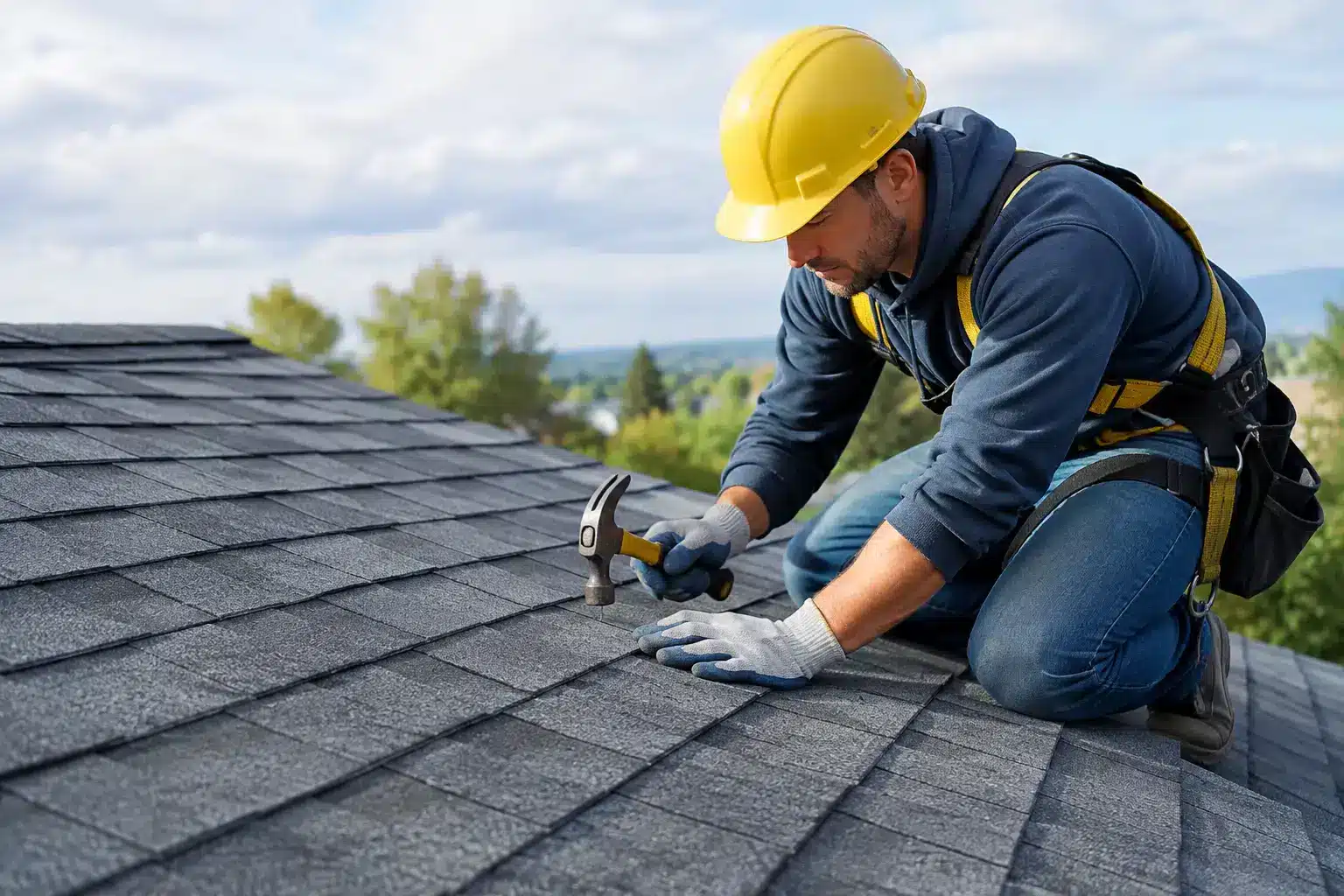

A water stain may show up in the middle of a bedroom ceiling, but the opening that let water in could be several feet away. Rain can travel along roof decking, framing, or insulation before it becomes visible inside. That is why homeowners, and building owners often ask, can roof repairs stop leaks? Yes, when the repair addresses the actual entry point and the materials around it are still in repairable condition.
A tube of sealant placed where water appears is rarely a lasting answer. A proper roof leak repair starts with identifying the failed component, checking how water moves across the roof, and repairing the surrounding system so the same issue does not return with the next Jacksonville downpour.
Can Roof Repairs Stop Leaks Permanently?
Targeted roof repairs can stop leaks for years, and sometimes for the remaining service life of the roof. The result depends on the source of the leak, the age and condition of the roof, and whether the repair includes damaged surrounding materials rather than only the most obvious spot.
For example, a few wind-lifted or cracked shingles may allow water beneath the roofing surface. Replacing the affected shingles, restoring the underlayment where needed, and securing the area correctly can resolve the problem without replacing the entire roof. The same is true of a separated flashing detail at a chimney, wall, vent pipe, or skylight. These are localized failures that often respond well to skilled repair.
There are limits. If shingles are brittle across the entire roof, decking is extensively deteriorated, or multiple leak areas point to a roofing system near the end of its useful life, repair may only provide temporary relief. An honest inspection should distinguish between a sensible repair and a condition where continued patching is likely to cost more over time.
Why Roof Leaks Are Often Misdiagnosed
The visible symptom is not always the cause. Water entering near a ridge, pipe boot, chimney transition, or skylight can run downslope or along roof framing before reaching the ceiling. A stain near an exterior wall may even come from failed siding, fascia, or a gutter overflowing against the roof edge.
Jacksonville Florida weather makes diagnosis more challenging. Intense sun can dry and crack sealants, humidity can expose small weaknesses over time, and heavy rain can drive water under materials that appeared secure during a quick visual check. Wind from tropical storms can loosen shingles, ridge caps, flashing, and roof-mounted components without creating an immediate, obvious hole.
A careful inspection looks beyond the stain. It considers the roof slope, shingle pattern, flashing laps, fasteners, penetrations, drainage paths, attic conditions, and signs of prior repairs. The goal is to explain where water entered and why that component failed, not simply apply a broad coating or caulk every nearby joint.
Common Repairs That Can Stop a Roof Leak
Shingle and Underlayment Repair
Missing, torn, curled, or improperly fastened shingles can expose the layers beneath them. A professional repair includes removing damaged material without harming neighboring shingles, evaluating the underlayment, and installing compatible replacement shingles with the proper overlap and fastening pattern.
This is particularly useful after wind damage or when a small area has deteriorated faster than the rest of the roof. However, replacement shingles may not match faded older shingles exactly. That is usually a cosmetic trade-off worth discussing, especially when the rest of the roof remains in sound condition.
Flashing Repair at Chimneys and Walls
Flashing is the metal system that directs water away from transitions where roofing meets a chimney, wall, or other vertical surface. It is one of the most important parts of leak prevention and one of the most frequently misunderstood.
Loose counterflashing, cracked sealant, corroded metal, or incorrectly layered flashing can allow water behind the roofing materials. A lasting repair may require removing shingles or siding around the transition, replacing failed flashing sections, and reinstalling materials in the correct sequence. Surface sealant may be part of the work, but it should not be the only defense.
Skylight and Roof Penetration Repairs
Skylights, plumbing vents, exhaust vents, and other roof penetrations create necessary openings in a roofing system. Their flashing and seals must remain watertight while handling expansion, contraction, sun exposure, and wind-driven rain.
A cracked vent boot can often be replaced directly. A leaking skylight may need new flashing, a new curb detail, or full replacement if the frame, glazing, or surrounding structure has failed. Replacing a skylight during roof work can make sense when it is old or repeatedly leaking, but a sound skylight should not be replaced simply because it is nearby.
Flat Roof Leak Repair and Coatings
Low-slope and flat roofs leak differently than shingle roofs. Ponding water, open seams, failing penetrations, split membrane material, and deteriorated edge details are common concerns. The correct repair depends on the existing roof system and whether moisture has reached the substrate below.
A roof coating can extend the life of an appropriate flat roof, but it is not a cure for trapped moisture, failed decking, or active seam separation. Preparation matters. The roof must be cleaned, repaired, dry, and compatible with the coating system before application. Otherwise, a coating can conceal a problem while water continues damaging materials below.
When a Repair Is More Than a Roof Repair
Not every leak originates in the field of the roof. Damaged fascia, sagging eaves, rotten roof-edge wood, clogged gutters, loose siding, and failed chimney caps can all contribute to water intrusion. These conditions matter because water does not respect service categories. It will follow any available path into vulnerable wood, insulation, walls, and ceilings.
For example, a clogged gutter can overflow behind the gutter line and soak fascia boards. Over time, this can affect the roof edge and create conditions that look like a shingle leak. Repairing the shingles without correcting the drainage issue may leave the homeowner with the same problem during the next period of heavy rain.
A complete recommendation should account for related conditions while keeping the scope reasonable. Homeowners deserve clear information about what must be repaired now, what should be monitored, and what is optional maintenance rather than urgent work.
Signs You Should Schedule a Leak Inspection Soon
Do not wait for a ceiling to collapse before investigating a suspected leak. Dark spots, peeling paint, damp insulation, mildew odors in the attic, bubbling drywall, and water around a skylight or chimney are all reasons to act promptly. Outside, look for displaced shingles, exposed nail heads, cracked pipe boots, rusted flashing, granules collecting in gutters, and debris blocking drainage.
After a strong storm, it is wise to inspect from the ground and inside the attic if it is safe to do so. Avoid walking on the roof. Wet surfaces, hidden weak decking, and steep slopes create real safety risks. Taking photographs of interior staining and noting when it appears can help identify patterns, especially if a leak occurs only with wind-driven rain from a certain direction.
What a Reliable Repair Process Looks Like
A dependable roofing contractor should inspect the affected area and the surrounding roof before recommending work. You should receive a plain-language explanation of the source, the condition of nearby materials, and the repair approach. Photos before and after the work are useful documentation, particularly for homeowners planning to sell, buyers reviewing inspection findings, or anyone who wants proof of what was corrected.
At James Neill Roofing Repair, inspection-led repair work is designed around that process. With more than 45 years of experience and Florida license CCC057937, the focus is on locating the source of water intrusion before recommending a repair or discussing replacement. That approach helps Jacksonville-area homeowners avoid paying for generalized work that does not solve the leak.
If an estimate only says “seal leak,” ask what is being sealed, why it failed, and whether the surrounding flashing, shingles, underlayment, or wood has been evaluated. Specific answers are a good sign that the repair is based on evidence rather than guesswork.
A small leak can remain small only if the source is corrected early. Prompt, properly matched roof repair protects more than shingles – it helps protect the framing, ceilings, belongings, and peace of mind inside your home.