
A chimney leak can look like a roof problem from inside the house: a brown ceiling stain, damp framing, or a musty odor near the fireplace. But when water is entering through an open, rusted, loose, or poorly fitted chimney top, chimney cap replacement may be the focused repair that protects the chimney structure and the roof around it.
For Jacksonville Florida homeowners, this is not a minor cosmetic detail. Heavy rain, humidity, salt air near the beaches, wind, and tropical storms are hard on exposed metal components. A cap that is missing or deteriorated gives water and animals a direct route into an area that should stay protected.
What a chimney cap does for your home
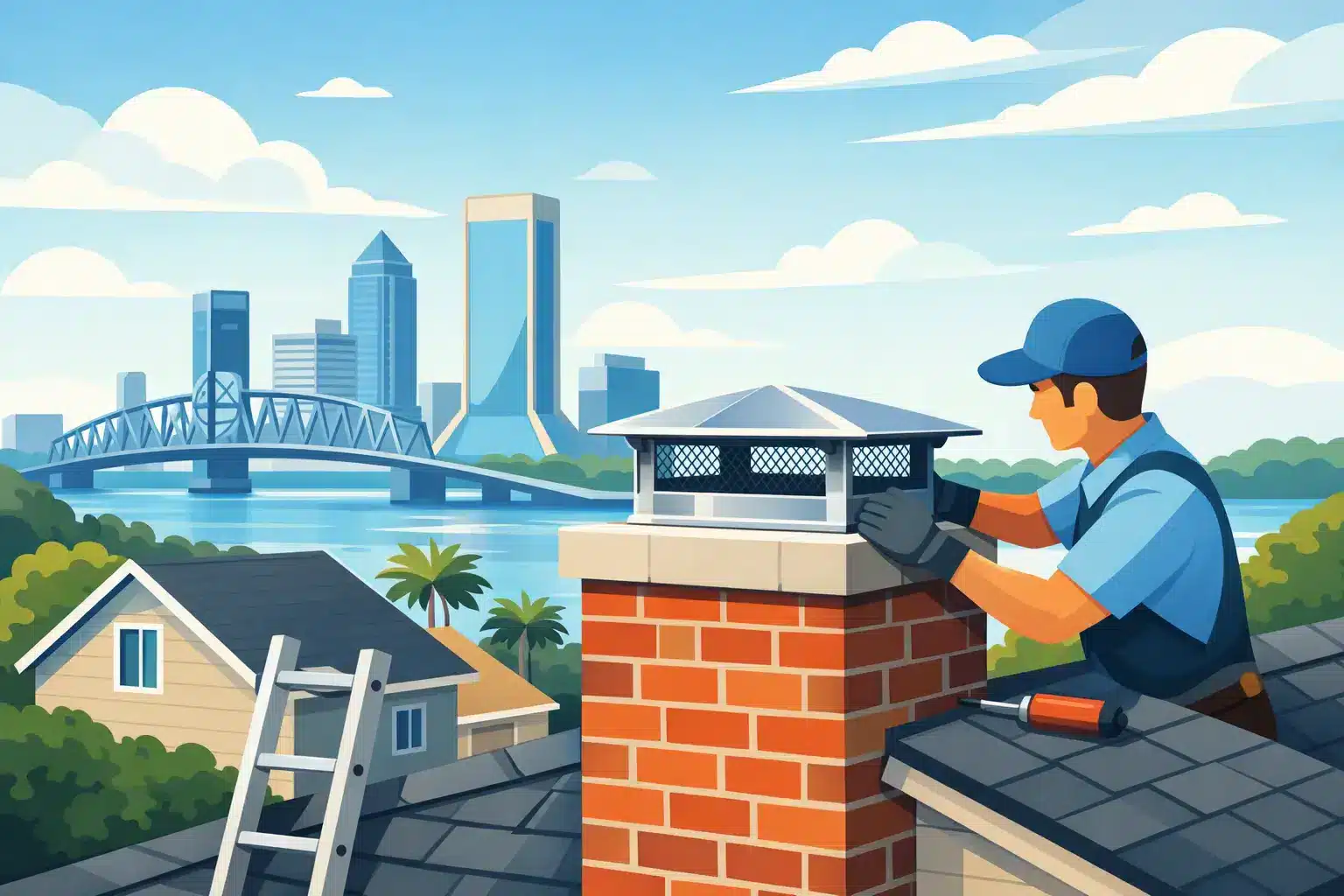
A chimney cap is the metal cover installed over the top opening of a chimney or a factory-built metal chimney, and older homes it can be also made of brick with a mortar crown,and a flue cap. It is designed to keep rain out while allowing smoke and combustion gases to vent safely. Most caps include mesh screening around the sides to discourage birds, squirrels, raccoons, and other animals from entering the flue.
A properly fitted cap also helps limit downdrafts, wind-blown debris, and leaves entering the chimney. That matters during Jacksonville Florida storms, when wind can drive rain into openings that may seem protected under normal conditions.
The cap should not be confused with the chimney crown. The crown is the sloped concrete or masonry surface at the top of a brick chimney. The cap covers the flue opening, while the crown sheds water away from the chimney. Both can contribute to leaks, but they require different repairs. Replacing a cap will not correct a cracked crown, failed flashing, or damaged brick mortar. That is why the condition of the entire chimney transition should be checked before work is recommended.
Signs chimney cap replacement may be needed
A cap does not always fail all at once. Rust often begins at fasteners, seams, screen attachments, or the lower edge where moisture collects. High winds can loosen a cap, bend the lid, or pull it out of position. On older chimneys, an undersized or generic cap may never have covered the opening correctly in the first place.
From the ground, homeowners may notice a cap that is tilted, missing, visibly rusty, or sitting unevenly on the chimney. A shiny metal cap with damaged screening also deserves attention, particularly if birds have been active around the chimney.
Inside the home, signs can be less obvious. Water stains near a fireplace, a damp firebox after rain, bits of nesting material, persistent odors, or unusual debris in the fireplace can all point to an unprotected or compromised chimney top. A water stain near the chimney does not automatically mean the cap is at fault, however. Water can travel along framing and appear some distance from the actual entry point.
If a cap blows off during a storm, it is best to arrange an inspection promptly rather than waiting for the next leak. An open flue can admit a surprising amount of water during a hard rain, and animals can begin nesting quickly.
Why a careful chimney inspection comes first
The visible cap is only one part of a vulnerable roof penetration. The roof-to-chimney flashing, counterflashing, shingles or roofing material around the chimney, masonry joints, crown, and flue area all need to work together to keep water outside.
A roofer should inspect for lifted shingles, corroded flashing, separated sealant, open counterflashing, cracked mortar, and moisture damage around the chimney base. On a metal factory-built chimney, the chase cover and storm collar may be as important as the cap itself. These components are often mistaken for one another, and replacing the wrong piece can leave the original water entry point unresolved.
This approach can save homeowners from spending money on a repair that does not stop the leak. For example, a new cap will help if rain is entering directly through an open flue. If water is entering where the chimney meets the roof, the repair may instead involve flashing and surrounding roofing materials. In some cases, more than one condition needs attention.
A documented inspection with clear findings and before-and-after photographs gives the homeowner a practical record of what was found and what was repaired. It also helps during a real-estate transaction, when buyers and sellers need straightforward information about chimney and roof conditions.
Choosing the right replacement cap
Chimney caps are not one-size-fits-all. The correct replacement depends on whether the chimney is masonry or factory-built, the number and size of flues, the shape of the chimney top, local exposure, and the venting requirements of the appliance below.
For a masonry chimney, a cap may mount directly to a single flue tile, cover multiple flues, or attach to the chimney crown. A full-width cap can offer broader protection over multiple flues, but it must be measured and secured correctly. It also needs adequate clearance so exhaust can vent as intended.
Material selection matters in Jacksonville Florida. Galvanized steel is often a lower-cost option, but it can eventually rust in wet, humid conditions. Aluminum, or Stainless steel generally offers stronger long-term corrosion resistance and is a sensible choice for many homes, especially in coastal or high-exposure areas. Copper can last a long time and has a distinctive appearance, though it is usually the higher-cost choice.
Screening is useful for keeping animals out, but overly fine mesh can trap soot and creosote. The mesh, cap design, and clearances should suit the fireplace, gas appliance, or other vented equipment served by the chimney. A cap should never restrict the system it is intended to protect.
What proper chimney cap replacement involves
Safe replacement begins with access. The roof pitch, roof surface, chimney height, and weather conditions affect how the work is performed. A technician should inspect the existing cap and its attachment points rather than simply removing it and installing a similar-looking product.
The old cap is removed carefully, then the chimney top, flue tile, crown, or chase cover is evaluated for deterioration. Loose pieces, cracked attachment areas, and corroded fasteners can affect how securely the new cap can be installed. If the supporting surface has failed, that repair should be addressed before relying on a new cap.
The replacement cap is measured to fit, positioned level, and securely fastened using compatible materials. It should cover the opening adequately while maintaining proper venting clearance. The final inspection should include the cap itself and the roof area around the chimney, because foot traffic and existing wear can reveal additional concerns during access.
Homeowners should be cautious about temporary fixes such as tape, plastic sheeting, or a loosely placed cover. They may reduce water entry briefly, but wind can dislodge them, and they are not a safe substitute for a properly secured cap. If active rain is entering the home, temporary protection may be appropriate while permanent repairs are scheduled, but the source still needs to be identified.
When replacement is better than repair
Minor cap issues can sometimes be repaired. A fastener may be replaced, a small screen section may be secured, or a cap that shifted in the wind may be reset if the material remains sound. Repair is often reasonable when the cap is structurally intact and corrosion has not weakened the metal.
Replacement is usually the better value when the lid is badly rusted, the screen is extensively damaged, the cap is bent, seams are separating, or repeated repairs are becoming necessary. A cap that no longer fits tightly should not be trusted through another storm season.
The same practical judgment applies to the surrounding chimney components. A homeowner should not be pushed into broad replacement work solely because one part has failed. At the same time, it is not wise to replace only the cap when deteriorated flashing or a cracked crown is clearly allowing water into the structure. The right scope comes from the actual condition, not from a preset sales package.
Protect the chimney before the next hard rain
A quick visual check after major wind or storms is worthwhile, especially if tree branches have contacted the roof or debris has collected near the chimney. If you see a missing cap, rust, animal activity, or staining near the fireplace, schedule an inspection before a small opening becomes interior damage.
James Neill Roofing Repair brings more than 45 years of focused repair experience to Jacksonville-area homes, with Florida license CCC057937. Clear diagnosis, careful chimney transition work, and documented results help homeowners make a sound decision without guessing at the source of a leak.
A properly fitted chimney cap is a small component with a serious job. Taking care of it early can keep rain, pests, and preventable repair costs outside where they belong.