

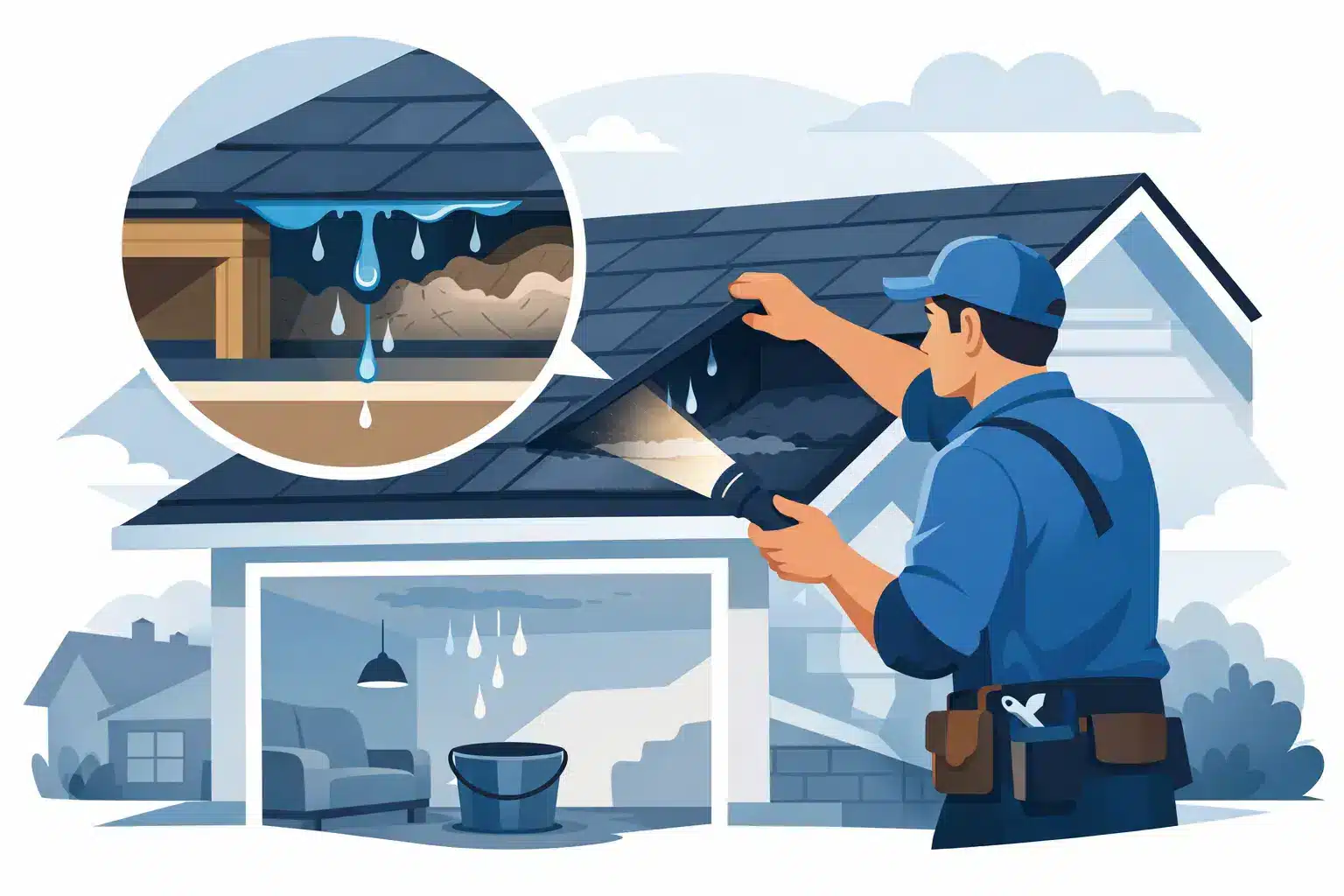

A brown ceiling stain may be the first thing you see, but it is rarely where the water entered. In Jacksonville Florida, roof leak repair requires more than applying sealant near a visible stain. Wind-driven rain, intense sun, high humidity, and sudden tropical downpours can send water beneath shingles, through a roof penetration, or along framing before it reaches the ceiling below.
The right repair begins with identifying the true entry point and checking the materials around it. A small failure in flashing, a cracked pipe boot, or a worn skylight seal can cause significant interior damage if it is left unresolved. Targeted work protects the home without treating every leak as a reason for a full roof replacement.
Why the leak location is often misleading
Water follows the path of least resistance. Once it enters the roofing system, it can travel along roof decking, underlayment, nails, rafters, or insulation. That means a stain in a bedroom ceiling may originate several feet uphill from the stain – or at a nearby chimney, vent, skylight, or roof-to-wall transition.
This is why simply patching the area above the interior damage can fail. The visible roof surface may look acceptable while water is entering at a component that sits higher on the slope. A careful inspection considers the roof layout, the direction of the storm, the age and condition of surrounding materials, and the path water may have taken.
For homeowners, the practical takeaway is simple: document where you see moisture, but do not assume that is the source. An inspection-led diagnosis gives you a repair recommendation based on evidence rather than guesswork.
Common roof leak repair issues in Jacksonville Florida
Florida roofs work hard. Long periods of heat can dry and weaken roofing materials, while heavy rain exposes every small opening. The most common leak sources are often details around the roof, not broad failures across the entire field of shingles.
Damaged or deteriorated shingles
Shingles can crack, curl, lose protective granules, or lift in strong wind. Missing tabs and exposed nail heads are obvious concerns, but subtle damage can be just as important. A shingle that no longer seals properly against the one beside it may allow wind-driven water under the roofing surface.
Repair may involve replacing damaged shingles and evaluating the underlayment and decking beneath them. Matching the repair to the condition of adjacent shingles matters. New material installed next to brittle, failing shingles may not provide a long-lasting solution if the surrounding area is already near the end of its service life.
Flashing failures at transitions
Flashing directs water away from vulnerable transitions. It is commonly found around chimneys, walls, valleys, vents, and skylights. When flashing is loose, corroded, incorrectly layered, or covered with deteriorated sealant, water can work behind it.
Chimney areas deserve especially close attention. A leak may involve step flashing, counterflashing, a cracked chimney cap, damaged mortar, or roofing material that has pulled away from the chimney base. The correct repair depends on which component has failed. Adding more caulk over an improperly installed transition is usually temporary at best.
Pipe boots and roof penetrations
Plumbing vent pipes pass through the roof and rely on rubber or metal boots to keep water out. Florida sun can cause rubber collars to split or become brittle. A small crack around a vent pipe can let water into the attic during a hard rain, often creating a stain near a bathroom, hallway, or closet.
Other penetrations, including exhaust vents and equipment mounts, need the same careful evaluation. Their flashing must be properly integrated with the roofing materials above and below the penetration so water sheds onto the roof, not underneath it.
Skylight and low-slope roof concerns
Skylights can leak because of failed seals, cracked glazing, damaged flashing, or deteriorated surrounding shingles. Condensation can also be mistaken for a roof leak, particularly where ventilation or insulation is limited. A diagnosis should distinguish between rain-related water intrusion and interior moisture before repairs are recommended.
Low-slope or flat roof sections require their own approach. Ponding water, open seams, deteriorated coatings, clogged drains, and edge flashing problems can all contribute to leaks. A coating may be appropriate when the roof surface and substrate are in suitable condition. It is not a substitute for repairing wet materials, failed seams, or structural concerns first.
What to do when you discover water inside
Act promptly, especially during an active storm, but avoid unsafe roof access. Place a container under drips, move furniture and electronics away from the area, and protect flooring as best you can. If a ceiling is bulging with water, treat it cautiously. A large amount of trapped water can make drywall unstable, and an electrician may be needed if moisture is near a light fixture or electrical equipment.
Take clear photographs of the stain, dripping water, and any damp belongings. Note the date, weather conditions, and whether the leak occurred during steady rain, strong wind, or after a storm. Those details can help identify whether the problem is related to wind-driven rain, a drainage issue, or a persistent opening.
Do not rely on roof cement or spray sealant as a permanent fix. These products can obscure the actual failure, trap water, and make future diagnosis harder. Temporary protection has a place when weather is moving in, but it should be followed by a proper inspection and repair plan.
What a thorough repair inspection should include
A meaningful roof inspection does not stop at spotting a damaged shingle. It examines the roof system and the areas most likely to allow water intrusion. That includes shingle condition, valleys, flashing, roof penetrations, chimney transitions, skylights, ridge areas, gutters, roof edges, and signs of sagging or deteriorated eaves.
The attic can provide valuable clues when it is safely accessible. Water marks on decking, damp insulation, mold-like growth, rusted fasteners, and daylight at penetrations may help confirm the water path. However, a dry attic on the day of inspection does not automatically mean there is no leak. Intermittent leaks can appear only under a particular rain direction or intensity.
Good documentation matters. Before-and-after photographs and plain-language findings help homeowners understand what was found, why a specific repair is recommended, and what condition the surrounding roof materials are in. This is useful not only for peace of mind, but also for real estate transactions, insurance discussions, and future maintenance planning.
When repair is the sensible choice – and when it may not be
A focused repair is often the right choice when a roof has a localized issue and the remaining roofing system is in serviceable condition. Replacing a failed pipe boot, repairing flashing, correcting a chimney transition, replacing storm-damaged shingles, or addressing a skylight problem can prevent interior damage and extend the roof’s useful life.
There are situations where a repair should come with a broader conversation. If shingles are widely brittle, curling, or losing granules, if multiple areas are leaking, or if roof decking has extensive moisture damage, isolated patches may provide only limited value. The honest answer depends on the roof’s age, installation quality, previous repairs, storm history, and the condition of materials surrounding the leak.
A dependable Roofing contractor should explain that difference clearly. Homeowners deserve to know whether a repair is expected to be durable, whether nearby materials are likely to need attention soon, and what the practical alternatives are. A repair recommendation should never be used to hide a larger problem, and replacement should not be pushed when a targeted repair is appropriate.
Preventing the next leak
Roof maintenance is usually less disruptive and less expensive than emergency interior repairs. After major storms, look from the ground for displaced shingles, debris buildup, loose gutter sections, damaged fascia, or branches resting on the roof. Keep gutters and roof valleys clear so rainwater can drain as intended.
Schedule an inspection when you notice a new stain, see damaged roofing materials, purchase an older home, or prepare to sell. Early attention can prevent a minor flashing or shingle issue from becoming damaged decking, wet insulation, stained ceilings, and mold concerns.
For Jacksonville Florida homeowners, James Neill Roofing Repair brings more than 45 years of hands-on experience to inspection-led repairs, with Florida license CCC057937. The goal is straightforward: locate the cause, explain the condition clearly, and complete the work needed to protect your property.
A roof leak does not always mean a new roof is needed, but it does deserve a careful response. The sooner the source is identified and repaired correctly, the better chance you have of keeping a small water problem from becoming a costly disruption to your home and family.