
A ceiling stain after a hard Jacksonville rain can make any homeowner fear the worst. But roof patch versus reroofing is not a decision that should be made from a water spot, a missing shingle, or the age of the roof alone. The right answer starts with locating the actual path of water intrusion and assessing the condition of the roofing system around it.
A properly targeted repair can protect a home for years when the damage is isolated. On the other hand, repeatedly patching a roof with widespread wear can cost more over time, leave the home exposed during the next storm, and postpone a necessary larger project. Careful inspection is what separates a sensible repair from a temporary fix.
What a Roof Patch Can Actually Solve
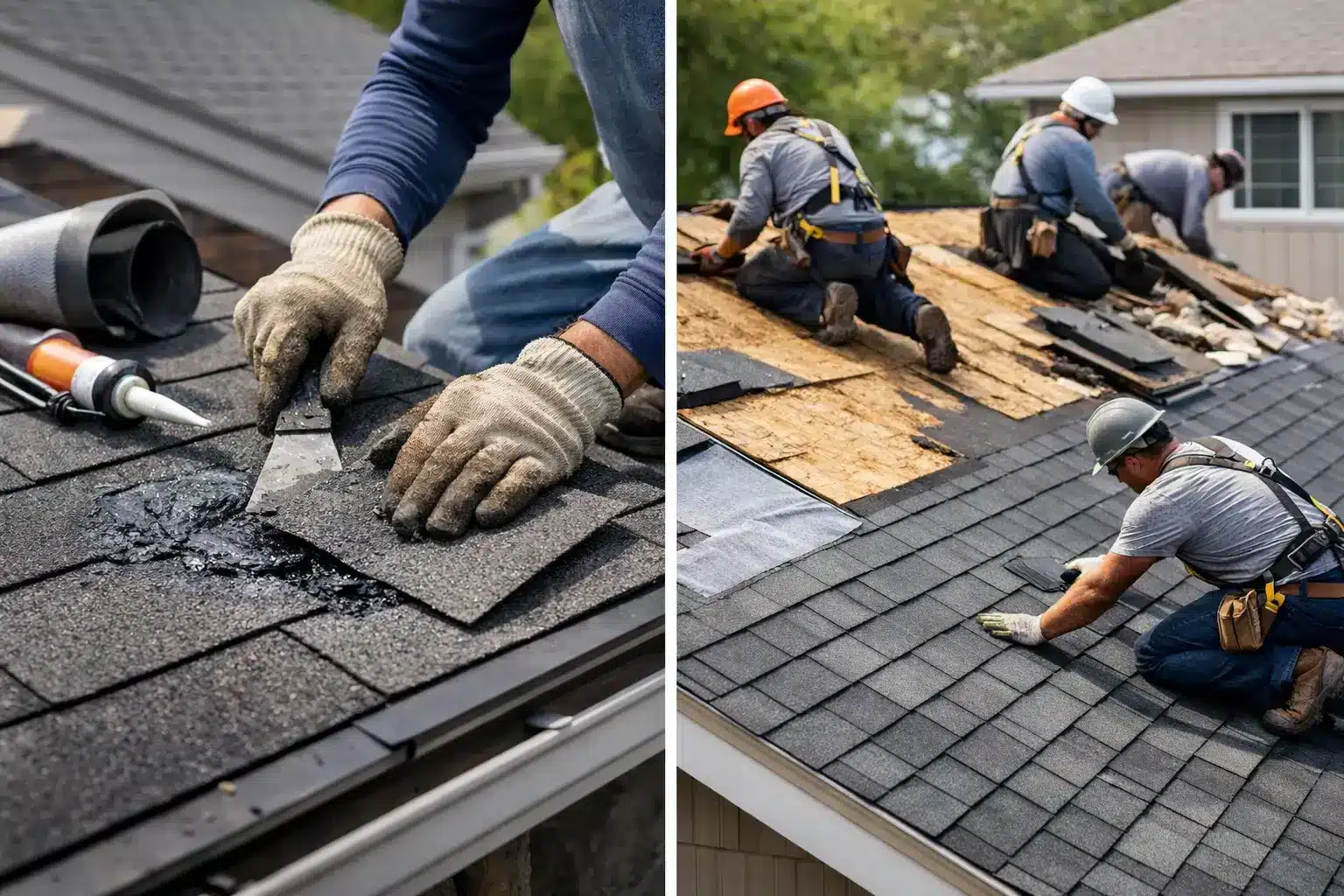
A roof patch is not simply a dab of sealant over a suspicious area. Quality repair work addresses the damaged material and the components that direct water away from vulnerable transitions. Depending on the roof, that may mean replacing broken or wind-lifted shingles, repairing flashing around a chimney, resealing a roof penetration, correcting a skylight transition, or replacing a limited damaged section of flat roofing.
A patch is usually a strong option when the surrounding roof materials are still in good condition. For example, a few shingles damaged by wind may be repaired without disturbing the rest of a roof that still has sound granules, secure fasteners, and adequate remaining service life. A leak at a plumbing vent or chimney can often be resolved by correcting failed flashing, rather than replacing large areas of otherwise serviceable shingles.
The key is that the repair must extend beyond the visible symptom. Water can enter at one point and travel along decking, underlayment, rafters, or a roof slope before appearing on a ceiling several feet away. Staining near a skylight does not automatically mean the skylight itself has failed. The source could be the flashing, a nearby shingle course, a roof penetration uphill from it, or a drainage issue.
In Jacksonville, intense sun, humid conditions, wind-driven rain, and tropical storms can speed up this process. Materials that look acceptable from the ground may have cracked seal strips, exposed fasteners, deteriorated flashing, or worn areas around transitions. An inspection should look at the affected location and the materials surrounding it, not just the interior stain.
When Roof Patch Versus Reroofing Becomes a Larger Decision
Reroofing is often used loosely to describe installing a new roof covering. Sometimes homeowners mean a complete tear-off and replacement. Other times they mean placing a new layer over an existing roof. Those are different projects, with different suitability, cost, and code considerations.
A new roof covering may be the better long-term recommendation when the existing roof has broad deterioration rather than one defined failure point. This is especially true when leaks are recurring in different locations, shingles are brittle or losing granules across multiple slopes, flashing repairs are accumulating, or the roof is near the end of its expected service life.
The condition beneath the shingles matters as well. If moisture has affected decking, fascia, roof framing, or eaves, simply covering the roof may conceal damage instead of correcting it. Soft decking, sagging roof edges, rot around penetrations, and persistent moisture require a closer look before any reroofing plan is selected.
An experienced contractor should also consider whether a reroof over existing materials is appropriate for the home. Layering can add weight, make future leak diagnosis harder, and prevent a full view of the decking and underlayment. A tear-off takes more labor, but it allows damaged wood to be identified, proper underlayment to be installed, and vulnerable details at chimneys, skylights, valleys, and edges to be rebuilt correctly.
No homeowner should be told that replacement is the only answer just because a roof has reached a certain age. Age is a useful clue, not a complete diagnosis. Likewise, a low-cost patch is not automatically the honest choice if a roof is failing in several areas. The decision depends on the roof’s overall condition, the location and cause of the problem, and how much reliable service remains in the existing materials.
Signs a Targeted Repair May Be the Better Value
A repair is often worth pursuing when the roof has one identifiable issue and the rest of the system remains sound. That can include localized storm damage, a failed boot around a pipe, displaced flashing, a chimney cap issue causing water entry, or limited shingle loss on a roof with good overall condition.
It is also a practical choice for homeowners who need to stop active water intrusion while planning future work. A properly completed repair can protect the interior, prevent moisture from spreading into insulation or framing, and give the homeowner time to make a well-informed decision about a future roof project.
Look for a contractor who can explain the findings in plain language. Before-and-after photographs are especially useful when damage is hidden on a steep slope, around a chimney transition, or beneath lifted shingles. Homeowners should understand what failed, why it failed, what materials will be repaired, and whether nearby areas show similar wear.
Signs Reroofing May Be the Safer Long-Term Choice
A larger roofing project becomes more reasonable when repairs are no longer isolated. The following conditions deserve a direct conversation about reroofing rather than another small patch:
- Leaks have appeared in multiple, unrelated parts of the home.
- Shingles are broadly curling, cracking, bald, brittle, or losing granules.
- Previous repairs are scattered across several roof slopes.
- The roof deck, fascia, eaves, or framing show signs of water damage or deterioration.
- Flashing and penetrations have reached the point where surrounding roofing materials cannot reliably support a lasting repair.
These signs do not guarantee that full replacement is required, but they indicate that the roof should be evaluated as a complete system. The cost comparison should include more than the immediate price of a repair. Consider the likelihood of another leak, the risk of interior drywall and flooring damage, the condition of the decking, and the value of having a roof system that is properly detailed for heavy rain and wind.
Why Leak Diagnosis Should Come Before the Recommendation
Roofing decisions are often rushed after a storm or when water begins dripping inside. That urgency is understandable, but it is also when homeowners are most vulnerable to generalized recommendations. A contractor who begins with an inspection can distinguish between a repairable component failure and system-wide material decline.
For instance, a leak near a chimney may require new counterflashing, replacement shingles around the transition, and correction of deteriorated sealant. Replacing the whole roof without addressing the chimney detail correctly may not solve the underlying issue. In the same way, a patch at a recurring valley leak may not hold if the surrounding shingles and underlayment have reached the end of their useful life.
This inspection-led approach is particularly valuable for home buyers and sellers. A roof concern found during a real estate transaction should be documented clearly: where the issue is located, whether active moisture is present, what work is needed now, and whether the rest of the roof shows broader concerns. Clear information helps all parties avoid treating a manageable repair as a full replacement emergency, or overlooking a roof that needs more than a cosmetic patch.
Choose Work That Matches the Roof You Have
The best roofing decision is not always the smallest job or the largest job. It is the work that matches the source of the problem and the remaining condition of the roof. James Neill Roofing Repair brings more than 45 years of experience and Florida Certified Roofing Contractor license CCC057937 to inspections and repairs designed to protect Jacksonville-area homes without pushing unnecessary replacement.
If you see a new ceiling stain, loose shingles, damaged flashing, or water around a chimney or skylight, arrange an inspection before the next heavy rain turns a limited issue into interior damage. A clear diagnosis gives you a practical path forward and the confidence to invest in the repair or reroofing work your home actually needs.