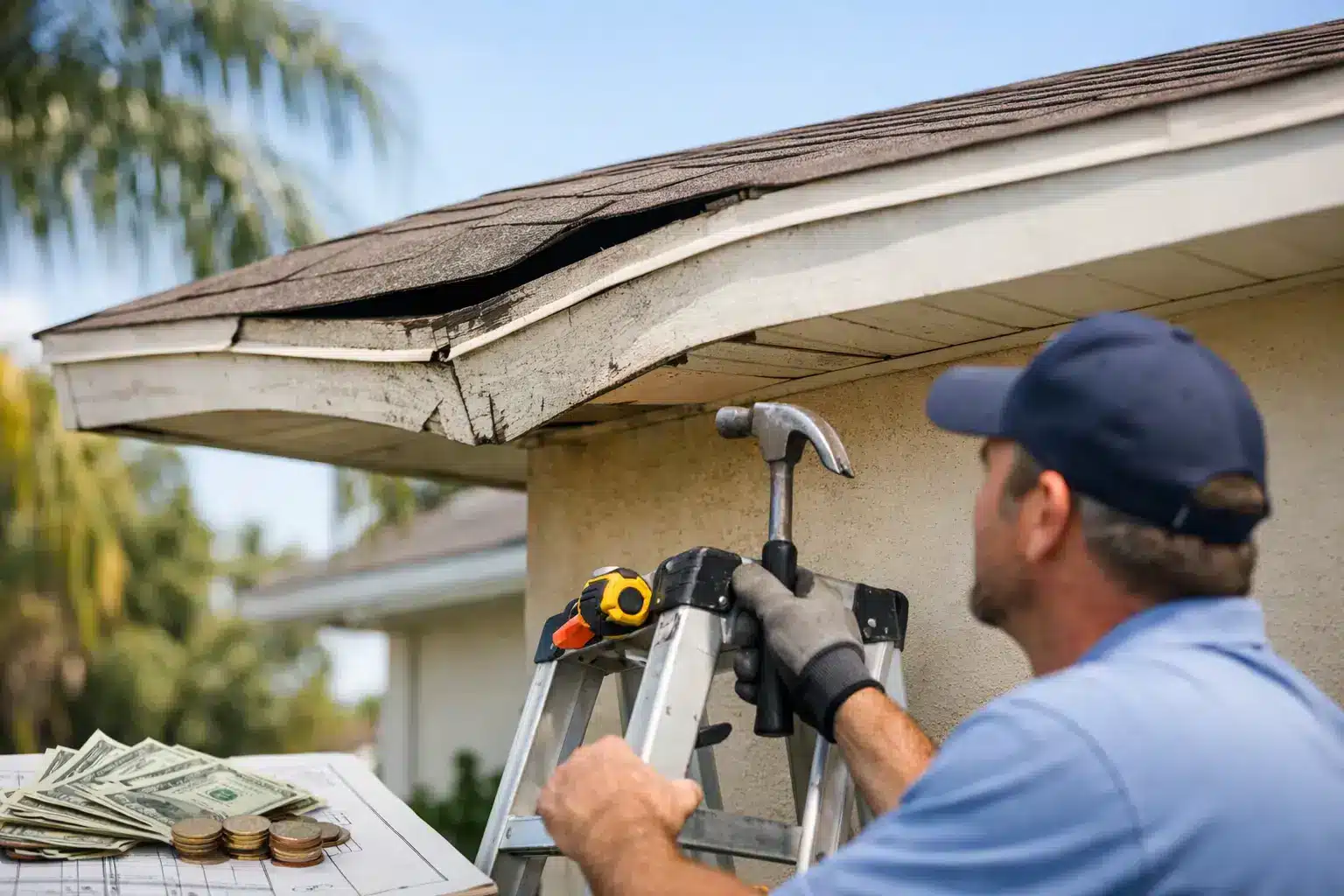

A sagging roof edge, and fascia can look like a minor trim problem from the driveway, but the sagging roof eaves repair cost often depends on what is happening behind the fascia board. In Jacksonville Florida, repeated heavy rain, humidity, wind-driven storms failing roof coverings, overflowing leaking gutters can allow water to damage the wood that supports the roof overhang. Addressing that damage early on can protect the exterior roof structure, soffits, siding, and interior of the home.
The right repair is not simply covering an obvious bowed area with new fascia trim. An experienced roofer like James Neill Roofing Repair will determine whether the eave is sagging because of rotted fascia, deteriorated rafter tails, failed roof decking, a gutter problem, or an active roof leak above it; sometimes it is all these examples. These types of roofing conditions have very different repair scopes and costs.
What Is the Typical Sagging Roof Eaves Repair Cost?
For a small, localized eave repair, homeowners may spend several hundred dollars when the issue is limited to a short section of fascia, soffit, or exterior trim. Costs rise when the repair involves rotted rafter tails, damaged roof decking, shingles, flashing, or gutter removal and reinstallation. A larger section of structural carpentry can run into the thousands, particularly if water has traveled beyond the visible low spot.
The broad range is not a sign that a contractor is avoiding a straight answer. It reflects the fact that an eave is made up of several connected, and layered materials. The fascia is the vertical board at the roof edge where gutters are commonly attached. The soffit is the finished underside of the overhang, and usually has a vent feature. Behind them are rafter tails and roof decking, which provide structural support. Water can damage one layer while leaving another intact, or it can compromise several layers at once requiring removal of all layers to fix the damage.
A careful inspection is the only reliable way to separate a cosmetic repair from a structural one. A low bid based on a quick visual assessment may only replace the visible board, leaving wet or weakened framing in place.
What Drives the Cost of Sagging Roof Eaves Repair?
The actual source of moisture
Water instrusion is usually the reason an eave begins to sag. The source may be a roof leak near the edge, worn shingles, exposed nail heads, failing drip edge, damaged flashing, or an overflowing gutter, and even improper workmanship. In Jacksonville Florida, gutters that are packed with leaves and roof debris can hold water against the fascia during a hard rain. That repeated exposure can rot the wood even when there is no obvious interior ceiling stain.
If the source is not corrected during the repair, newly installed wood may begin deteriorating too. The repair estimate should account for stopping the leak or correcting the drainage problem, not just replacing the damaged finish materials.
How far the damage extends
A small soft area at the fascia can conceal damage to the rafter tail behind it. When the roof overhang has visibly dropped, the framing may need to be opened so the contractor can evaluate the wood condition and restore proper support. This can involve sistering or replacing damaged rafter tails, installing new blocking, and replacing affected decking before the roof edge is closed back up.
The longer the affected run of eave, the more labor and material the project requires. Repairs are also more involved when damage extends around a corner, beneath a valley, or near a chimney, skylight, or other roof transition where water has multiple paths to enter.
Roofing materials that must be removed and replaced
Accessing roof-edge framing often requires lifting or removing shingles along the eave. If those shingles are brittle, heavily worn, or no longer available in the same color, matching materials may be more difficult. The Roofing contractor may need to replace a wider section so the repair sheds water correctly and looks consistent with the surrounding roof.
This is one reason a sound repair can cost more than replacing fascia alone. Roofing materials must be reinstalled with proper underlayment, drip edge, and shingle overlap so rainwater stays outside the structure.
Gutter condition and attachment
Gutters are often secured directly to fascia boards. If the fascia has rotted or pulled away, the gutter may need to be detached before carpentry work begins. It must then be reinstalled with the correct slope and secure fastening.
Sometimes the gutter itself is contributing to the problem. Loose hangers, poor slope, blocked downspouts, or water spilling behind the gutter can all keep the eave wet. Correcting these issues is usually less expensive than allowing another cycle of rot to develop.
Height, roof design, and access
A one-story home with an easily accessible roof edge is generally simpler to repair than a steep, high, or complex roof. Two-story elevations, tight side yards, screened enclosures, landscaping, solar equipment, and roof valleys can all increase labor time and safety requirements.
Florida storm exposure matters as well. If the repair area has been affected by wind damage, the surrounding shingles, decking attachment, and edge-metal details may need closer evaluation before work begins.
Signs the Eave May Need More Than Trim Work
Homeowners should not wait for a section of soffit to fall before arranging an inspection. Look for fascia boards that appear wavy, cracked, split, or soft; gutters that pull away from the roofline; peeling paint concentrated at the eaves; stained or sagging soffit panels; and roof edges that no longer look straight.
Inside the home, water stains near an exterior wall or a musty odor in the attic can support the case for a roof-edge leak. In some cases, pests take advantage of gaps created by deteriorated soffits or rotted wood. Birds, squirrels, insects, Raccoon’s, and moisture can turn a manageable carpentry repair into a broader restoration issue.
A visual symptom does not identify the cause on its own. For example, a drooping gutter may be caused by weak fascia, but it may also be caused by failed gutter fasteners. Likewise, discolored soffit may indicate a roof leak, condensation, or water backing up from a clogged gutter. Diagnosis should come before a repair recommendation.
Why a Patch Can Become an Expensive Repeat Repair
Replacing only the exposed fascia can be tempting because it offers a quick improvement in appearance. However, covering over deteriorated rafter tails or damp roof decking does not restore the eave’s strength. It can also hide continuing water intrusion until the damage becomes more widespread.
The better approach is targeted: remove only the materials needed to inspect the affected area, replace unsound wood, correct the water entry point, and reinstall roofing and drainage components correctly. This limits unnecessary work while avoiding a repair that looks finished but fails prematurely.
Homeowners should also be cautious about being told that visible eave damage automatically means the entire roof needs replacement. A roof replacement may be appropriate when the roof covering is at the end of its service life or damage is widespread. But a localized eave problem can often be repaired when the remaining roof system is in serviceable condition. The condition of the shingles, decking, flashing, and framing should guide that decision.
How to Get a Useful detailed Repair Estimate
A useful detailed estimate explains the observed condition, the probable source of moisture, and the materials involved in the repair. It should distinguish between fascia or soffit replacement and structural repairs to rafter tails or decking. If shingles or gutters must be removed and reset, that should be clear as well.
Ask whether the Roofing contractor has inspected the roof surface above the sagging area and the underside of the overhang. Before-and-after photographs can be particularly helpful because the most important damage may only be visible once the exterior trim is removed. Documented findings also give homeowners a clearer record for maintenance planning, insurance discussions, or a real-estate transaction.
For Jacksonville Florida homeowners, it is wise to address active water entry before the next period of heavy rain. James Neill Roofing Repair approaches sagging eaves as a roofing leak and carpentry issue, checking the surrounding roof materials and drainage details rather than treating the visible sag as an isolated trim defect.
A straight roof edge does more than improve curb appeal. It helps keep gutters supported, water moving away from the home, and the roof structure protected for the seasons ahead.