
A brown ceiling spot after a hard Jacksonville Florida rain can make any homeowner fear the worst. Yet roof repair versus replacement is rarely decided by the size of the stain alone. A leak may come from one failed pipe boot, lifted flashing at a chimney, worn sealant around a skylight, or a small group of wind-damaged shingles. The right answer begins with finding where water is actually entering the roof.
A careful inspection can protect your home from two costly mistakes: spending money on a broad repair that does not solve the leak, or replacing a roof that still has useful service life. Florida sun, humidity, heavy rain, and storm winds are demanding on every roof system, but they do not affect every roof component in the same way.
Roof Repair Versus Replacement: Start With the Cause
The visible symptom is not always the failed component. Water can travel along roof decking, framing, or insulation before it reaches a ceiling, which means the interior stain may be several feet from the entry point. Likewise, a missing shingle may be obvious after a storm but may not be the only area that needs attention.
A qualified roof inspection should look at the roof covering and the details that connect it to the home. Those details include flashing at walls and chimneys, pipe penetrations, valleys, skylights, ridge areas, gutters, roof-to-wall transitions, and any flat-roof sections. The surrounding materials matter just as much as the apparent defect. Replacing a single shingle next to brittle, failing shingles may only delay a larger problem. On the other hand, replacing a roof because one chimney flashing detail failed can be unnecessary.
The goal is not to choose the smallest possible repair. It is to choose work that corrects the source of water intrusion and holds up against the conditions around it.
When a Targeted Roof Repair Makes Sense
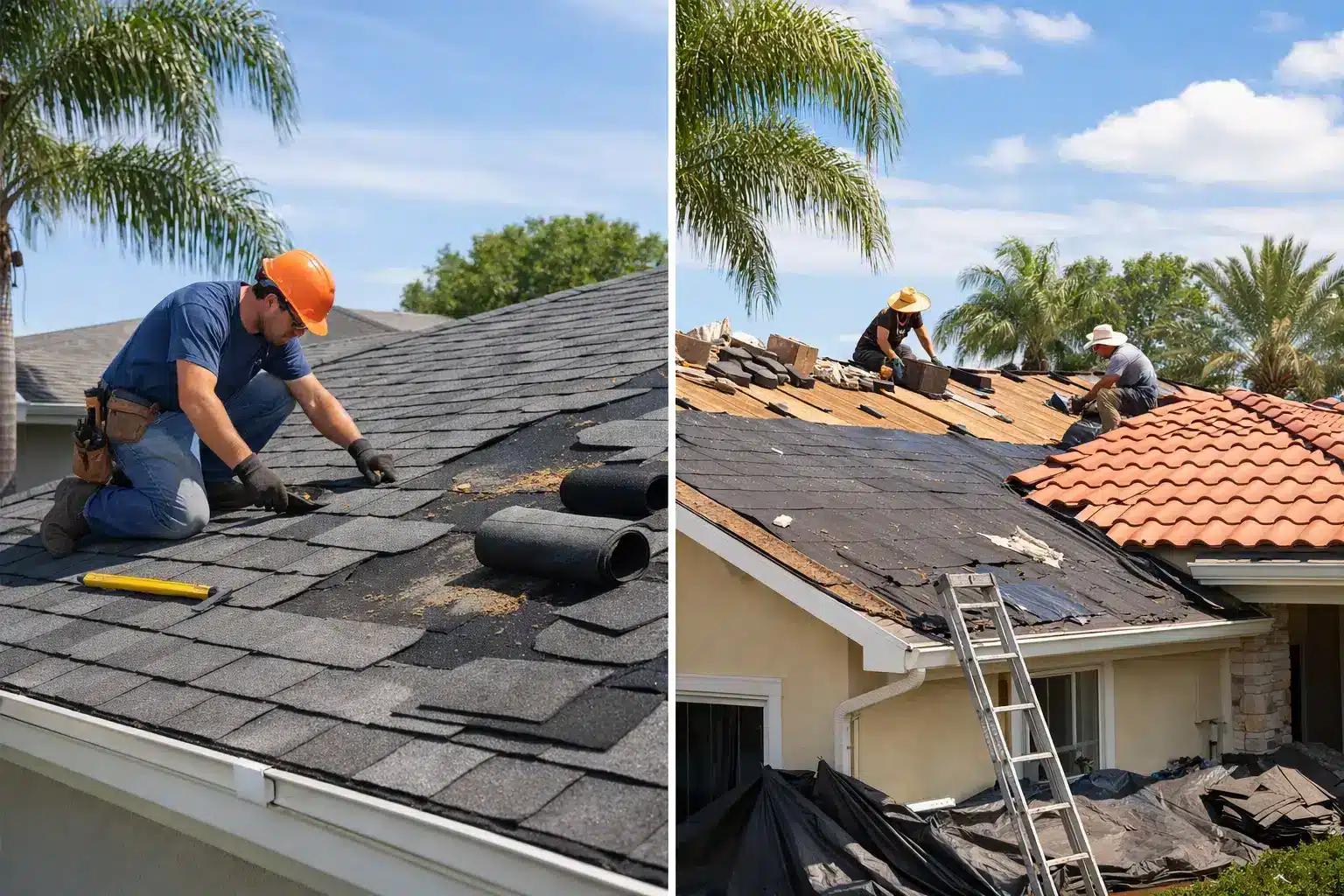
Repair is often the sensible choice when the roof has generally sound materials and the damage is limited to a defined area or component. This is especially true when a leak is tied to a penetration or transition rather than widespread deterioration of the roof covering.
For example, a cracked plumbing vent boot can allow water into an otherwise healthy shingle roof. Damaged step flashing where the roof meets a wall can cause repeat leaks even when the shingles look acceptable. A skylight may need new flashing, replacement glazing, or a full skylight replacement while the roof around it remains serviceable. Chimney caps, counterflashing, and masonry transitions can also create leak paths that a general shingle repair will not address.
Targeted repair may also be appropriate after wind damage if the affected shingles can be properly integrated with the existing roof and nearby materials are still in good condition. On low-slope or flat roofs, localized membrane repair, drainage correction, maintenance, or a coating may extend the life of a system when the substrate remains sound.
A repair recommendation is stronger when it includes clear findings: what failed, why it failed, what surrounding material was checked, and what should be monitored next. Before-and-after photographs help homeowners see the condition and confirm that the repair addressed more than the visible symptom.
Signs Replacement May Be the Better Investment
Every roof reaches a point where recurring repairs become less practical. Replacement is worth serious consideration when the problem is not isolated, the roof covering is broadly worn, or underlying materials have been affected by repeated moisture.
These conditions commonly point toward replacement rather than a small repair:
- Shingles are widespread cracked, curled, bald, brittle, loose, or missing granules across multiple slopes.
- Leaks recur in different areas, especially after prior repairs to separate components.
- The roof deck feels soft, sags, or shows signs of long-term water damage.
- Flashing, valleys, penetrations, and roof edges have deteriorated throughout the roof rather than at one isolated location.
- The roof is near the end of its expected service life and needs substantial work in more than one area.
Age matters, but it should not be the only deciding factor. Two roofs installed in the same year can age very differently depending on ventilation, tree cover, maintenance history, prior storm exposure, installation quality, and whether repairs were made correctly. A roof that is older but stable may justify a repair. A younger roof with widespread workmanship issues or storm-related damage may not.
Replacement can also make better financial sense when the repair would require disturbing large sections of aging materials that are unlikely to reseal or perform reliably afterward. In that situation, a homeowner should receive an honest explanation of why the repair has limited value and what replacement would correct.
Florida Weather Changes the Decision
Jacksonville Florida roofs face a combination of heat, UV exposure, humid air, driven rain, and tropical-storm winds. The sun can dry and embrittle shingles and sealants. Wind can break tabs, loosen fasteners, and open vulnerable roof edges. Heavy rain tests every flashing detail, valley, and roof penetration.
Coastal communities such as Jacksonville Beach, Neptune Beach, Atlantic Beach, and Ponte Vedra Beach Florida also contend with salt-laden moisture and wind exposure. Metal components, sealants, and fasteners deserve close attention in these environments. Inland homes are not immune, either. Trees can scrape shingles, clog gutters, and hold moisture against roof surfaces, while wind-driven rain can expose small flaws around chimneys and skylights.
That is why a roof decision should account for more than whether it is leaking today. A repair that is appropriate before storm season may include securing a vulnerable edge, replacing compromised flashing, clearing drainage paths, and correcting a small opening before interior damage starts. Waiting for a minor issue to become a major leak can turn a manageable exterior repair into drywall, insulation, framing, and mold-related work inside the home.
How to Compare Repair and Replacement Estimates
A useful estimate should explain the scope in plain language. For a repair, homeowners should know the suspected source of the problem, which materials will be removed or replaced, how surrounding areas will be tied back in, and whether there is evidence of deck or carpentry damage.
For a replacement recommendation, ask what conditions make replacement more appropriate than repair. Is the concern widespread shingle failure, multiple active leaks, aging underlayment, deteriorated decking, or a roof that has reached the end of its practical life? A clear answer helps you compare proposals based on work needed, not simply the largest or lowest number.
Be cautious with any recommendation made without an inspection of the leak area and related roof components. A contractor should not promise that every leak requires a new roof, and a contractor should not promise that every old roof can be made reliable with a patch. Both claims overlook the condition of the full system.
If you are buying or selling a home, documented findings are particularly valuable. An inspection can separate a limited repair need from a condition that may affect negotiations, insurance questions, or future maintenance planning. It also gives the next owner a clearer record of what was found and corrected.
Protect the Roof You Have While You Decide
If water is entering the home, move belongings away from the affected area and photograph the staining or active drip. Do not climb onto a wet roof or attempt to seal a suspected area from inside the attic. Temporary measures may reduce immediate damage, but they do not identify the leak path.
Schedule an inspection promptly, especially after a storm or when a leak returns. James Neill Roofing Repair provides inspection-led recommendations for Jacksonville-area homeowners, with attention to the flashing, penetrations, shingles, skylights, chimney areas, and surrounding materials that often cause hidden leaks. With more than 45 years of experience and Florida license CCC057937, the focus is on explaining what the roof needs and documenting the work clearly.
The best roofing decision is the one supported by the actual condition of your roof, not by fear of a ceiling stain or pressure to make a fast, expensive choice. A careful diagnosis gives you the information to repair confidently when repair is enough, and to plan responsibly when replacement is truly warranted.