
A roof can look acceptable from the driveway while moisture is quietly breaking down the wood beneath its shingles. Knowing the signs of roof decking rot helps Jacksonville Florida building, and homeowners address the source of a problem before a small leak becomes damaged ceilings, weakened roof framing, or a larger repair area.
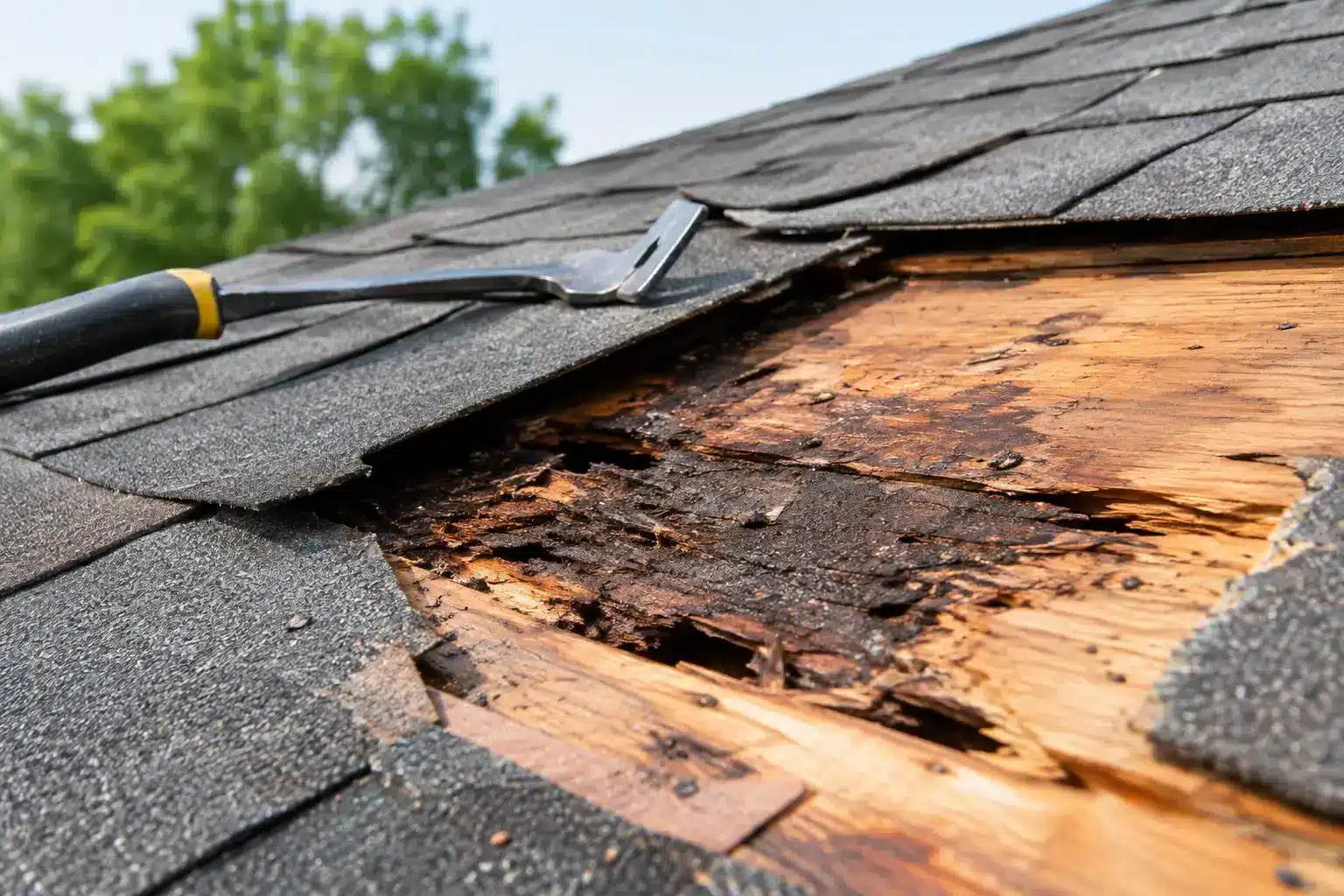
Roof decking is the plywood or oriented strand board sheathing fastened over the rafters or trusses. It provides the solid surface that supports shingles, underlayment, flashing, and other roofing materials. When that wood stays wet long enough, it can soften, delaminate, decay, and lose the strength needed to hold the roof system in place.
1. A Soft, Spongy, or Sagging Roof Surface
A visible dip in the roof plane is one of the clearest signs that decking may be deteriorating. You may notice a low area from the yard, a wavy section beneath shingles, or a spot that appears to sag near a valley, chimney, skylight, or roof edge. These areas collect water more easily, which can accelerate the damage.
Not every uneven roof is rot. Older homes can have framing that has settled, and some shingles create shadows that resemble a dip. But if the surface feels soft under a qualified roofer’s inspection, or the area has changed over time, the decking needs closer evaluation.
Homeowners should not walk on a questionable roof to test it. Rot can reduce the deck’s load-bearing ability, making a weak area unsafe. A professional inspection can assess the surface from above and inspect accessible framing and decking from the attic.
2. Water Stains, Damp Insulation, or a Musty Attic
Decking rot usually begins with repeated moisture exposure. In many cases, the most useful clues are inside the attic. Brown water stains on the underside of roof sheathing, damp insulation, dark streaks around nail penetrations, or a persistent musty odor may point to an active or past water intrusion issue.
The location of staining matters. Moisture around a plumbing vent boot, chimney transition, skylight, or attic vent often suggests a flashing or penetration problem. Staining near the eaves can come from damaged drip edge, gutter overflow, wind-driven rain, or a leak traveling down the roof deck before it becomes visible.
A stain alone does not prove the wood is rotten. Some stains are from an older leak that was repaired years ago. The key questions are whether the wood still feels firm, whether there is current moisture, and whether surrounding materials show continuing deterioration.
3. Shingles That Dip, Lift, or Will Not Lie Flat
Shingles depend on solid decking for support and secure fastening. As roof decking softens, shingles may appear sunken, uneven, cracked, or loose in a concentrated area. Nail heads can begin backing out because the wood beneath them no longer holds as securely as it should.
This can be especially noticeable after Jacksonville’s heavy rain, tropical weather, and strong winds. Wind does not necessarily cause the rot, but it can expose an existing weak spot by lifting shingles or opening a pathway for more water.
A few damaged shingles do not automatically mean the decking has failed. The surrounding roof condition determines the right repair. If the shingles are otherwise serviceable and deterioration is limited, a targeted repair may include removing the affected shingles, replacing damaged decking, correcting the leak source, and installing matching roofing materials. If rot is widespread under an aging roof, the repair approach may need to be broader.
4. Interior Ceiling Damage That Keeps Returning
A ceiling stain, peeling paint, bubbling drywall, or a soft spot near the ceiling deserves prompt attention, particularly if it returns after cosmetic repairs. Water can travel along roof decking, rafters, insulation, or wiring before it reaches the ceiling below. The stain in a bedroom may not sit directly under the leak.
Repeated interior damage is often a sign that the visible symptom was treated without locating the actual entry point. Repainting a water stain or patching drywall may improve the appearance for a while, but it will not stop wood deterioration above it.
During diagnosis, a roofer should examine likely failure points such as valleys, step flashing, chimney flashing, pipe boots, skylight curbs, wall transitions, and damaged shingles. The goal is not merely to find wet wood. It is to identify why the wood became wet and whether nearby decking has also been affected.
5. Crumbling, Flaking, or Darkened Wood in the Attic
When attic access is available, visible changes to the underside of the decking can be revealing. Watch for layers of plywood separating, rough or flaking wood fibers, darkened patches, crumbling edges, or a surface that dents easily when carefully checked by a professional.
Plywood decking may delaminate as moisture breaks down the glue between its layers. Oriented strand board can swell at its edges and become weak after repeated wetting. Both conditions can reduce fastener holding strength and allow the roof surface to flex.
Dark stains can also indicate mildew or surface mold rather than structural rot. Florida humidity makes attic ventilation part of the evaluation. Condensation from poor ventilation can contribute to moisture problems, but it should not be used as a quick explanation for every stain. A careful inspection distinguishes condensation patterns from a roof leak, plumbing leak, or moisture entering around a penetration.
6. Rotting Fascia, Soffit, or Eaves Near the Roof Edge
Rot at the roof edge does not always mean the main roof deck is damaged, but it is a reason to investigate. Fascia boards, soffits, and eave returns can deteriorate when gutters overflow, drip edge is missing or improperly installed, or water gets behind the gutter.
In some cases, the damage remains limited to trim boards. In others, moisture has reached the edge of the decking and the rafter tails behind the fascia. This distinction affects both the scope and cost of repair.
Look for peeling paint, swollen wood, soft areas, gaps at the eaves, or gutters pulling away from the home. These conditions are common after years of rain exposure, especially where gutters are clogged or roof runoff is not draining correctly. Repairing the fascia without correcting the water-management issue can lead to the same damage returning.
7. Daylight, Drips, or Rusted Fasteners in the Attic
Pinpoints of daylight in an attic can occur around vents and penetrations, but daylight where it should not be visible needs professional attention. So do active drips during rain, rusted roofing nails, and wet areas around roof framing.
Rusty nail tips may be caused by elevated attic humidity, but they can also develop when moisture repeatedly reaches the underside of the deck. If they appear only in one area, that localized pattern can help narrow the search for a leak.
Do not assume a dry attic on a sunny day means the roof is sound. Many roof leaks occur only during wind-driven rain or when water backs up at a vulnerable flashing detail. Document where and when you notice moisture, including the weather conditions, to help make the inspection more efficient.
What Causes Roof Decking to Rot?
Decking rot requires moisture and time. The most common causes are damaged or missing shingles, failed flashing, deteriorated pipe boots, leaking skylights, chimney transition problems, clogged gutters, and storm damage that opens the roof system to rain.
Age can also play a role. As shingles become brittle or lose their protective granules, the roof becomes more vulnerable to water intrusion. Still, age alone does not tell the full story. A newer roof can develop localized rot if flashing was installed incorrectly or a penetration was not sealed correctly. An older roof may have sound decking if it has stayed dry and been maintained.
Why a Focused Inspection Matters
Replacing shingles over rotten wood does not create a dependable repair. The damaged decking must be exposed, evaluated, and replaced where needed. Just as importantly, the leak path has to be corrected before the new materials go on.
A proper inspection considers the affected area and the materials around it. For example, a leak near a chimney may involve step flashing, counterflashing, shingles, decking, and nearby framing. A soft spot near an eave may involve gutters, drip edge, fascia, and the roof deck edge. Repairing only the most visible piece can leave the underlying cause in place.
James Neill Roofing Repair approaches roof concerns with inspection-led diagnosis, documented findings, and repair recommendations matched to the actual condition of the roof. For homeowners in Jacksonville and nearby communities, that means clear information about whether the issue is isolated, repairable, or part of a more extensive roofing concern.
If you have noticed a sagging area, recurring ceiling stain, attic moisture, or loose shingles, schedule an inspection before the next prolonged rainstorm. Early attention can protect the structure above your home and help keep a manageable repair from becoming a major disruption.