

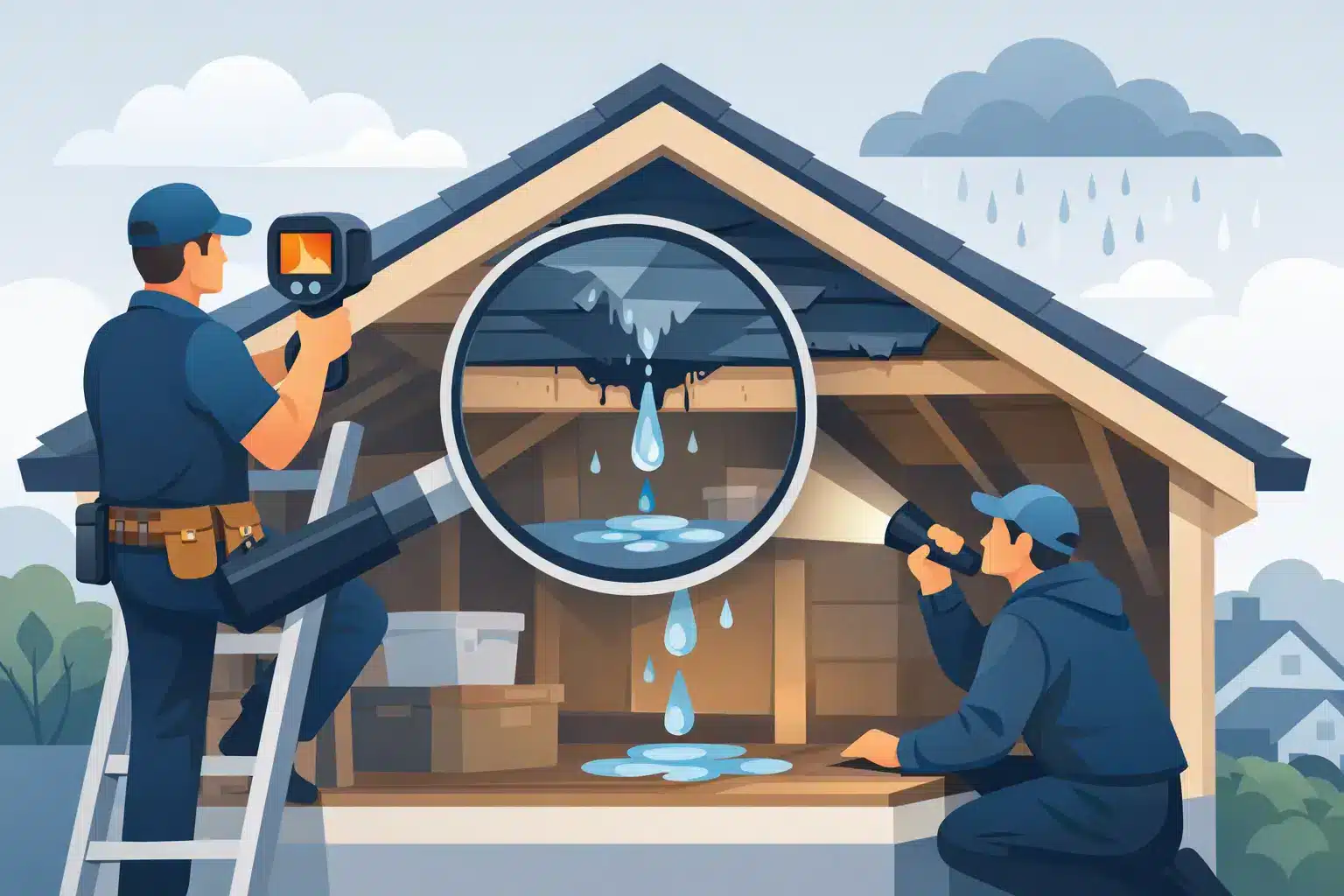

A brown ceiling stain is rarely the place where water entered the roof. In Jacksonville Florida heavy rain, wind-driven storms, and humid conditions, water can travel along roof decking, rafters, insulation, wiring, or a chimney chase cap before it becomes visible indoors. Knowing how to find roof leak source requires experience, and means that having, an understanding of how water travels then being able to methodically locate the actual roof leak intrusion point, and not just patching the first suspicious wet spot seen; this is when a seasoned Roofing Contractor such as, James Neill Roofing Repair is a reliable resource to depend upon when needed.
That distinction can protect your home from repeated damage. A small opening around flashing or a roof penetration may look minor from outside, but it can saturate insulation, stain drywall, damage framing, and encourage mold growth over time. The goal is not simply to stop a drip. It is to identify the failed roofing component and evaluate the materials around it.
Start Inside, but Do Not Stop at the Ceiling
Begin by documenting what you can safely see. Note the location of the stain or drip, whether it appears only during hard rain, and whether wind direction seems to matter. Take photographs before the area dries or before someone paints over the evidence.
If you can safely access the attic, inspect it during daylight hours with a bright flashlight. Look above and around the interior stain, then expand your search uphill toward the roof ridge. Water follows gravity, but it can also move sideways along framing before it drops.
Signs worth noting include dark or damp roof decking, wet insulation, water marks on rafters, rusty roofing nails, and daylight visible through a penetration or seam. A musty odor may indicate moisture has been present longer than the ceiling stain suggests.
Do not step on ceiling drywall from inside the attic. It will not support your weight. Walk only on structural framing or properly supported attic flooring, and avoid contact with electrical wiring. If the attic is hot, cramped, or has extensive wet insulation, an inspection professional is the safer choice.
Follow the Highest Water Mark
The newest drip is not always the best clue. Look for the highest point of staining on the framing or underside of the roof deck. That is often closer to the entry point than the ceiling stain below.
A leak near a bathroom exhaust vent, plumbing vent, skylight, chimney, or roof valley deserves special attention. These transitions interrupt the roof’s water-shedding surface, making correct flashing and surrounding materials essential. In many cases, the shingles themselves are not the problem. The failure is where roofing materials meet another component.
Check the Roof From the Ground First
A ground-level inspection can reveal useful clues without the risk of climbing onto a wet or steep roof. Use binoculars if needed and look for obvious damage near the area identified from inside.
Pay attention to lifted, cracked, missing, curled, or granule-worn shingles. After a tropical storm or a day of strong wind and rain, wind can loosen a shingle tab enough to expose a nail, break a seal, or allow rain beneath the course above it. Damage may be subtle, especially on an aging roof.
Also look at the roof’s common trouble spots:
- Chimney flashing and the metal or masonry transition around the chimney
- Skylight frames, curb flashing, cracked seals, and nearby shingles
- Plumbing vent boots, including rubber collars that split from Florida sun exposure
- Valleys where two roof slopes meet and carry concentrated water flow
- Wall-to-roof transitions, dormers, and step flashing
- Ridge vents, exhaust vents, satellite mounts, and other roof penetrations
Gutters can offer clues as well. Overflowing gutters, loose downspouts, or debris backed up at a roof edge can force water where it does not belong. However, a gutter problem should not automatically be blamed for an interior leak. The roof edge, fascia, drip edge, and adjacent shingles still need to be examined together.
Match the Leak to the Weather Conditions
The circumstances of the leak often narrow the search. A leak that appears during every steady rain may point to deteriorated flashing, a failed vent boot, a damaged shingle, or an open roof seam. A leak that occurs only in wind-driven rain can be harder to find because water may be pushed sideways beneath flashing or through a small opening that would not leak in a gentle shower.
Leaks that happen after several days of rain can indicate slow water entry, clogged drainage, saturated roof materials, or an issue on a low-slope or flat-roof section. On these roofs, ponding water and aging coatings require a different evaluation than a typical shingle roof.
If a stain grows during humid weather but not necessarily during rain, consider condensation. Bathroom exhaust ducts that terminate in an attic, uninsulated ductwork, or poorly ventilated roof spaces can create moisture that resembles a roof leak. The repair is different, which is why a careful diagnosis matters.
Use a Controlled Water Test Only When Conditions Are Safe
When there is no active rain, a controlled water test can help confirm a suspected area. This should be done with two people: one person remains in the attic to watch for water, while the other applies water outside with a garden hose. Never conduct this test during lightning, high wind, or on a slippery roof.
Start low on the suspected section of roof and work upward slowly. Apply water to one small area at a time for several minutes. If you soak the entire roof at once, you lose the ability to identify where water entered.
For example, test below a skylight first, then its side flashing, then the upper flashing. Around a chimney, test the lower flashing, side step flashing, and upper cricket or back-pan area separately. Keep clear communication between the person outside and the person in the attic.
A water test can be useful, but it has limits. It may not reproduce the wind pressure of a Northeast Florida storm, and some leaks require prolonged rain before appearing. If the suspected area involves damaged shingles, soft decking, steep slopes, electrical concerns, or a difficult chimney transition, do not turn a simple diagnosis into an injury risk.
Do Not Assume Caulk Is a Repair
Roofing sealant has a purpose, but broad caulking is not a substitute for correctly installed flashing, intact shingles, or sound roof decking. A bead of sealant may temporarily slow water while hiding the actual problem underneath. It can also make future repairs harder by trapping moisture or interfering with the proper installation of new materials.
The same is true of replacing one visible shingle without checking the surrounding courses, fasteners, underlayment, and flashing. If wind lifted several shingles or water has traveled beneath them, the repair area may need to extend beyond the one piece that looks damaged.
A targeted repair can be the right answer when the roof has localized damage and the surrounding materials remain serviceable. On the other hand, widespread granule loss, brittle shingles, repeated leaks in different areas, soft decking, or failed components across the roof may change the recommendation. Honest repair advice depends on the full condition of the roof, not just the current stain.
When a Professional Inspection Is the Better Next Step
Call for a roof inspection promptly if water is actively entering the home, a ceiling is sagging, staining spreads quickly, or you see wet electrical fixtures or outlets. Move furniture and valuables away from the area, place a container under a drip if safe, and avoid touching wet electrical components. A sagging ceiling can hold significant water weight and should be treated cautiously.
Professional help is also sensible when the leak is near a chimney, skylight, valley, flat-roof area, or multiple roof penetrations. These areas require an understanding of layered flashing and water flow that is difficult to assess from the ground.
A thorough inspection should explain where water entered, why that component failed, whether nearby materials are affected, and what repair is recommended. Ask for photographs and clear information about the condition found. This gives you a record of the issue and helps distinguish a focused repair from an unnecessary replacement recommendation.
For homeowners across Jacksonville Florida, James Neill Roofing Repair provides inspection-led diagnosis backed by more than 45 years of experience and Florida license CCC057937. The focus is on locating the actual source of water intrusion, documenting the findings, and recommending workmanship that fits the condition of your roof.
A roof leak is easier and less expensive to address before water damages more of the home. Keep notes after storms, act on new stains quickly, and insist on a diagnosis that follows the water all the way back to its source.