

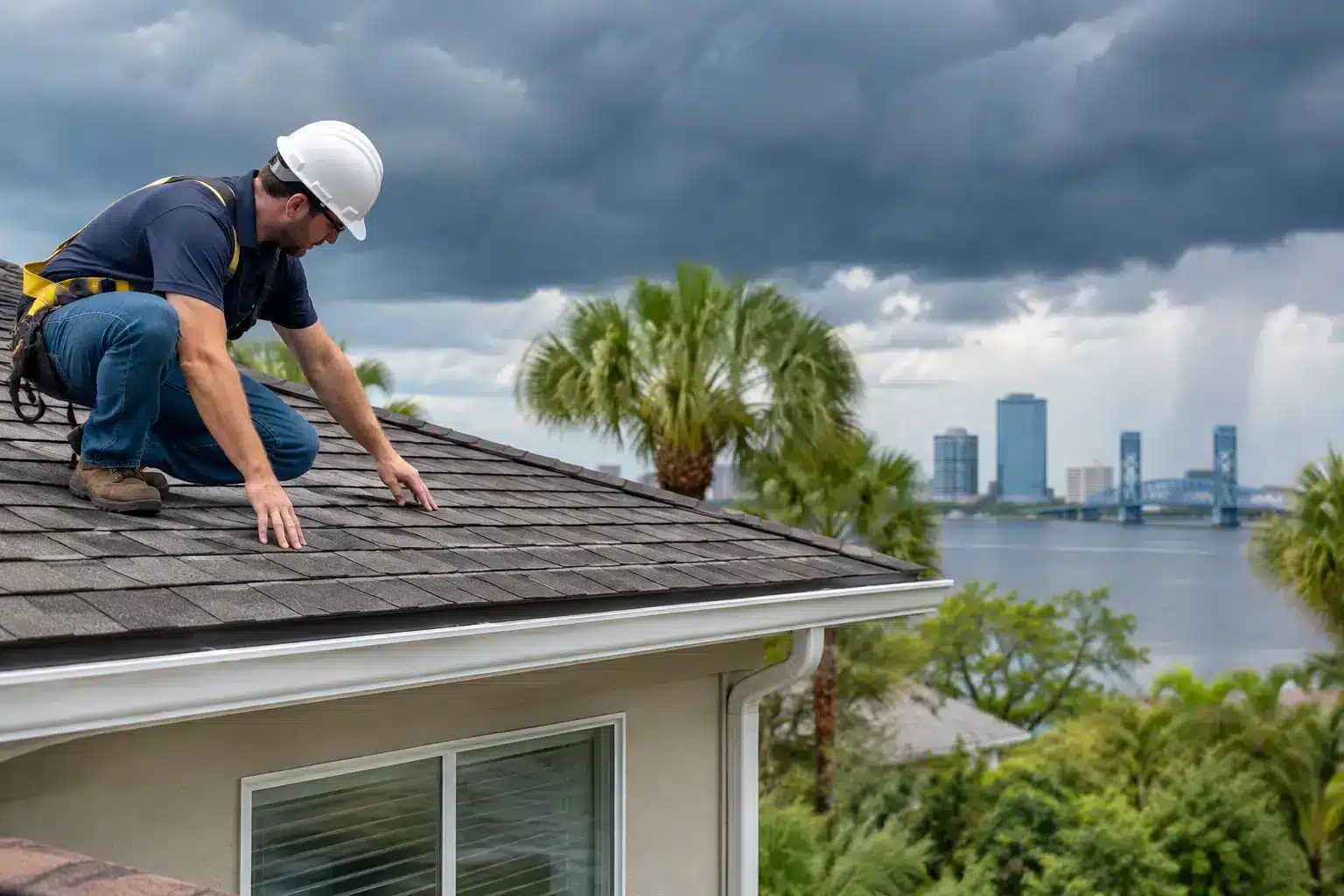

A Jacksonville Florida storm can turn a small roof weakness into a ceiling stain, wet insulation, or damaged framing in a single afternoon. Effective storm roof preparation is not about assuming the entire roof needs replacement. It is about finding the vulnerable details – loose shingles, aging sealant, failed flashing, blocked drainage, and worn roof penetrations – before heavy rain and wind test them.
Florida roofs face a demanding combination of intense sun, humidity, wind-driven rain, and tropical weather. A roof may look acceptable from the driveway while water is already working beneath lifted shingle edges or through a cracked pipe boot. Preparing early gives homeowners time to make sound repair decisions rather than reacting after interior damage has begun.
Start Storm Roof Preparation With an Honest Inspection
The most useful preparation step is a close inspection of the roof and its connected components. A proper inspection should look beyond visible shingle wear. Water often enters at transitions: where the roof meets a chimney, skylight, wall, vent pipe, valley, or low-slope section.
An experienced roofer should identify the actual condition and explain what it means in plain language. For example, a few missing shingle tabs may be a localized repair if the surrounding shingles remain flexible and properly sealed. On the other hand, a lifted area may point to deteriorated underlayment, failed fasteners, or wind damage extending beyond the obvious spot.
Homeowners should be cautious of recommendations based only on a quick glance or a single interior stain. The stain shows where water appeared, not necessarily where it entered. Water can travel along roof decking, rafters, or insulation before becoming visible inside. Correct diagnosis prevents repeated patchwork and helps protect the rest of the home.
Check the Roof Areas Most Likely to Leak
Storm preparation should focus on details that handle water movement and changes in material. These locations often fail before the main roof field does.
Flashing and roof penetrations
Flashing directs water away from vulnerable joints. It is commonly installed around chimneys, skylights, wall transitions, vents, and valleys. Rusted metal, separated flashing, cracked sealant, or poorly installed repairs can leave openings for wind-driven rain.
Pipe boots deserve special attention. Florida heat can dry and crack rubber collars around plumbing vents, while wind can loosen the surrounding shingles. Because these openings are small and easy to miss from the ground, they are a frequent source of unexplained ceiling leaks.
Chimneys also need more than a quick check of the roof shingles around them. The chimney cap, mortar condition, counterflashing, and roof-to-chimney transition all affect how well the assembly sheds water. A missing or damaged cap can allow water into the chimney itself, while failed flashing can direct water behind exterior finishes and into the roof structure.
Shingles, ridge caps, and edges
Look for shingles that are cracked, curled, loose, torn, or missing. Granules collecting in gutters may indicate normal aging, but heavy granule loss can also mean shingles are becoming less able to handle sun and rain.
Ridge caps and roof edges are particularly exposed to wind. If adhesive strips have weakened or nails are backing out, wind can lift shingles and create a path for rain. Addressing a small unsecured section before a storm is usually simpler and less expensive than repairing a larger wind-damaged area afterward.
Skylights and low-slope roof sections
A skylight leak is not always a failed skylight. The problem may be in the flashing system, surrounding shingles, curb, sealant, or drainage above the unit, and even poor installation. Repeated sealants, and caulking without determining the cause can trap water or delay the needed repair.
Flat and low-slope roofs require a different inspection approach. Standing water, open seams, cracked coating, soft areas, clogged drains, and deteriorated edge details should be addressed promptly. These roofs depend on sound drainage and intact membrane or coating systems, especially during long periods of heavy rain.
Keep Gutters and Drainage Working
Roof drainage is part of storm readiness. Gutters packed with leaves, pine needles, roofing granules, or roof debris can overflow against fascia boards, siding, soffits, and foundations. The result may be mistaken for a roof leak when the real problem is water backing up at the edge.
Clean gutters and downspouts before the storm season, then confirm that downspouts discharge away from the home. While cleaning, inspect gutter hangers, seams, and end caps. Loose gutters can pull away under the weight of water, and leaking seams can keep wood trim wet long enough to cause rot.
This is also a good time to inspect fascia and eaves. Soft wood, peeling paint, sagging sections, or insect activity can signal moisture damage that needs repair. Strong roof-edge carpentry gives gutters a secure attachment point and helps protect the attic and wall system below.
Prepare the Property Without Creating New Damage
Homeowners, building owners can handle several practical steps before severe weather arrives, but safety matters. Do not walk a roof unless you have the training, equipment, and conditions to do so safely. Wet shingles, steep slopes, and heat can make a routine look dangerous quickly.
From the ground, use binoculars to look for visible damage, and check the attic during daylight hours for staining, damp insulation, mildew odor, or shafts of light near penetrations. Keep a record of any prior leaks and take photographs of ceiling stains or exterior damage before storms arrive. Documentation can help establish whether a condition worsened after a weather event.
Around the house, remove loose branches, yard furniture, decorations, and other items that could become windborne debris. Trim limbs that rub against the roof or hang directly over it, but use a qualified tree professional for large limbs or work near power lines. Branches can scrape off granules, break shingles, and damage gutters even when they do not fall completely.
If you have a known active leak, do not wait for a forecast to worsen. Move valuables from the affected area, place a container under drips, and contact a qualified roofing contractor for diagnosis. Interior tarps and buckets are temporary damage-control measures, not repairs.
Know When a Repair Is Enough and When It Is Not
Storm roof preparation does not automatically mean replacing an aging roof. Targeted repairs can be the right choice when the roof has a limited problem, the surrounding materials are serviceable, and the repair can be properly integrated with the existing system.
Replacement may be more practical when deterioration is widespread, shingles are brittle across large areas, recurring leaks come from multiple locations, or the roof has reached the end of its useful service life. The decision depends on the roof’s overall condition, not just the most visible defect.
Ask for clear findings, photographs when practical, and an explanation of the proposed work. A responsible recommendation should distinguish between immediate leak risks, maintenance items, and conditions that can be monitored. That information helps homeowners prioritize work without being pressured into unnecessary replacement.
After a Storm, Inspect Promptly but Carefully
Once conditions are safe, walk around the property and look for shingles in the yard, displaced ridge caps, bent gutters, fallen branches, cracked skylights, and debris piled in roof valleys. Inside, inspect ceilings, attic spaces, and upper walls for new water marks or dampness.
Do not assume that no visible leak means no storm damage occurred. Wind can loosen shingles or compromise flashing without causing immediate interior water intrusion. A timely professional inspection is especially sensible after strong winds, driving rain, or a nearby tropical system, particularly for homes with older roofs or prior repair history.
James Neill Roofing Repair approaches storm-related concerns by tracing the source of the problem and evaluating the materials around it. For Jacksonville Florida homeowners, that inspection-led approach can mean addressing a failed flashing detail, damaged shingle section, chimney transition, skylight issue, or drainage problem before it becomes a larger interior repair.
A prepared roof is not one that never faces weather. It is one that has been inspected honestly, maintained where it needs attention, and given the best chance to shed the next hard rain away from your home and family.