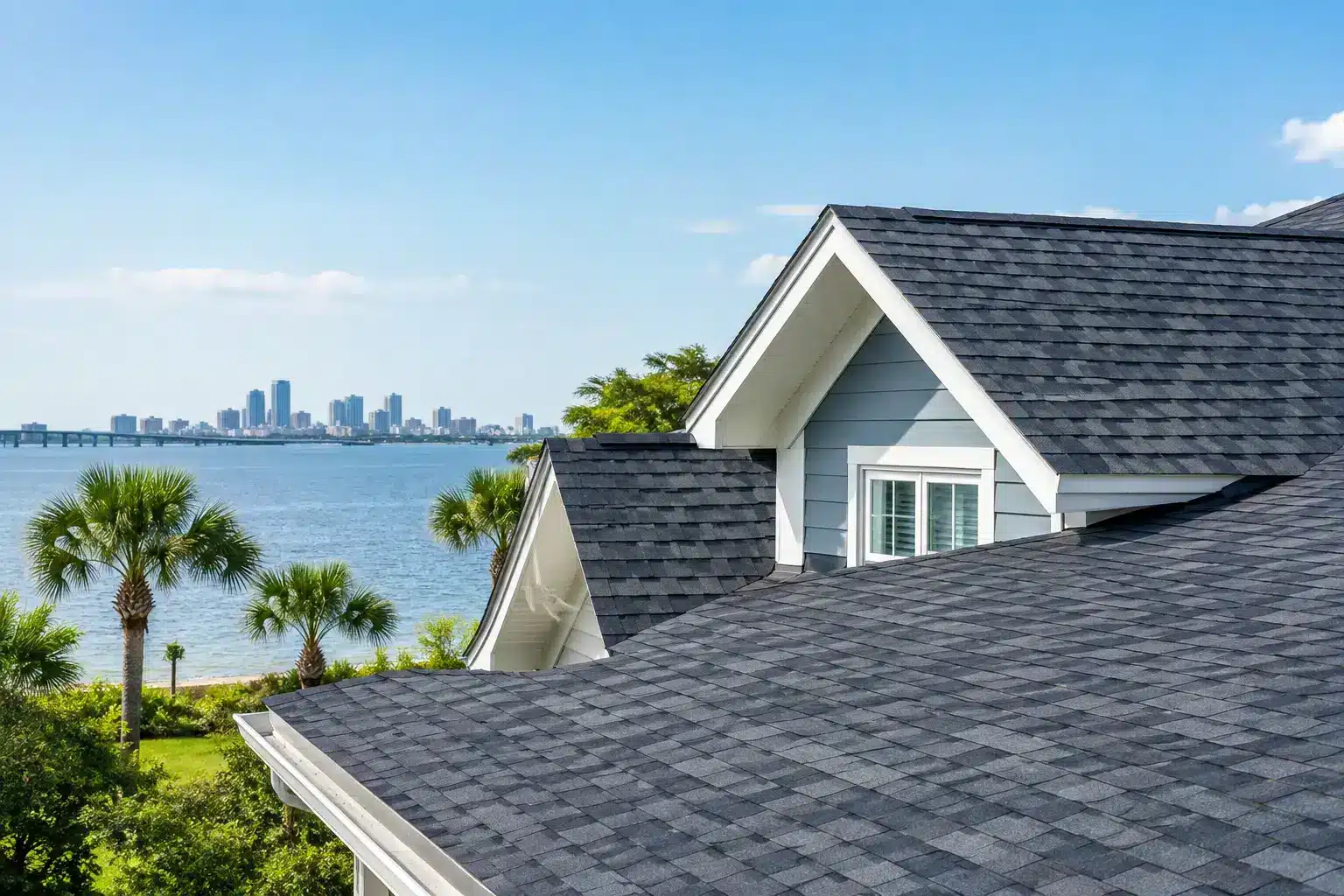

A roof near the Jacksonville coast can look perfectly serviceable from the driveway while salt moisture is corroding fasteners, sunlight is drying shingles, and wind-driven rain is working beneath a flashing edge. This Jacksonville coastal roof care guide is designed to help homeowners catch those conditions before a small exterior defect becomes stained drywall, damaged framing, or a larger repair.
Coastal exposure does not mean every roof needs replacement sooner than expected. It does mean the roof needs more deliberate attention. The right repair depends on the actual entry point for water, the condition of surrounding materials, and whether the issue is isolated or part of broader deterioration.
What Coastal Weather Does to Jacksonville Roofs
Jacksonville roofs contend with more than occasional storms. Intense UV exposure heats roofing materials day after day. High humidity can keep shaded areas damp longer than they should be. Summer downpours test drainage quickly, while tropical weather can lift shingles, loosen sealant, and drive rain sideways into places that normally stay dry.
Salt air adds another concern for homes near Jacksonville Beach, Atlantic Beach, Neptune Beach, Mayport, and other coastal areas. Salt does not usually cause a roof leak by itself, but it can speed up corrosion on exposed metal components. Flashing, chimney caps, fasteners, vent boots, gutters, and certain skylight components deserve closer observation when they are regularly exposed to coastal moisture.
The trade-off is straightforward: waiting until water reaches the ceiling may seem less urgent or less expensive, but it often turns a localized roof repair into interior restoration work. A timely inspection can identify a failing detail while the repair is still focused.
Start With the Roof’s Most Vulnerable Details
Shingles receive the most attention, but leaks frequently begin where the roof changes direction or where something passes through it. Those transition areas need to shed water correctly even during wind-driven rain.
Flashing and roof penetrations
Flashing protects the joints around chimneys, walls, valleys, vents, skylights, and pipe penetrations. A gap in sealant may be visible, but the underlying issue can also be loose flashing, rusted metal, improper overlap, or deteriorated material nearby. Covering the gap with more caulk may slow the symptom without correcting the water path.
Look for bent or lifted flashing, rusty staining, cracked sealant, missing shingles near penetrations, or debris collecting in valleys. From inside the attic, watch for darkened roof decking, damp insulation, daylight around penetrations, or a musty odor after heavy rain. Do not walk a steep, wet, or visibly damaged roof to investigate. A close ground-level look and an attic check are safer starting points.
Chimneys and chimney caps
Chimney transitions are a common source of recurring leaks because several materials meet in one area. The problem may involve step flashing, counterflashing, mortar joints, the chimney cap, or water entering through an uncovered flue. A stain near a fireplace does not automatically mean the shingles are failing.
Coastal moisture can accelerate wear on metal chimney caps and related hardware. If you see rust, a loose cap, cracked masonry, or water marks around the chimney inside the home, arrange an inspection before the next major rain event.
Skylights, vents, and pipe boots
A skylight leak can originate at the glazing, frame, flashing system, surrounding shingles, or a buildup of debris above the unit. The same principle applies to ridge vents, static vents, and plumbing pipe boots. The visible drip location inside the home may be several feet from where water enters, especially when it travels along decking or framing.
A proper diagnosis examines the component and the roofing materials around it. Replacing a skylight when its flashing is the real issue, or resealing a skylight when the frame has failed, can lead to repeat work and unnecessary cost.
A Seasonal Jacksonville Coastal Roof Care Schedule
A roof does not need constant attention, but it benefits from checks timed around the weather that stresses it most. For most Jacksonville homes, a professional inspection once a year is sensible. Older roofs, flat roofs, homes under large trees, and properties with prior leaks may need more frequent review.
Before hurricane season, clear gutters and downspouts, remove loose branches near the roofline, and check that gutter hangers and extensions are secure. Make sure water is directed away from the foundation. If shingles are already loose, flashing is exposed, or fascia is soft, address those conditions before high winds make them worse.
After a strong storm, walk the property and look for shingles in the yard, displaced gutter sections, fallen limbs, bent metal, damaged soffit, or new water stains indoors. Take photographs from the ground before making temporary arrangements. If there is active water entry, place a container beneath the drip, move belongings away from the area, and contact a qualified roofing contractor promptly.
During the drier months, look for sun-related aging such as curling edges, cracking, granule loss, or brittle sealant. Dark streaks or algae may be mostly cosmetic, but moisture-holding debris and organic growth should not be ignored. Harsh pressure washing can damage shingles and force water into vulnerable areas, so cleaning methods should match the roof material.
Flat Roofs Need Drainage, Not Just Coating
Flat and low-slope roofs on additions, Florida rooms, porches, and certain residential sections require a different maintenance approach from sloped shingle roofs. Their performance depends heavily on drainage, seams, edge details, penetrations, and the condition of the membrane or coating.
Ponding water after rain is a warning sign worth documenting. A shallow puddle may evaporate, but repeated standing water can stress seams and coatings, collect debris, and reveal drainage problems. Adding coating over a wet, deteriorated, or poorly drained surface is not a lasting repair. The substrate, seams, flashing, and slope conditions need to be evaluated first.
Pay attention to transitions where a flat roof joins a wall or steeper roof. These areas often involve flashing and termination details that can loosen over time. A focused repair may be appropriate when the rest of the roof remains sound. If the membrane is broadly cracked, blistered, or failing at multiple seams, more extensive work may be the better value.
Do Not Overlook Gutters, Fascia, and Eaves
Roof water management continues beyond the roof covering. Clogged gutters can overflow behind the gutter line, wetting fascia boards, soffits, siding, and roof-edge decking. Over time, this can contribute to wood rot and create an opening for water and pests.
Check gutters after leaf drop and after heavy storms, particularly if your home has oaks or pines nearby. Gutters should be firmly attached, free of standing debris, and sloped toward clear downspouts. Water spilling over one area during a normal rain deserves attention even if there is no interior leak yet.
Sagging eaves, peeling paint near the roofline, soft fascia, and loose soffit panels are not merely appearance issues. They can indicate repeated moisture exposure. Repairing damaged wood without correcting the gutter, flashing, or roof-edge issue that caused it is likely to create the same problem again.
When a Repair Makes Sense and When It May Not
Targeted repair is often the right choice for a roof with a limited defect and generally sound surrounding materials. Examples include a small area of wind-damaged shingles, a failed pipe boot, compromised flashing, a chimney cap issue, or a localized leak around a skylight.
However, repairs have limits. If shingles are brittle across multiple slopes, granule loss is widespread, leaks are occurring in several unrelated areas, or roof decking is extensively compromised, repeated spot repairs may not be the most economical approach. Age alone does not determine the answer. Condition, installation quality, ventilation, prior repairs, and the source of each problem all matter.
Ask for clear findings rather than a broad recommendation based only on what can be seen from the ground. Before-and-after photographs and an explanation of the affected components help homeowners understand what is being repaired and why. James Neill Roofing Repair approaches service calls this way: identify the source of deterioration or water intrusion first, then recommend work that fits the roof’s actual condition.
Know When to Schedule an Inspection
Call for a roofing inspection when you notice a new ceiling stain, active drip, missing or lifted shingles, rust around flashing, a loose chimney cap, recurring skylight moisture, or water pooling on a flat roof. It is also wise to schedule a check after a significant wind event, before listing a home for sale, or when buying a property with an unclear repair history.
Do not wait for a stain to grow. A small, well-documented repair completed before Jacksonville’s next stretch of heavy rain can protect the roof structure, the rooms below it, and the family living underneath it.