

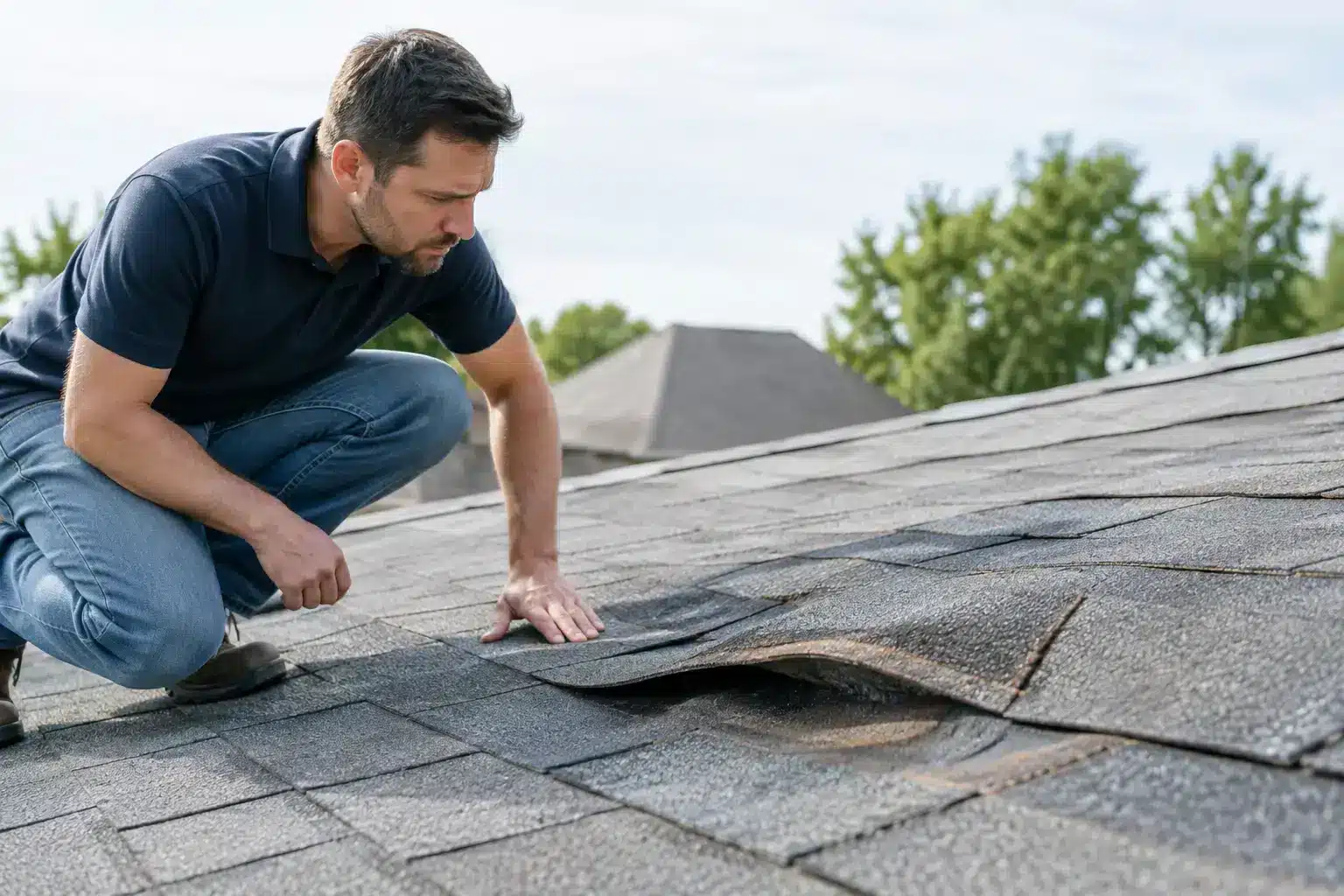

A roof should feel firm and supported, not springy, dipped, or soft underfoot. So, are soft roof spots dangerous? They can be. A soft area may be a warning that moisture has damaged the roof decking beneath the shingles or surface material. It does not automatically mean the entire roof needs replacement, but it does call for a prompt professional inspection before a small concealed problem turns into a leak, interior damage, or a larger structural repair.
In Jacksonville Florida, repeated heavy rain, humidity, intense sun, wind-driven storms, and coastal moisture can expose weaknesses around flashing, skylights, vents, chimneys, and aging shingles. Water does not always enter directly above the soft area, either. It can travel along decking or framing before it becomes visible.
What a Soft Spot on a Roof Usually Means
Most soft roof spots develop when the wood roof deck loses its strength. Roof decking is the plywood or oriented strand board layer that supports the shingles, underlayment, and other roofing materials. When it stays wet long enough, the wood can swell, delaminate, rot, or weaken.
A building or homeowner may notice a shallow dip in the roofline from the ground, a section that looks uneven in certain light, or an area that feels spongy when a contractor walks on it during an inspection. On a low-slope or flat roof, you may see ponding water, blistered coating, cracked seams, or a depressed area where water repeatedly collects.
The visible surface is not always the failed component. Shingles can appear mostly intact while the decking beneath them has deteriorated. That is why replacing a few visible shingles without identifying the water source can leave the underlying problem in place.
Are Soft Roof Spots Dangerous to Walk On?
Yes, potentially. A soft spot can be unsafe for anyone walking on the roof because weakened decking may not support normal weight. The risk is higher after prolonged leaks, around old roof penetrations, or where a roof has sustained storm damage. A fall through damaged decking can cause serious injury and further damage to the roof.
Homeowners should not test a soft area by stepping on it, pressing hard against it, or attempting a do-it-yourself repair from the roof surface. Even if the area seems minor, the weakened section may extend farther than it appears. Look from the ground, check the attic if it can be done safely, and schedule an inspection instead.
Soft spots can also become dangerous to the home itself when they allow continued water intrusion. Wet decking can affect insulation, ceiling drywall, fascia boards, rafters, and electrical components. Mold growth is another concern when moisture remains trapped in attic spaces or wall cavities.
Common Causes of Spongy or Weak Roof Areas
The cause matters because the correct repair depends on where water is entering and how far the surrounding materials have been affected. A careful inspection should trace the issue back to its source rather than treating the soft spot as an isolated surface defect.
Leaks Around Flashing and Roof Penetrations
Flashing protects vulnerable transitions where the roof meets a chimney, wall, vent pipe, skylight, or other penetration. Loose, corroded, improperly installed, or storm-damaged flashing can let water enter beneath the roof covering. Over time, that moisture can soften the deck nearby.
Chimney transitions and skylight perimeters deserve particular attention. These areas often experience repeated water exposure, and the leak may not become obvious inside until the wood beneath has already been affected.
Aging or Damaged Shingles
Cracked, lifted, missing, or worn shingles can allow rain to reach the underlayment and decking. Jacksonville sun can make shingles brittle over time, while wind and tropical weather can break seals or pull materials loose. Granule loss alone does not always create a soft spot, but it can signal an aging roof that needs closer evaluation.
Flat-Roof Drainage Problems
On flat and low-slope roofs, standing water is a frequent contributor to deterioration. Ponding can stress seams, coatings, drains, and flashing details. Once water gets below the membrane or coating, it can saturate the materials below and gradually weaken the deck.
A flat-roof repair may involve more than applying coating over the top. The contractor should assess drainage, the condition of the existing surface, seam integrity, flashing, and whether wet materials need to be removed before repairs are completed.
Attic Moisture and Ventilation Issues
Not every soft roof area begins with rain coming through the roof. In some homes, warm, humid air enters the attic and condenses on cooler surfaces. Bathroom fans that vent into the attic, blocked soffit ventilation, and poorly balanced attic airflow can contribute to moisture-related wood damage.
This is why a proper diagnosis includes looking at both the roof exterior and the attic side when conditions allow. If the source is condensation, replacing damaged decking without correcting the ventilation issue may lead to the same problem later.
Signs the Problem Needs Prompt Attention
A soft spot should be evaluated soon, but certain signs raise the urgency. Staining on ceilings or walls, active dripping, peeling paint near the ceiling, sagging drywall, or a musty attic odor can indicate ongoing moisture exposure. A roofline that visibly sags or dips may point to more extensive deck or framing deterioration.
After a heavy storm, look for shingles on the ground, bent flashing, displaced chimney caps, damaged skylight seals, or water appearing around vents and ceiling fixtures. Do not assume a leak is minor because it stops after the weather clears. Water can remain trapped in insulation and wood long after the visible drip ends.
If the ceiling is bulging with water, keep people away from the area and avoid disturbing it. Water-filled drywall can fail suddenly. If water is near light fixtures or electrical equipment, use caution and contact a qualified professional as needed.
What a Proper Soft-Spot Inspection Should Include
An inspection-led repair approach starts by determining whether the deck is actually soft, where the moisture originated, and whether nearby materials remain sound. The roof surface should be checked for missing or damaged shingles, exposed fasteners, failed sealant, flashing problems, worn pipe boots, skylight defects, chimney transitions, and low areas that hold water.
Inside the attic, an experienced roofer may look for water stains, darkened wood, wet insulation, daylight at penetrations, mold-like growth, rusted fasteners, and signs of ventilation problems. The condition of fascia and eaves can also provide clues, especially when water has been running behind gutters or off a damaged roof edge.
Documentation matters. Clear findings and before-and-after photographs help homeowners understand what was found, what repair is recommended, and why. It also helps distinguish targeted repairs from a broad replacement recommendation that may not fit the actual condition of the roof.
Can a Soft Roof Spot Be Repaired Without Replacing the Whole Roof?
Often, yes. If the damage is limited and the roof covering around it is still serviceable, a contractor may remove the affected shingles or roofing material, replace the damaged decking, repair the leak source, install appropriate underlayment and flashing, and restore the roof surface. The goal is to repair both the consequence and the cause.
A larger project may be more sensible when soft areas are widespread, the roof is near the end of its service life, multiple leaks are present, or surrounding shingles cannot be removed and reinstalled without breaking. The right answer depends on the deck condition, the age and type of roof, the extent of moisture damage, and the availability of matching materials.
For Jacksonville homeowners, waiting through another rainy season is rarely a good trade-off. A focused inspection can establish whether the issue is a contained repair or a sign of broader deterioration. James Neill Roofing Repair, Florida license CCC057937, can help identify the source of the problem and explain practical repair options in clear terms.
If you see a dip, suspect a spongy section, or have signs of a recurring leak, keep off the roof and arrange an inspection before the next heavy rain gives water another path into your home.