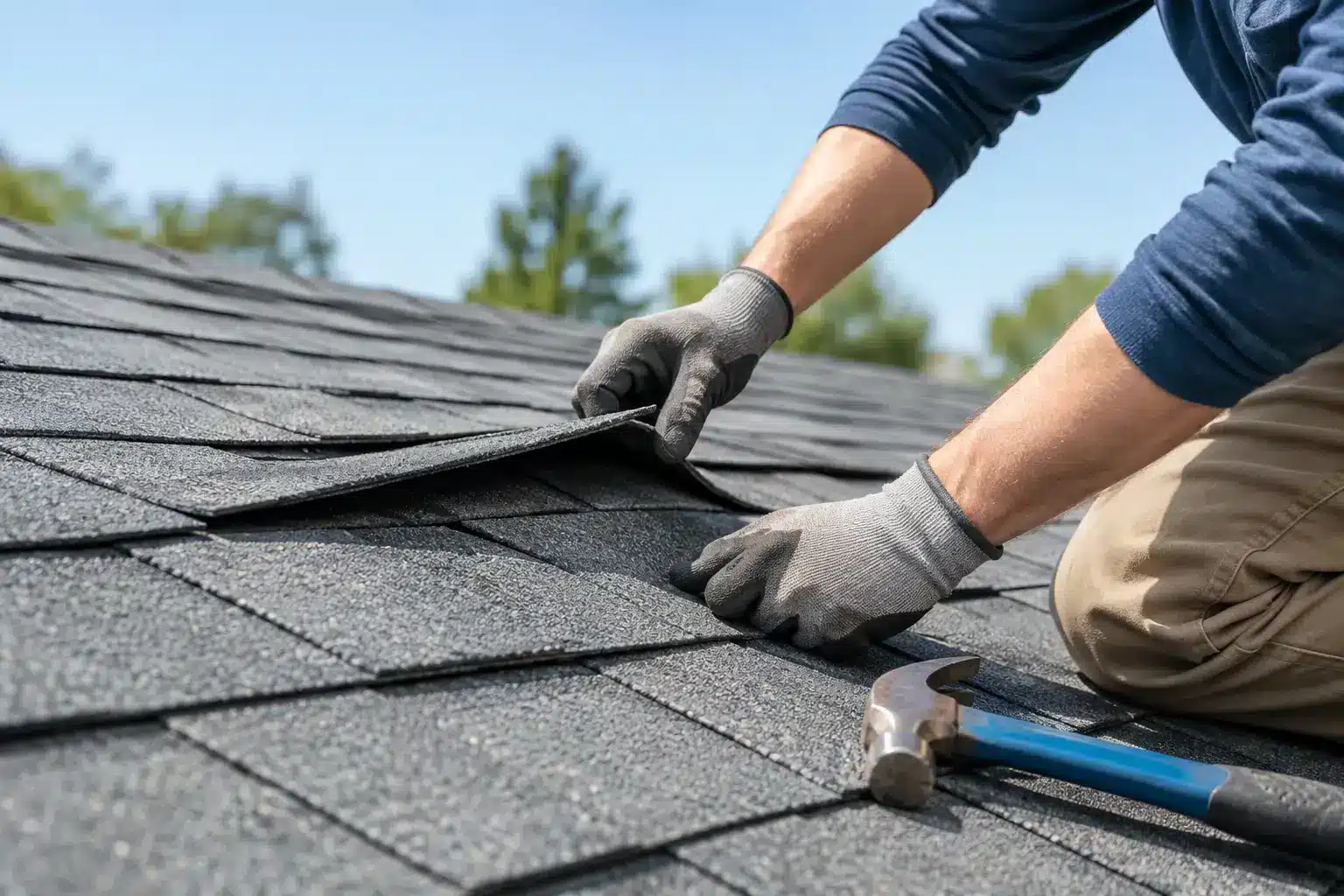

A shingle that has lifted at one corner can look minor from the ground, but it can become an entry point for wind-driven rain. In Jacksonville Florida, repeated sun exposure, humidity, summer downpours, and tropical-storm winds can work beneath loosened shingles quickly. To repair lifted shingles correctly, the visible tab is only the starting point. The real question is why it lifted and whether water has already reached the roof deck, underlayment, nails, or nearby flashing.
A prompt, targeted repair can often keep a small roofing issue from becoming stained ceilings, damaged insulation, or rotted wood. But a quick dab of roofing cement without checking the surrounding area can hide the symptom while the actual failure continues.
Why shingles lift in the first place
Asphalt shingles are installed in overlapping courses. Each shingle relies on correct nailing, a sealed adhesive strip, sound decking, and proper overlap to shed water. When any part of that system is compromised, a shingle edge or tab may lift.
Wind is an obvious cause, particularly after a strong thunderstorm or tropical weather. Wind can catch an unsealed edge, flex the shingle, pull fasteners upward, and break the bond at the adhesive strip. One lifted shingle can then expose the shingles beside it to the same pressure during the next storm.
Florida sun also plays a major role. Years of heat can dry asphalt shingles, making them less flexible and less able to lie flat after they are disturbed. Older shingles may curl, crack, lose granules, or break when someone tries to bend them back into place. In that situation, resealing a tab may not be a durable answer.
Installation and ventilation conditions matter, too. Nails driven too high, too low, or through the shingle can allow wind movement. A roof deck with moisture damage may no longer hold nails securely. Excess attic heat can speed shingle aging, while leaks around pipe boots, skylights, chimneys, and flashing can deteriorate the materials around an otherwise healthy-looking shingle.
Check the condition before attempting a repair
Homeowners can often spot the warning signs from the ground with binoculars or from an accessible attic. Do not walk on a pitched roof unless you have the training, equipment, and safe access to do so. A brittle roof can be damaged by foot traffic, and wet or algae-covered shingles are especially hazardous.
Look for a raised corner, a flap that moves in the wind, missing tabs, exposed nail heads, or a patch that appears darker than the surrounding roof. Inside the home, check ceilings and attic framing after rain for fresh discoloration, damp insulation, musty odors, or visible drips. A leak may travel along roof framing before it appears indoors, so the stain location is not always directly below the damaged shingle.
Pay close attention when lifted shingles occur near a roof transition. Valleys, ridges, sidewalls, chimneys, plumbing vents, skylights, and eaves handle more water or require flashing details. What appears to be a loose shingle may actually be a flashing issue, failed sealant, deteriorated underlayment, or water entering from higher on the roof.
These conditions call for an inspection rather than a simple reseal:
- Several shingles are lifting, curling, cracking, or losing granules.
- Nails are backing out or shingles feel loose across a broad area.
- The roof deck feels soft, sags, or shows water damage from the attic.
- A ceiling stain returns after prior repairs or following wind-driven rain.
- The lifted area is close to a chimney, skylight, valley, or roof penetration.
How a proper lifted-shingle repair is performed
The right repair depends on the shingle’s age, condition, and cause of failure. If a newer shingle is intact, flexible, and simply lost its adhesive bond, a qualified roofer may be able to carefully lift the tab, inspect underneath it, secure it correctly, and reseal it with compatible roofing adhesive. The work must be done with restraint. Too much cement can interfere with drainage, create an unsightly raised spot, or signal that a shingle was patched rather than properly repaired.
When wind has torn, creased, cracked, or stretched the shingle, replacement is usually the better choice. The damaged shingle is removed without breaking adjacent courses. The installer then checks the deck and underlayment below before fitting a compatible replacement, placing fasteners in the proper nailing zone, and sealing the replacement as required by the shingle system and conditions.
Matching matters. Shingle color naturally changes over time as granules wear and the roof weathers under the Florida sun. A new shingle may be visible at first, especially on an older roof. That does not automatically make the repair wrong. The priority is a watertight, correctly integrated repair. Still, an experienced contractor can assess available shingle stock, pattern, thickness, and weathering to make the repair blend as reasonably as possible.
The surrounding shingles should always be checked. If one shingle lifted because its seal strip failed from age, nearby tabs may be close behind. If it lifted due to wind, the repair should include a close look for creases, loosened nails, fractured tabs, and disturbed ridge shingles beyond the obvious damage.
Why roofing cement alone is not always the answer
Roofing cement has a useful place in limited repairs, but it is not a cure-all. It may help reseal an intact tab or provide a temporary protective measure when conditions prevent a full repair. It should not be used to glue down shingles that are brittle, badly curled, torn, improperly nailed, or lifted because the decking underneath is failing.
A heavy coating of black cement can also trap dirt, degrade in the sun, and make future inspection harder. More importantly, it can give a homeowner false confidence while rain continues entering through a damaged flashing edge, exposed fastener, or split underlayment layer.
A careful repair begins below the shingle surface. The contractor should determine whether the shingle itself failed, whether wind compromised the fastening, or whether water from another roof component is working its way underneath. That diagnostic step is what separates a lasting repair from a temporary patch.
When a small repair becomes a larger roofing decision
Not every lifted shingle means the entire roof needs replacement. A localized wind event, a fallen branch, or an isolated installation defect can often be addressed with focused shingle repair. Homeowners deserve a clear explanation of what is damaged, why it happened, and what repair will realistically accomplish.
On the other hand, widespread lifting and brittleness can indicate an aging roof system. If repairs are appearing in multiple areas, shingles are cracking during routine work, or leaks are recurring at different locations, it may be time to discuss larger repairs or replacement planning. The decision depends on the remaining life of the shingles, the condition of the deck and underlayment, past leak history, and the cost of continuing spot repairs.
A good inspection does not begin with a replacement recommendation. It begins with documented findings. Photos of lifted tabs, exposed fasteners, damaged flashing, or deteriorated wood help homeowners understand the condition of their roof and make an informed decision without guesswork.
Protect your roof after wind and heavy rain
After a Jacksonville storm, inspect the property as soon as it is safe. Look for shingles or granules on the ground, debris on the roof, bent gutter sections, damaged fascia, and water marks inside. Clear loose branches from the yard, but leave roof-level debris removal to someone who can work safely without damaging shingles.
If water is actively entering the home, move belongings away from the affected area and place a container beneath the drip if possible. Avoid puncturing a bulging ceiling unless you understand the risks involved with water, wiring, and ceiling collapse. Call for an inspection promptly, especially if rain is expected again.
James Neill Roofing Repair approaches lifted shingle concerns by tracing the source of exposure before recommending work. With more than 45 years of experience and Florida license CCC057937, the focus is on clear findings, correct repair details, and practical solutions that protect the home rather than overselling a roof replacement.
A lifted shingle is easiest and least expensive to address before the next hard rain tests it. Getting the area inspected early gives you a better chance to correct a small failure, protect the roof structure, and keep a minor roof concern from becoming an interior repair.