

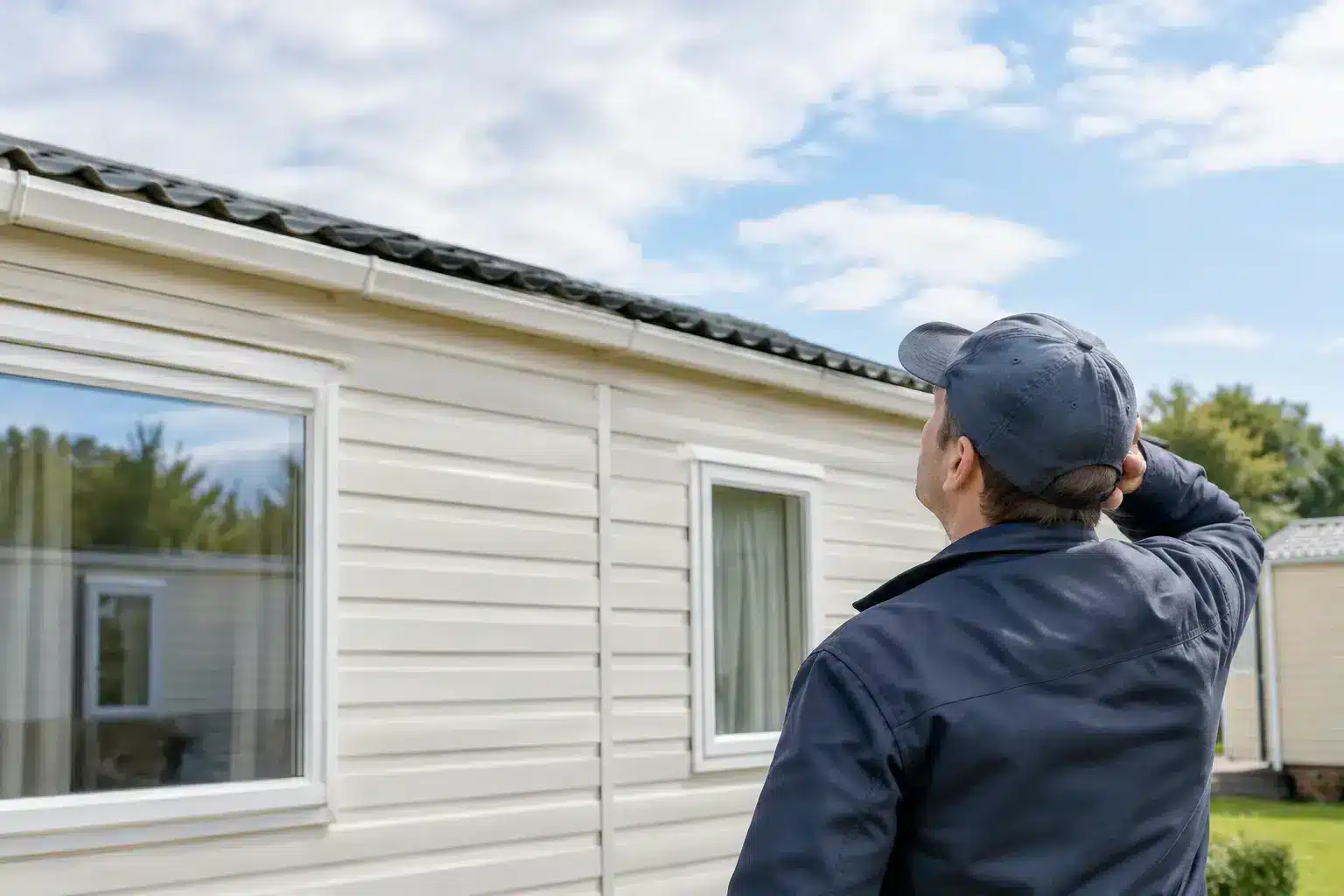

A brown ceiling stain after a Jacksonville downpour is not always directly below the leak. Water can travel along roof decking, framing, insulation, wiring paths, or the inside of a wall before it becomes visible. That is why mobile roof problems need more than a quick patch at the spot where water appears indoors. The repair should begin by finding the actual entry point and checking the materials around it.
Mobile homes may have metal, shingle, low-slope, or roof-over systems. Each can develop leaks differently, but the homeowner risk is the same: a small failure at a seam, penetration, edge, or transition can lead to wet insulation, damaged ceiling panels, wood deterioration, and mold-friendly conditions. Prompt inspection is usually far less costly than waiting for a minor leak to become an interior repair.
Why Mobile Roof Problems Can Be Hard to Trace
Mobile home roofs have details that require careful inspection. A roof may be nearly flat, covered with a membrane or metal panels, or have a newer roof installed over an older structure. Water does not always enter through an obvious hole. It can work beneath loose flashing, travel through an open panel seam, or collect where coating has worn thin around a vent or plumbing stack.
Roof movement also matters. Florida heat causes roofing materials to expand, and cooler rain can quickly change their temperature. Over time, fasteners can loosen, sealant can split, and metal panels can move at overlaps. Strong wind and wind-driven rain add pressure at roof edges, ridge caps, vents, and attached structures such as Florida rooms and porch roofs.
A proper inspection looks beyond the visible wet area. It checks the roof surface, seams, fasteners, penetrations, edge trim, gutters where present, ceiling condition, and any soft or stained areas that may show how long the problem has existed.
7 Warning Signs of Mobile Home Roof Trouble
1. Ceiling stains, bubbling, or sagging panels
A fresh water spot may look minor, but it is evidence that moisture has already passed through the roofing system. Bubbling paint, soft ceiling panels, peeling tape at ceiling seams, or a sagging section deserve prompt attention. Avoid poking or cutting into a sagging wet ceiling unless necessary for safety, since retained water can make the material unstable.
2. Drips that only appear during wind-driven rain
If a roof leaks only when rain is blowing from one direction, the weak point may be flashing, edge trim, a roof penetration, or a wall-to-roof transition. These leaks are easy to miss on a dry day. The timing and direction of the storm are useful clues for a roofing professional trying to identify the source.
3. Cracked coating or exposed roof material
Elastomeric coatings help protect many low-slope and metal mobile home roofs from sunlight and standing water. When a coating becomes chalky, cracked, thin, or separated at seams, it may no longer shed water as intended. A coating can be an effective maintenance solution when the underlying roof is sound, but it will not correct loose metal, rotten decking, failed flashing, or an active leak hidden below the surface.
4. Loose fasteners, lifted seams, or missing trim
Metal roofing commonly relies on fasteners and sealed overlaps. A raised screw, deteriorated washer, open seam, or loose edge can create a direct path for water. Missing or bent trim is another concern because it exposes vulnerable roof edges to rain and wind.
Do not assume that adding caulk to every visible fastener is the right answer. Some sealants fail quickly in direct sun, and applying material over a dirty or wet surface can trap a problem rather than solve it. The condition of the panel, fastener, and surrounding seal must guide the repair.
5. Soft spots or a spongy feel near the roof edge
A soft area can indicate wet or deteriorated decking beneath the roof covering. This is more serious than a surface crack because the roof structure may need carpentry repair before new roofing material can hold properly. Areas near eaves, around skylights, and beside porch connections are common places for hidden deterioration.
6. Rust, corrosion, or staining on metal components
Surface discoloration does not always mean a roof is leaking, but rust around seams, fasteners, penetrations, or roof edges should be evaluated. In coastal and humid parts of the Jacksonville area, moisture and salt air can accelerate corrosion. Once metal begins to deteriorate at a seam or fastener point, water intrusion can follow.
7. Repeated leaks after prior repairs
A recurring leak often means the previous work treated a symptom rather than the failure point. For example, a ceiling stain may be patched repeatedly when the real issue is a plumbing vent flashing uphill from it. A seam may be resealed when water is actually entering at damaged edge trim and traveling beneath the panel.
This is where documented findings matter. Before-and-after photos and a clear explanation of the roof condition give homeowners a better basis for approving a targeted repair or deciding whether broader work is justified.
Common Causes and the Right Repair Approach
The correct repair depends on the roof type and the condition of surrounding materials. On a metal roof, the work may involve replacing failed fasteners, correcting open seams, repairing damaged panels, renewing sealant at appropriate details, and securing or replacing edge trim. On a low-slope roof, the solution may include repairing membrane splits, reinforcing seams, correcting flashing, or applying a compatible coating after preparation.
Roof penetrations need particular attention. Plumbing vents, exhaust vents, skylights, antenna mounts, and additions create interruptions in the roof surface. Their flashing must direct water onto the roof, not allow it behind the roofing material. A roof-to-wall connection at a Florida room or porch can be just as vulnerable, especially where different materials meet.
Sometimes a localized repair is the sensible choice. If the roof covering is generally in good condition and the problem is limited to one failed detail, targeted work can protect the home without pushing an unnecessary replacement. On the other hand, widespread corrosion, extensive soft decking, multiple active leaks, or a roof surface that has reached the end of its serviceable condition may make larger repairs more practical. The answer depends on inspection findings, not a one-size-fits-all recommendation.
What Homeowners Can Do Before an Inspection
After a leak, protect the interior first. Move furniture and electronics away from the affected area, use a container for active drips, and photograph ceiling stains or water entry. If it is safe, note whether the leak occurs near a vent, exterior wall, skylight, chimney, or roof transition. Do not walk on a wet, aging, or visibly damaged mobile home roof. A weak area can be unsafe, and unnecessary foot traffic can worsen the damage.
Keep simple records of when the leak happened, how much rain fell, and whether wind was involved. This information can help narrow the inspection. If the roof has been coated or repaired before, knowing the approximate date and type of work is also useful.
James Neill Roofing Repair approaches mobile home leaks by inspecting the roof system and its connected details before recommending work. With more than 45 years of experience and Florida license CCC057937, the focus is on identifying the source, explaining the condition in plain language, and completing repair work that fits the actual problem.
Preventing Water Damage Between Storms
Regular maintenance gives homeowners the best chance of catching small issues early. Check ceilings after heavy rain, keep nearby tree limbs from rubbing the roof, and watch for loose trim, debris buildup, cracked coating, or changes around vents and roof edges. If gutters are installed, keep them clear so water does not back up near the roofline and fascia.
An inspection is especially worthwhile before hurricane season, after a major wind event, or when buying or selling a mobile home. It can identify aging sealants, vulnerable seams, and early wood damage before they turn into a disruptive interior leak.
A mobile home roof does not need to look severely damaged to deserve attention. When a stain, drip, loose seam, or soft area first appears, a careful inspection and a properly matched repair can protect the home, the people inside it, and the investment you have worked hard to maintain.